Let's be honest, green peas get a bad rap. We think of them as a forgotten handful from a frosty bag, boiled to oblivion and pushed to the side of the plate. But that humble pea is one of the most underrated items in the vegetable drawer. It's a starchy vegetable, yes, but one that packs a surprising amount of protein and fibre, making it behave more like a tiny, gentle legume than a simple green.
↑ Fresh, sweet peas are a nutritional standout — and frozen is just as good.
The surprising vegetable that acts like a legume
Green peas are botanically a fruit, but we eat them as a vegetable. Nutritionally, though, they're in a class of their own. Unlike leafy greens, they're a 'starchy' vegetable, meaning they have more carbohydrate. But look closer: for 14 grams of carbs, you get nearly 6 grams of fiber and over 5 grams of protein. That's an incredible ratio.
This unique profile means they provide satisfying energy without the sharp blood sugar spike you'd get from more refined starches. It's why they feel more substantial than broccoli or spinach, and why they're such a smart addition to any meal.
IN ONE LINE
With more protein than an egg (by weight) and a huge hit of fibre, green peas are a nutritional powerhouse hiding in plain sight in the freezer aisle.
Green pea nutrition facts
Here's the nutritional breakdown for a 100-gram serving of cooked green peas, which is roughly two-thirds of a cup.
The numbers that jump out are the protein and fiber. To get over 5 grams of each in just 81 calories is remarkable. It's what makes peas so filling and satisfying. You also get a very significant amount of your daily vitamin C, crucial for immune function and skin health.
Don't fall for the 'fresh is always best' myth. Frozen peas are picked and flash-frozen at peak ripeness, often locking in more nutrients than 'fresh' peas that have been sitting on a truck and then a shelf for a week.
Green peas and your blood sugar
Because they're a starchy vegetable, people sometimes worry that peas will spike their blood sugar. The opposite is true. The glycemic index (GI) of green peas is considered low. While the exact number can vary, it's typically in the 45-55 range.
Why so low? Because all that protein and fiber act like a brake, slowing down the absorption of the carbohydrate. This means you get gentle, steady energy, not a sharp spike and crash. This makes green peas an excellent food for blood sugar management and sustained energy.
GLYCEMIC INDEX · PEAS vs COMMON FOODS
Green peas sit firmly in the low-GI band
Apple
whole fruit
LOW
Green Peas
cooked
LOW
Pineapple
whole fruit
MEDIUM
White Bread
refined
HIGH
Cornflakes
refined
HIGH
SCALE 0–90
04590
The best way to eat them
Getting the most out of peas is simple. The biggest crime is overcooking.
01
Don't boil them to death.
A quick steam or a brief simmer for 2-3 minutes is all they need. They should be tender but still have a slight pop. Grey, mushy peas are a tragedy.
02
Choose frozen or fresh.
Both are excellent. Canned peas are often mushy and loaded with sodium, so they're a distant third choice. If you use canned, rinse them well.
03
Think beyond a side dish.
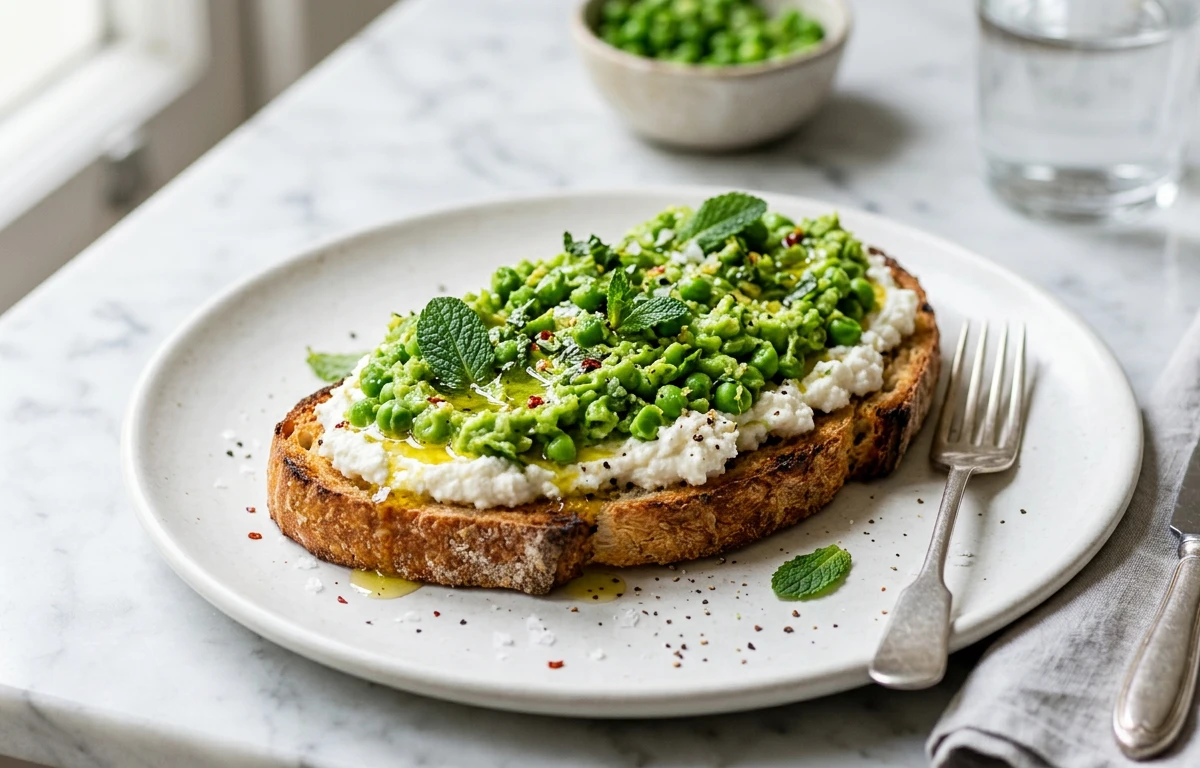
Stir them into pastas, risottos, or curries at the last minute. Mash them into a spread for toast. Blend them into soups. They add protein, fiber, and sweetness.
04
Pair with grains for a complete protein.
Peas are high in the amino acid lysine, which is often low in grains. Pairing peas with rice, quinoa, or pasta creates a complete protein profile, which is great for plant-based diets.
What green peas are good for
01
A serious plant-protein source
With over 5 grams of protein per serving, peas help build muscle, repair tissue, and keep you feeling full and satisfied for longer.
5.4g
protein
02
Excellent for gut health
One serving provides 20% of your daily fiber needs, feeding good gut bacteria and promoting smooth, regular digestion.
5.7g
fiber
03
Supports blood sugar control
The potent combination of fiber and protein slows carbohydrate absorption, preventing blood sugar spikes and making peas a smart choice for everyone.
Low
glycemic
04
A big vitamin C boost
Forget oranges for a second. A serving of peas delivers a hefty 40mg of vitamin C, crucial for your immune system, skin health, and iron absorption.
44%
vit C DV
What to pair peas with
Peas have a sweet, fresh flavor that works with a surprising range of ingredients. Here are a few classic and creative pairings.
Eat freely — or be mindful?
Three ways with peas
Move beyond boiling. Here are three simple recipes that make green peas the star of the show.
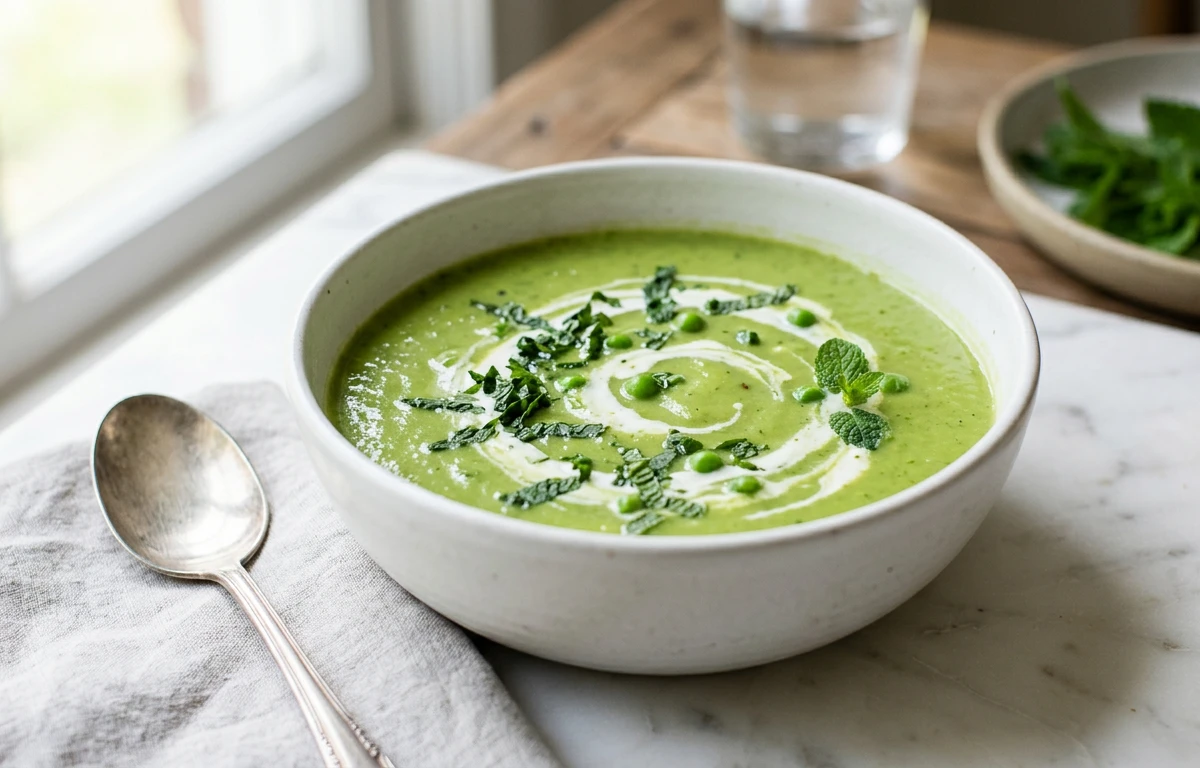
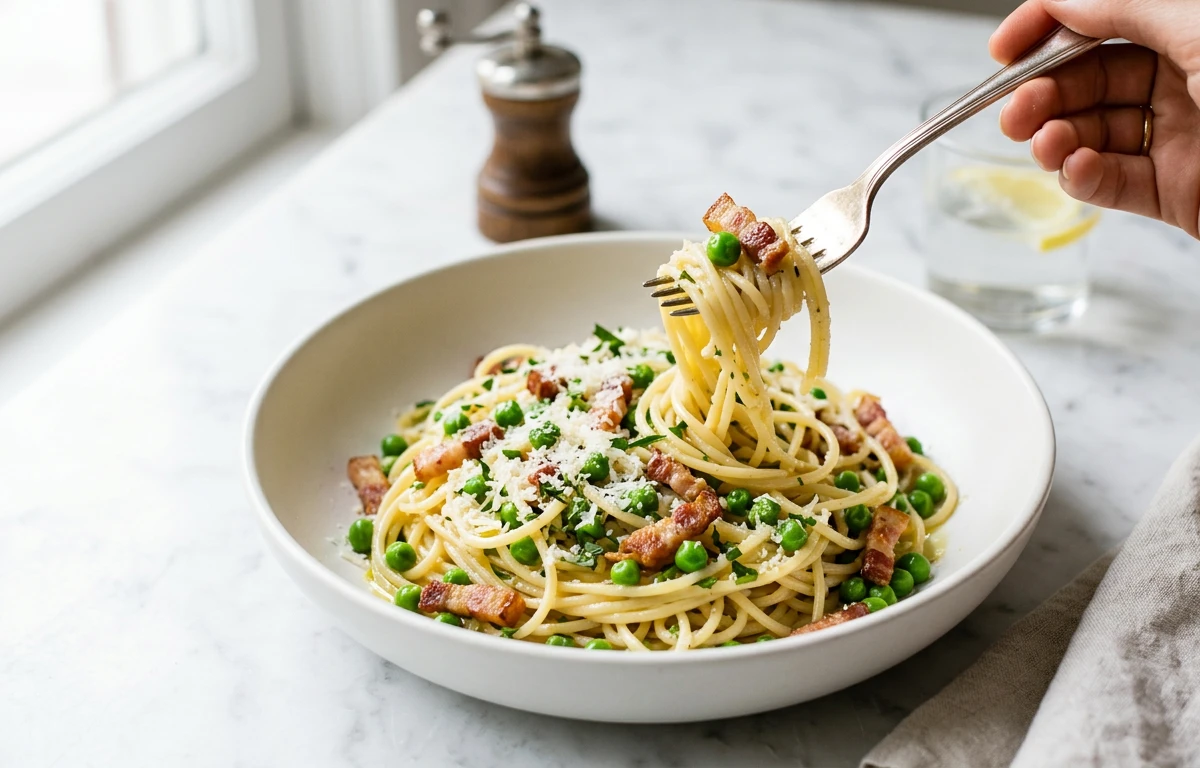
Want to get more plant protein and fiber into your week, without the guesswork?
Our meal planner can help you build balanced days that feature smart ingredients like green peas, perfectly portioned and paired for your health goals. Get a plan with a single, simple grocery list.
Build my weekly plan →SOURCES & REFERENCES · 3
One more thing
Eating well is rarely about willpower. It’s about having a short list of dinners you actually want to eat. Pick two from this list. Make them next week. The rest will follow.
If you want these on autopilot, our weekly meal planner can drop the picks above into your calendar with one click and build a single grocery list from the merged ingredients.
FREQUENTLY ASKED QUESTIONS
Frequently asked questions
Are green peas good for people with diabetes?
Yes, they are an excellent choice. Their high fiber and protein content, combined with a low glycemic index, helps prevent blood sugar spikes. They provide steady energy and nutrients without disrupting blood glucose control.
Are green peas a carb or a protein?
They're both! Technically, they are a starchy vegetable, so their main macronutrient is carbohydrate. However, they have an unusually high amount of protein for a vegetable, which is why they are so nutritionally valuable, especially in plant-based diets.
Are frozen peas healthy?
Absolutely. Frozen peas are picked at their peak and flash-frozen, which locks in their nutrients. They are often more nutritious than 'fresh' peas that have been transported and stored for days. They are a convenient and incredibly healthy staple to keep in your freezer.
Do peas cause bloating or gas?
Because they are so high in fiber, a sudden large increase in your pea intake could cause some gas or bloating if your system isn't used to it. The effect is usually temporary. If you're sensitive, start with smaller portions and drink plenty of water.
METHODOLOGY
How this article was created
Built using verified nutrition databases, culinary research, and traditional cooking knowledge — every claim is cross-referenced against the sources listed in the article.
· USDA data· Culinary research· Quality reviewed
Read our methodology →TRANSPARENCY
About this content
Articles are curated using trusted food databases (USDA FoodData Central, IFCT), culinary literature, and dietary guidelines, then structured by our editorial team for clarity, accuracy, and usefulness.
· Verified data sources· Culinary research· Quality reviewed
Read our editorial policy →EXPLORE OUR MEALS
Meals that fit this article

AMERICAN · 1677 CAL
Almonds with Sliced Apple + supplement + iron

MEDITERRANEAN · 809 CAL
Greek Yogurt with Berries Almonds and Granola + supplement + iron

GENERAL_HEALTHY · 705 CAL
Banana with Peanut Butter Pregnancy + supplement + iron

MODERN · 982 CAL
Hummus with Crudits and Pita with Fresh Orange Snack + supplement + iron
TAGGED
KEEP READING