Let's be honest, corn gets a bit of a bad rap. We see it in everything from sugary cereals to corn syrup, and it's easy to write the whole thing off as a starchy, sugary filler. But a kernel of sweet corn, eaten straight from the cob or a steaming bowl, is a different story. It's a whole food — technically a grain, but we eat it like a vegetable — with surprising fiber, a little protein, and a dose of vitamin C. It's not the nutritional powerhouse of, say, kale, but it's far from the junk food villain it's often made out to be.
↑ Whole kernel corn is a world away from highly processed corn syrup.
More than just starch
Corn is in a funny spot. We treat it like a vegetable, piling it on our plates next to peas and carrots, but botanically, it's a whole grain. And while it's definitely starchy, that's not the whole picture. Those bright yellow kernels are packed with water and a decent amount of insoluble fiber—the kind that helps keep your digestive system moving.
The key is to distinguish between corn as a whole food and corn as an ingredient. The sweet corn you eat from the cob is miles away from the high-fructose corn syrup or refined cornflour used in processed foods. When you eat the whole kernel, you get the complete package: starch for energy, fiber for fullness, and a surprising little bundle of nutrients.
IN ONE LINE
Eaten as a whole kernel, corn is a fibrous whole grain that functions like a starchy vegetable, providing steady energy and gut-friendly fiber. It's a world apart from corn syrup.
Whole kernel corn nutrition facts
Here’s the nutritional breakdown for a 100-gram serving of cooked sweet corn, which is roughly half a cup.
For a starchy vegetable, that's a pretty balanced profile. The protein content is higher than you'd find in most other veggies, and nearly 3 grams of fiber is a solid contribution towards your daily goal. It won't win awards for its vitamin C, but it's a nice little bonus.
Corn's glycemic index
Glycemic index (GI) tells us how quickly a food's carbs hit our bloodstream. Foods under 55 are 'low', 56-69 are 'medium', and 70+ are 'high'. Sweet corn lands squarely in the 'medium' camp, with a GI typically in the mid-50s. This means it raises blood sugar more than, say, broccoli or an apple, but less than potatoes, white bread, or its own highly processed cousin, cornflakes. The fiber is doing important work here, slowing everything down.
GLYCEMIC INDEX · CORN vs COMMON FOODS
Corn sits in the medium-GI band
Apple
whole fruit
LOW
Whole Kernel Corn
whole grain
MEDIUM
Watermelon
whole fruit
HIGH
Cornflakes
refined
HIGH
SCALE 0–90
04590
The smart way to eat it
Enjoying corn without a big blood sugar impact is all about portion and pairing.
01
Stick to a portion.
A half-cup to one-cup serving is a great side. It's easy to overdo it, especially straight from the cob, so be mindful.
02
Pair with protein and fat.
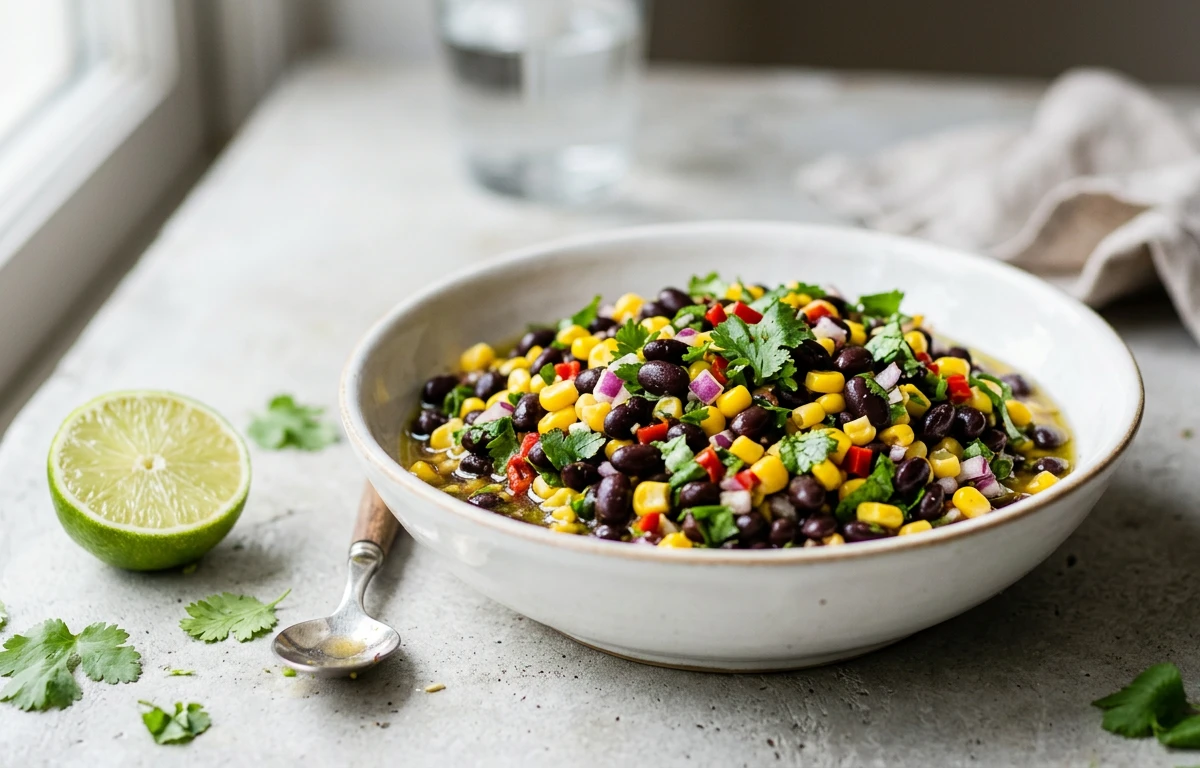
This is the golden rule for any carb. Add black beans, cheese, avocado, or chicken to your corn to slow digestion and create a balanced meal.
03
Eat the whole kernel.
Fresh, frozen, or canned (in water, not syrup) are all great. Avoid creamed corn, which often has added sugar and flour, and corn juice.
04
Don't drown it in butter.
A little butter is fine, but a simple squeeze of lime, a sprinkle of chili powder, or fresh herbs can add huge flavor for zero calories.
What corn is good for
01
Digestive health
The 2.7 grams of fiber per serving is mostly insoluble, which adds bulk and helps promote regularity. Think of it as a gentle 'scrub' for your system.
2.7 g
fiber
02
Steady energy release
Thanks to its fiber and medium GI, corn provides carbohydrate energy without the sharp spike and crash of refined grains. It's great fuel for an active afternoon.
Medium
GI
03
Eye health support
Corn's yellow color comes from antioxidants called lutein and zeaxanthin. These plant compounds are known to accumulate in the retina and help protect eyes from blue light damage.
Rich in
antioxidants
04
A naturally gluten-free grain
For those with celiac disease or gluten sensitivity, corn and cornmeal are excellent, safe alternatives to wheat, rye, and barley.
100%
gluten-free
What to pair corn with
Corn's sweetness loves savory, fatty, and acidic partners. Pairing it well turns a simple side into a balanced, satisfying dish.
Eat freely — or be mindful?
Three ways to eat it
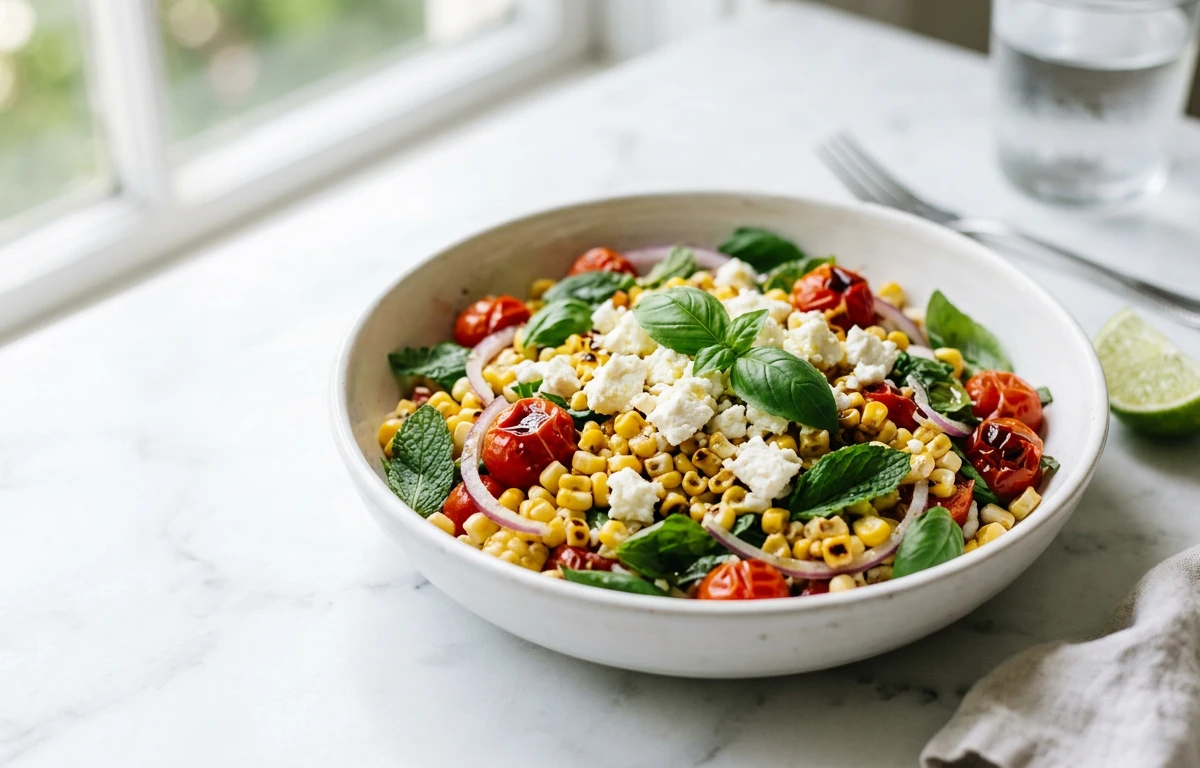
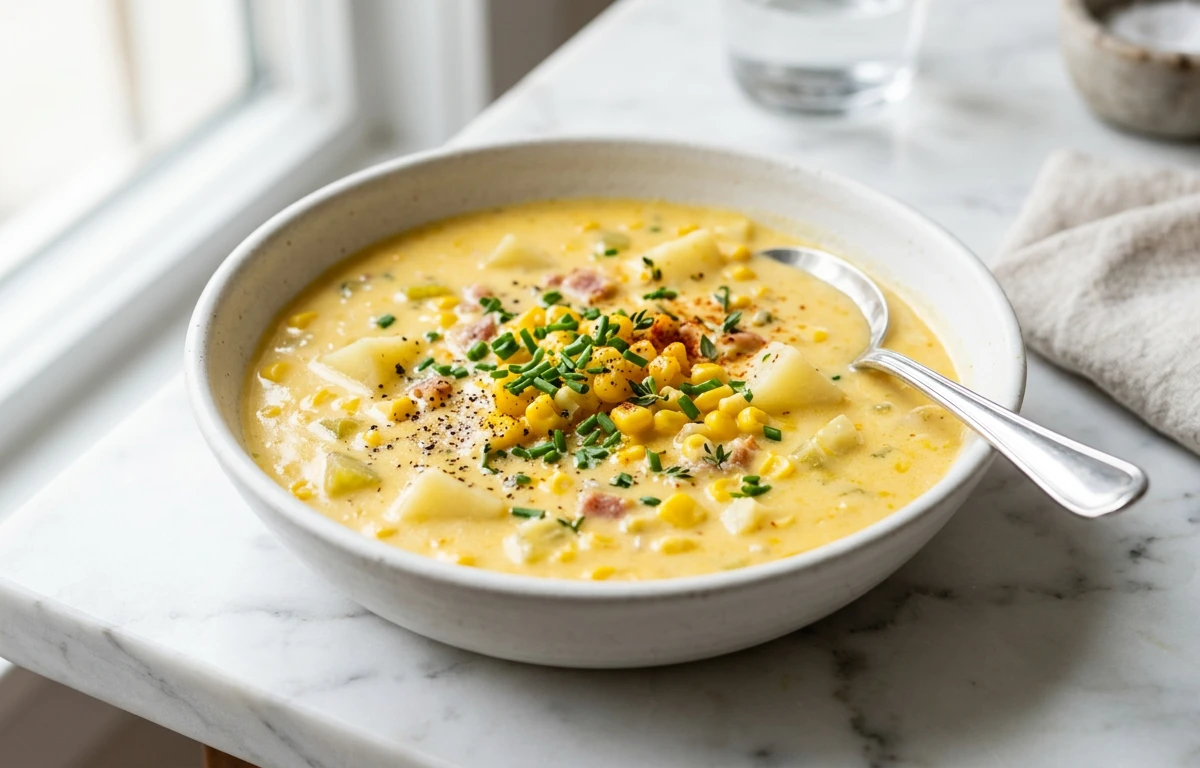
Here are three simple recipes that use whole kernel corn in a balanced way, leaning on natural pairings instead of added sugar or fat.
Want carbs like corn worked into a balanced week?
Our meal planner pairs starchy vegetables and grains with lean protein and healthy fats for steady energy. We handle the portions and macros, you get a simple plan and a single grocery list.
Build my weekly plan →SOURCES & REFERENCES · 3
One more thing
Eating well is rarely about willpower. It’s about having a short list of dinners you actually want to eat. Pick two from this list. Make them next week. The rest will follow.
If you want these on autopilot, our weekly meal planner can drop the picks above into your calendar with one click and build a single grocery list from the merged ingredients.
FREQUENTLY ASKED QUESTIONS
Frequently asked questions
Is corn good for you?
Yes, in its whole form. Whole kernel corn provides valuable fiber, some protein, and antioxidants. It's a healthy whole grain, but portion size matters. It is much healthier than its processed forms like corn syrup or cornflakes.
Can people with diabetes eat corn?
Yes, but with care. Corn has a medium glycemic index, so it will raise blood sugar. A small portion (e.g., half a cup) paired with protein and fat is generally manageable, but it should be factored into your total carbohydrate budget for the meal.
Does corn make you gain weight?
No single food causes weight gain. Corn is more calorie-dense than green vegetables (86 calories per 100g), so large portions can contribute to a calorie surplus. Eaten in moderation as part of a balanced diet, it's perfectly fine.
Is corn a vegetable or a grain?
It's both, depending on context. Botanically, a corn kernel is a whole grain. Culinarily, we prepare and eat sweet corn like a starchy vegetable.
METHODOLOGY
How this article was created
Built using verified nutrition databases, culinary research, and traditional cooking knowledge — every claim is cross-referenced against the sources listed in the article.
· USDA data· Culinary research· Quality reviewed
Read our methodology →TRANSPARENCY
About this content
Articles are curated using trusted food databases (USDA FoodData Central, IFCT), culinary literature, and dietary guidelines, then structured by our editorial team for clarity, accuracy, and usefulness.
· Verified data sources· Culinary research· Quality reviewed
Read our editorial policy →RELATED RECIPES
Cook from this article
EXPLORE OUR MEALS
Meals that fit this article

AMERICAN · 1677 CAL
Almonds with Sliced Apple + supplement + iron

MEDITERRANEAN · 809 CAL
Greek Yogurt with Berries Almonds and Granola + supplement + iron

GENERAL_HEALTHY · 705 CAL
Banana with Peanut Butter Pregnancy + supplement + iron

MODERN · 982 CAL
Hummus with Crudits and Pita with Fresh Orange Snack + supplement + iron
TAGGED
KEEP READING