Most people think of persimmons as those firm, tomato-shaped Fuyu fruits from the grocery store. But the native American persimmon is a different beast entirely. It's smaller, softer, and when perfectly ripe, it’s a wild, custardy explosion of honey and spice. It’s also surprisingly dense in calories and carbs, which isn't a bad thing—it's just something to know. This isn't a light, watery fruit; it's a genuine, satisfying snack with a huge vitamin C payload.
↑ The native American persimmon is smaller and softer than its Asian cousins.
The wild, jammy fruit
Forget everything you know about firm, crunchy fruit. A perfectly ripe native persimmon is a different experience—it's soft, almost liquid inside, with a texture like jam and a flavor that's part honey, part apricot, with a little bit of spice. You can't really slice it; you scoop it.
That custardy sweetness comes from a lot of natural sugar, which also means it's higher in calories and carbs than most fruits. A 100-gram serving, which is only about half a cup of pulp, packs 127 calories. For comparison, that's the same as a medium banana, but in a much smaller volume. It's not 'bad,' it's just dense. And it's a trade-off for getting a massive dose of vitamin C and a truly unique seasonal flavor.
IMPORTANT
The key is ripeness. An unripe native persimmon is shockingly astringent and will pucker your mouth. It must be completely soft and squishy before it's edible.
Native persimmon nutrition facts
Here’s the nutritional breakdown for 100 grams of raw native persimmon pulp, which is roughly half a cup.
The two numbers that jump out are the carbohydrates and the vitamin C. At 33.5 grams of carbs, this is a high-energy fruit. But that massive 66 mg of vitamin C means a small serving provides nearly three-quarters of your entire daily requirement. It's a trade-off: you get a lot of energy and a huge micronutrient hit in one small package.
Persimmon's glycemic index
The glycemic index (GI) of the native American persimmon hasn't been officially tested and published. However, we can make an educated guess. Given its high carbohydrate and sugar content, it's almost certainly not a low-GI fruit. It likely falls into the medium-GI category, similar to fruits like pineapple or mango. The 3.6 grams of fiber help to slow down sugar absorption, but the overall carb load means it will raise blood sugar more than, say, a handful of berries.
GLYCEMIC INDEX · PERSIMMON vs COMMON FOODS
Persimmon likely sits in the medium-GI band
Apple
whole fruit
LOW
Pineapple
whole fruit
MEDIUM
Persimmon (est.)
whole fruit
MEDIUM
Watermelon
whole fruit
HIGH
White Bread
refined
HIGH
SCALE 0–90
04590
How to eat it right
Because it's so energy-dense, a little mindfulness goes a long way with native persimmons.
01
Watch the portion.
A 100g serving (about 1/2 cup of pulp) is a good place to start. It's easy to eat much more because it's so delicious, but the calories and carbs add up fast.
02
Pair it with protein and fat.
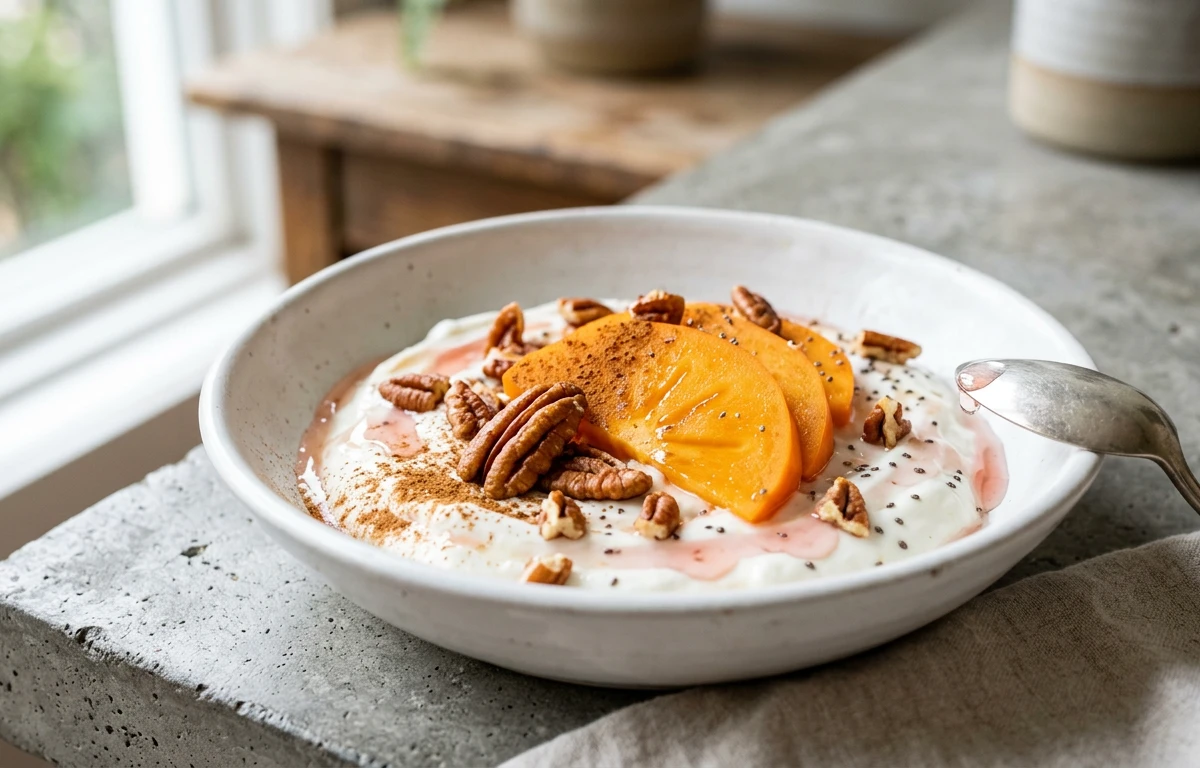
Stirring the pulp into Greek yogurt or topping it with a few pecans adds protein and fat, which slows sugar absorption and makes it a more balanced, filling snack.
03
Embrace its natural sweetness.
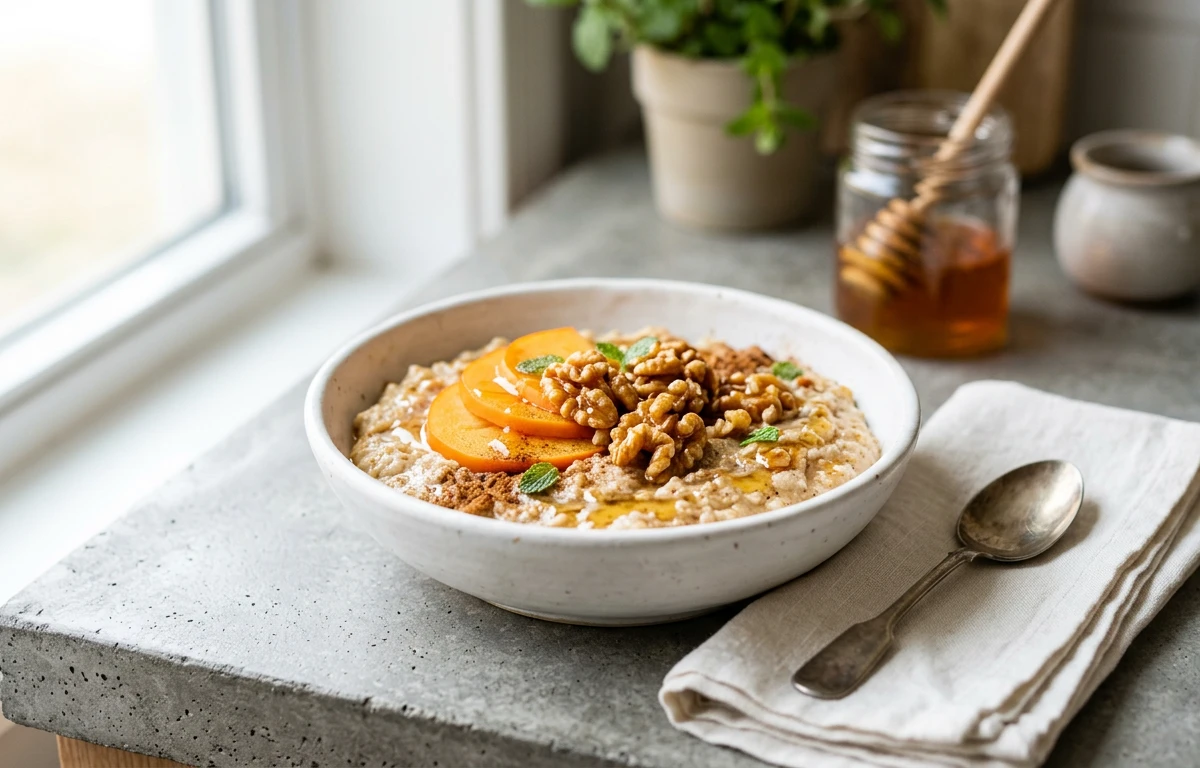
Persimmon pulp is so sweet you don't need to add any sugar. Use it as a natural sweetener for oatmeal, yogurt, or baked goods.
04
Wait until it's fully ripe.
I can't say this enough: it must be squishy-soft. An unripe persimmon is a memorable mistake. The fruit should feel like a water balloon and the skin will be wrinkled.
What persimmon is good for
01
A massive vitamin C boost
A small 100g serving delivers 73% of your daily vitamin C, crucial for immune function, skin health, and antioxidant defense.
73%
vit C DV
02
A good source of fiber
With 3.6 grams of fiber, it supports digestive regularity and contributes to feelings of fullness, helping to balance its high sugar content.
3.6 g
fiber
03
Natural, whole-food energy
The 33.5 grams of carbohydrates provide a quick source of energy, making it a great option for active people before or after a workout.
127
calories
What to pair persimmon with
Its intense, honey-like sweetness pairs beautifully with creamy, salty, and spicy flavors. Adding protein or fat is key to making it a balanced meal or snack.
Eat freely — or be mindful?
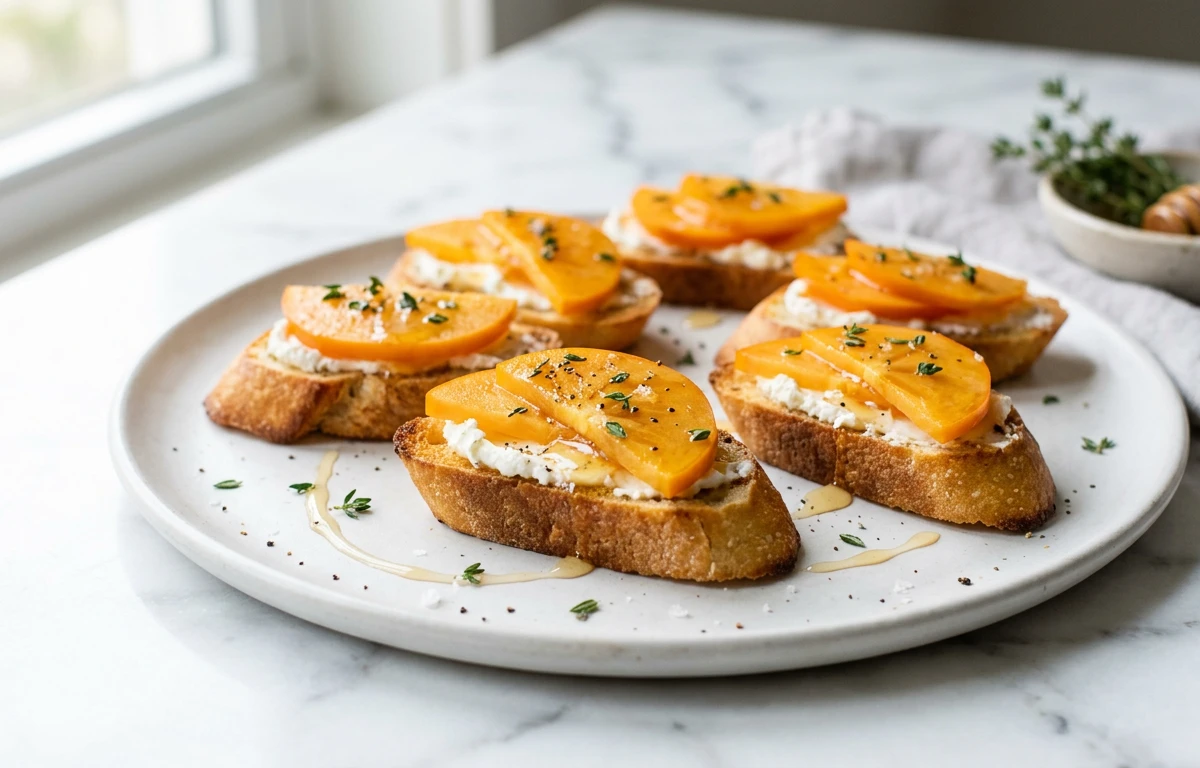
Three ways to eat it
Since native persimmon is so soft and sweet, the best recipes are simple ones that let its unique flavor shine.
Want seasonal fruit worked into a balanced week?
Our meal planner can incorporate seasonal finds like persimmon into a balanced diet, pairing them with the right foods for steady energy. We handle the portions and macros, you get the grocery list.
Build my weekly plan →SOURCES & REFERENCES · 3
One more thing
Eating well is rarely about willpower. It’s about having a short list of dinners you actually want to eat. Pick two from this list. Make them next week. The rest will follow.
If you want these on autopilot, our weekly meal planner can drop the picks above into your calendar with one click and build a single grocery list from the merged ingredients.
FREQUENTLY ASKED QUESTIONS
Frequently asked questions
How do you know when a native persimmon is ripe?
It needs to be extremely soft, to the point of feeling mushy or like a water balloon. The skin will often be wrinkled and may have dark spots. If it's even slightly firm, it will be unpleasantly astringent. They often ripen best after falling from the tree.
Are persimmons high in sugar?
Yes, for a fruit. A 100g serving contains 33.5g of carbohydrates, most of which is natural sugar. This is why it's so sweet and also why portion control is important, especially for those managing blood sugar.
Can you eat the skin of a native persimmon?
You can, but it can be a bit tough and sometimes bitter. Most people find it easier to cut the fruit in half and scoop out the soft, jelly-like pulp with a spoon.
What's the difference between native and Fuyu persimmons?
Fuyu persimmons are a non-astringent variety from Asia that can be eaten firm and crisp like an apple. Native American persimmons are an astringent variety that must be completely soft and ripe to be palatable. They are also much smaller and have a more intense, wild flavor.
METHODOLOGY
How this article was created
Built using verified nutrition databases, culinary research, and traditional cooking knowledge — every claim is cross-referenced against the sources listed in the article.
· USDA data· Culinary research· Quality reviewed
Read our methodology →TRANSPARENCY
About this content
Articles are curated using trusted food databases (USDA FoodData Central, IFCT), culinary literature, and dietary guidelines, then structured by our editorial team for clarity, accuracy, and usefulness.
· Verified data sources· Culinary research· Quality reviewed
Read our editorial policy →EXPLORE OUR MEALS
Meals that fit this article

AMERICAN · 1677 CAL
Almonds with Sliced Apple + supplement + iron

MEDITERRANEAN · 809 CAL
Greek Yogurt with Berries Almonds and Granola + supplement + iron

GENERAL_HEALTHY · 705 CAL
Banana with Peanut Butter Pregnancy + supplement + iron

MODERN · 982 CAL
Hummus with Crudits and Pita with Fresh Orange Snack + supplement + iron
TAGGED
KEEP READING