Don't make the mistake of peeling a raw, green plantain and expecting a sweet banana. It's a common mix-up, but they're worlds apart. Think of a plantain not as a fruit, but as a starchy vegetable, like a potato or yam. Eaten raw, it's tough and chalky. But once cooked, it transforms, offering steady, slow-release energy, a surprising amount of vitamin C, and a special kind of fibre that your gut will thank you for.
↑ Plantains are best cooked when they're firm and green, like a starchy vegetable.
The cooking banana that acts like a potato
Plantain is a member of the banana family, but it's starchier and lower in sugar. While a banana gets sweeter and softer as it ripens, a plantain starts off as a firm, starchy vegetable and slowly sweetens as its skin turns from green to yellow to black. Green plantains are used for savory dishes and behave much like a potato — you must cook them before eating. Yellow plantains are slightly sweeter and softer, often fried as a side dish. Black plantains are soft and sweet enough to be used in desserts.
This profile focuses on the green, unripe plantain, which is where most of the unique health benefits, particularly around gut health and blood sugar, are found.
IN ONE LINE
Treat green plantain like a potato: boil, bake, or mash it. It's a low-GI source of fibre and resistant starch that's fantastic for steady energy.
Plantain nutrition facts
Here’s the nutritional profile for a 100-gram serving of raw green plantain (about one-third of a large plantain).
The main story here is the carbohydrate. Unlike a sweet fruit, the vast majority of carbs in a green plantain come from starch, not sugar. A significant portion of this is 'resistant starch,' which functions like soluble fiber. It resists digestion in the small intestine and travels to the large intestine, where it feeds beneficial gut bacteria.
Plantain's glycemic index
The glycemic index (GI) of plantain changes dramatically with ripeness and cooking method. Green, unripe plantain that has been boiled has a low GI, typically around 45. This is because of its high resistant starch content, which slows down digestion and prevents sharp spikes in blood sugar. As a plantain ripens to yellow and black, its starches convert to sugars, and its GI rises into the medium and even high range. Frying also tends to result in a higher GI than boiling or baking.
GLYCEMIC INDEX · PLANTAIN vs COMMON FOODS
Green plantain sits in the low-GI band
Apple
whole fruit
LOW
Green Plantain
boiled
LOW
Mango
whole fruit
LOW
White bread
refined
HIGH
Cornflakes
refined
HIGH
SCALE 0–90
04590
How to cook it right
First rule of green plantain: you must cook it. Peeling can be tricky; it's easiest to slice off the ends, score the peel lengthwise, and pry it off in sections. From there, you have options.
01
Boil or steam it.
This is the simplest, healthiest method. Chop the plantain into chunks and boil in salted water for 15-20 minutes until tender. It preserves the low-GI profile and makes a great base for mashes.
02
Bake or air-fry it.
For a healthier take on 'fries,' slice the plantain, toss with a little oil and spices, and bake at 400°F (200°C) until golden. This gives you crispiness without the heavy oil.
03
Make tostones.
A Latin American classic. Slice the plantain, lightly fry or bake it, smash the pieces flat, and then bake or fry them again until crisp. Baking is the lighter option.
04
Go easy on the deep-fryer.
While delicious, deep-fried plantain chips or chunks absorb a lot of oil, adding significant calories and fat. Keep it as a treat.
What plantain is good for
01
Superb for gut health
Green plantain is one of the best food sources of resistant starch, a prebiotic that feeds beneficial gut bacteria, promoting a healthy microbiome.
High
Resistant Starch
02
Sustained, steady energy
Its low glycemic index means the carbohydrates are broken down and absorbed slowly, providing lasting energy without the blood sugar spike and crash.
GI ~45
low (boiled)
03
A good vitamin C boost
A 100g serving provides a solid 20% of your daily vitamin C, which is crucial for immune function and skin health.
20%
vit C DV
04
Promotes fullness
The combination of dense starch and fibre makes plantain very satiating, which can help with appetite control and weight management.
2.3 g
fiber
What to pair plantain with
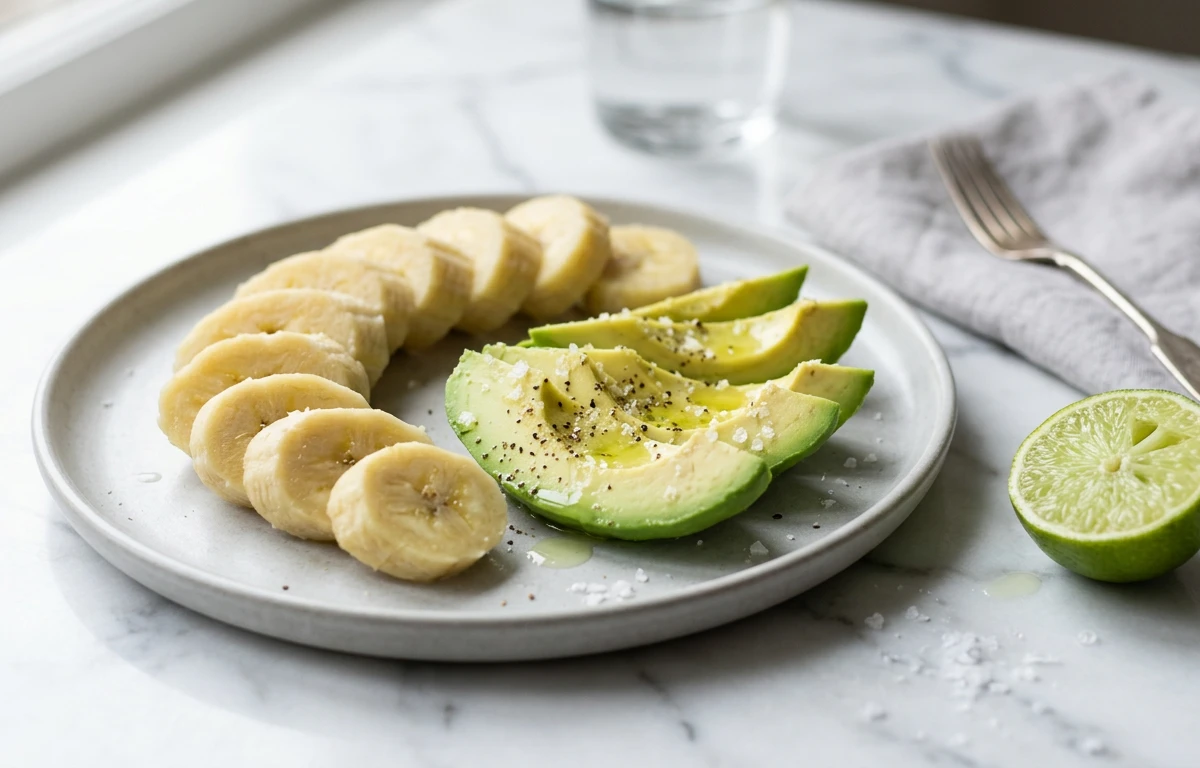
Because it's a starch, think of pairing plantain the way you'd pair a potato. It needs protein, healthy fats, and non-starchy vegetables to become a balanced meal.
Eat freely — or be mindful?
Three ways to cook it
Three simple, savory ways to prepare green plantain that highlight its starchy texture and health benefits.
.webp)
.webp)
Want starchy vegetables worked into a balanced week?
Our meal planner pairs foods like plantain with lean proteins and healthy fats for steady energy, with portions and macros already calculated and a single grocery list at the end.
Build my weekly plan →SOURCES & REFERENCES · 3
One more thing
Eating well is rarely about willpower. It’s about having a short list of dinners you actually want to eat. Pick two from this list. Make them next week. The rest will follow.
If you want these on autopilot, our weekly meal planner can drop the picks above into your calendar with one click and build a single grocery list from the merged ingredients.
FREQUENTLY ASKED QUESTIONS
Frequently asked questions
Can you eat plantain raw?
No, you shouldn't. Raw green plantain is very starchy, tough, and difficult to digest. It's not palatable and can cause digestive discomfort. It must be cooked before eating.
Is plantain good for diabetes?
Yes, green plantain can be an excellent choice for people with diabetes. When boiled or baked, it has a low glycemic index and is high in resistant starch, which helps manage blood sugar levels. Portion control is still important, and fried or ripened sweet plantains should be limited.
Is plantain healthier than a banana?
They're just different. A green plantain has less sugar and more resistant starch than a banana, making it better for blood sugar control and gut health. A banana is higher in sugar but offers convenient, no-cook energy and different vitamins. Think of green plantain as a healthy starch and a banana as a healthy fruit.
Is plantain a fruit or a vegetable?
Botanically, it's a fruit. Culinarily, it's treated as a vegetable. Because it's starchy and almost always cooked for savory dishes, it functions like a potato or yam on your plate.
METHODOLOGY
How this article was created
Built using verified nutrition databases, culinary research, and traditional cooking knowledge — every claim is cross-referenced against the sources listed in the article.
· USDA data· Culinary research· Quality reviewed
Read our methodology →TRANSPARENCY
About this content
Articles are curated using trusted food databases (USDA FoodData Central, IFCT), culinary literature, and dietary guidelines, then structured by our editorial team for clarity, accuracy, and usefulness.
· Verified data sources· Culinary research· Quality reviewed
Read our editorial policy →EXPLORE OUR MEALS
Meals that fit this article

AMERICAN · 1677 CAL
Almonds with Sliced Apple + supplement + iron

MEDITERRANEAN · 809 CAL
Greek Yogurt with Berries Almonds and Granola + supplement + iron

GENERAL_HEALTHY · 705 CAL
Banana with Peanut Butter Pregnancy + supplement + iron
MODERN · 982 CAL
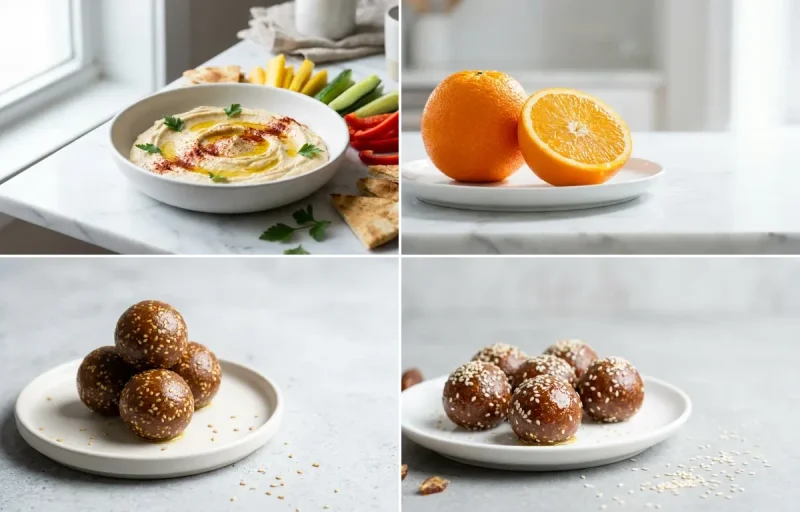
Hummus with Crudits and Pita with Fresh Orange Snack + supplement + iron
TAGGED
KEEP READING