Let's get one thing straight: there's no such thing as a 'negative-calorie' food. But celery gets as close to the concept as you can imagine. It's mostly water, with a satisfying crunch and a whisper of calories, making it a fantastic tool for hydration and weight management. But writing it off as crunchy water misses the point. Celery delivers fibre, a few key vitamins, and has a glycemic index so low it's barely measurable. It's a structural, functional vegetable that deserves a bit more credit.
↑ Celery is about 95% water, making it incredibly hydrating.
More than crunchy water
Celery is the ultimate high-volume, low-impact food. It’s about 95% water, which is why it’s so crisp and hydrating. The other 5% is mostly fiber, with a tiny amount of carbohydrate and a surprising number of micronutrients and plant compounds packed into its fibrous structure.
Its main job in most diets is to provide crunch, hydration, and a vehicle for dips. And that's a perfectly good job! But that structure also contains antioxidants and compounds like phthalides, which researchers are interested in for their potential role in supporting healthy blood pressure. It's a humble vegetable, but a functional one.
IN ONE LINE
Think of celery as a crunchy, edible water bottle. It's extremely low in calories and carbs, with a glycemic index so low it barely registers.
Celery nutrition facts
Here’s the nutritional breakdown for a 100-gram serving of raw celery, which is about two medium stalks or one cup, chopped.
Is celery a 'negative-calorie' food?
This is a persistent myth. The theory is that your body burns more calories digesting celery than the celery itself contains. It's a nice idea, but it's not quite true. The energy required to digest food (the 'thermic effect of food') is only about 10% of its calorie content. For celery, that means you burn maybe 1-2 calories digesting a 16-calorie serving.
So, no, it's not 'negative'. But with a net gain of just 14-15 calories, it's about as close as you can get. This is why it's such a powerful food for weight management — it fills you up with water, fiber, and crunch for almost zero caloric cost.
Don't fall for the celery juice craze. Juicing strips away the fiber — celery's best feature — and you lose the satisfying crunch and fullness factor. Eat the stalk whole.
Celery's glycemic index
Glycemic index (GI) measures how quickly a food raises blood sugar. Because celery is so low in digestible carbohydrates, its GI is considered to be extremely low. While some sources give it a number around 15, the real-world impact is negligible. You simply can't eat enough celery to cause a meaningful blood sugar response.
Its glycemic load (GL), which accounts for portion size, is effectively zero. This makes it one of the best possible vegetable choices for anyone managing blood sugar.
GLYCEMIC INDEX · CELERY vs COMMON FOODS
Celery has a negligible glycemic impact
Celery (raw)
non-starchy veg
LOW
Cherries
whole fruit
LOW
Apple
whole fruit
LOW
Watermelon
whole fruit
HIGH
White bread
refined
HIGH
SCALE 0–90
04590
How to get the most from it
01
Eat it raw.
The best way to get that signature crunch and maximum hydration is to eat celery raw. It's perfect for dipping or just snacking on its own.
02
Use the leaves.
Don't throw away the leafy tops! They're packed with flavor and nutrients. Chop them up and use them like an herb in soups, stocks, or salads.
03
Pair it with fat or protein.
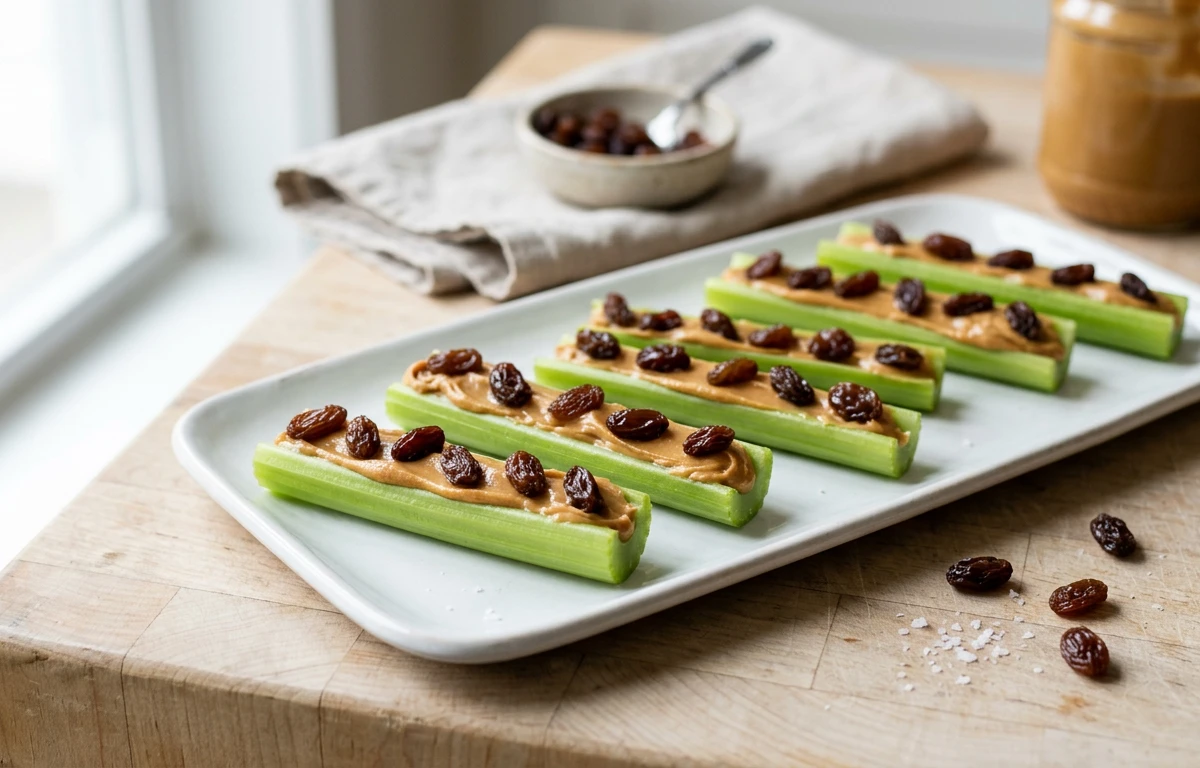
Celery on its own is not very filling. Pairing it with peanut butter, hummus, or cream cheese adds healthy fats and protein to make it a satisfying snack.
04
Skip the juice, eat the stalk.
Juicing removes the beneficial fiber. Eating the whole stalk is better for digestion, fullness, and blood sugar control.
05
Cook it for flavor.
While raw is great for snacking, cooked celery is a foundational ingredient (a 'mirepoix' with onions and carrots) that adds a deep, savory flavor to soups, stews, and sauces.
What celery is good for
01
Exceptional for weight management
At only 16 calories per 100g and high in water and fiber, celery helps you feel full with virtually no caloric cost.
16
calories
02
Superb hydration
Composed of about 95% water, eating celery is a legitimate way to contribute to your daily fluid intake.
95%
water
03
Supports healthy blood pressure
Celery contains phthalides, compounds that may help relax artery walls, as well as potassium, which helps balance sodium levels.
260mg
potassium
04
Great for blood sugar control
With an extremely low GI and GL, celery is one of the safest vegetables for people with diabetes or anyone watching their blood sugar.
Low
GI/GL
What to pair celery with
Celery's mild, savory flavor and sturdy crunch make it the perfect partner for creamy, flavorful dips and spreads. Adding fat and protein turns it from a light snack into something with real staying power.
Eat freely — or be mindful?
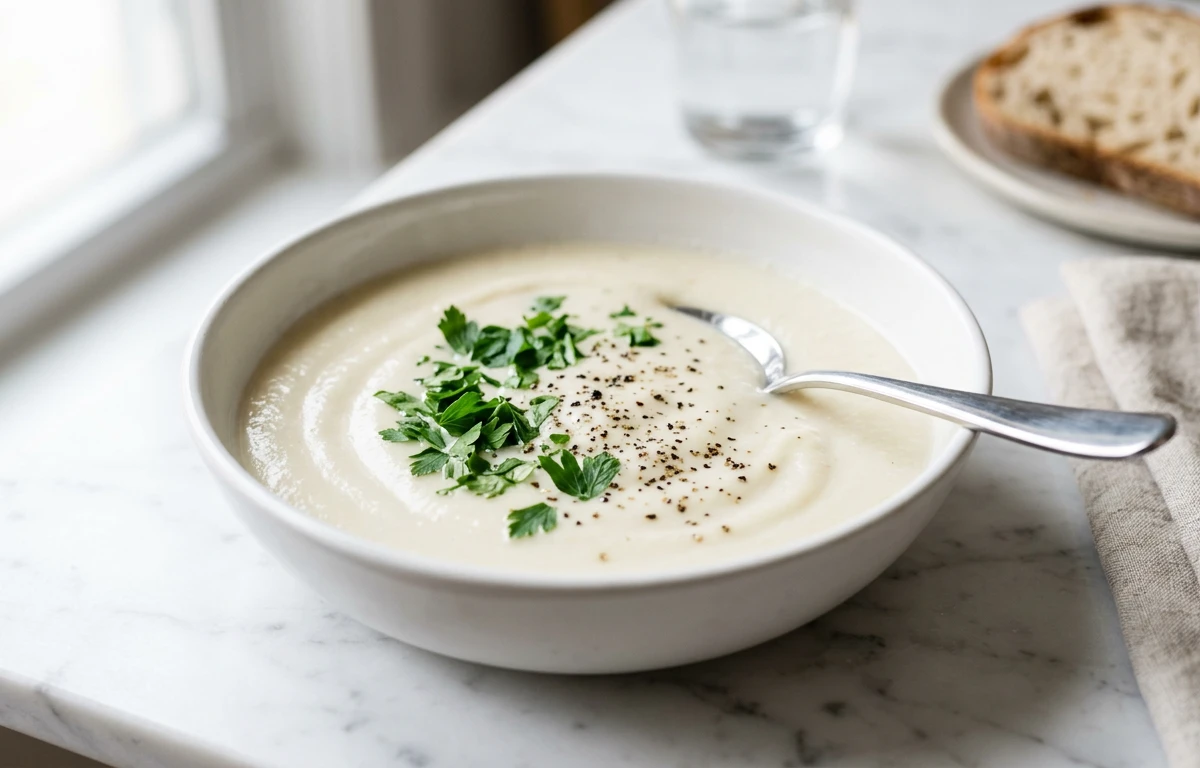
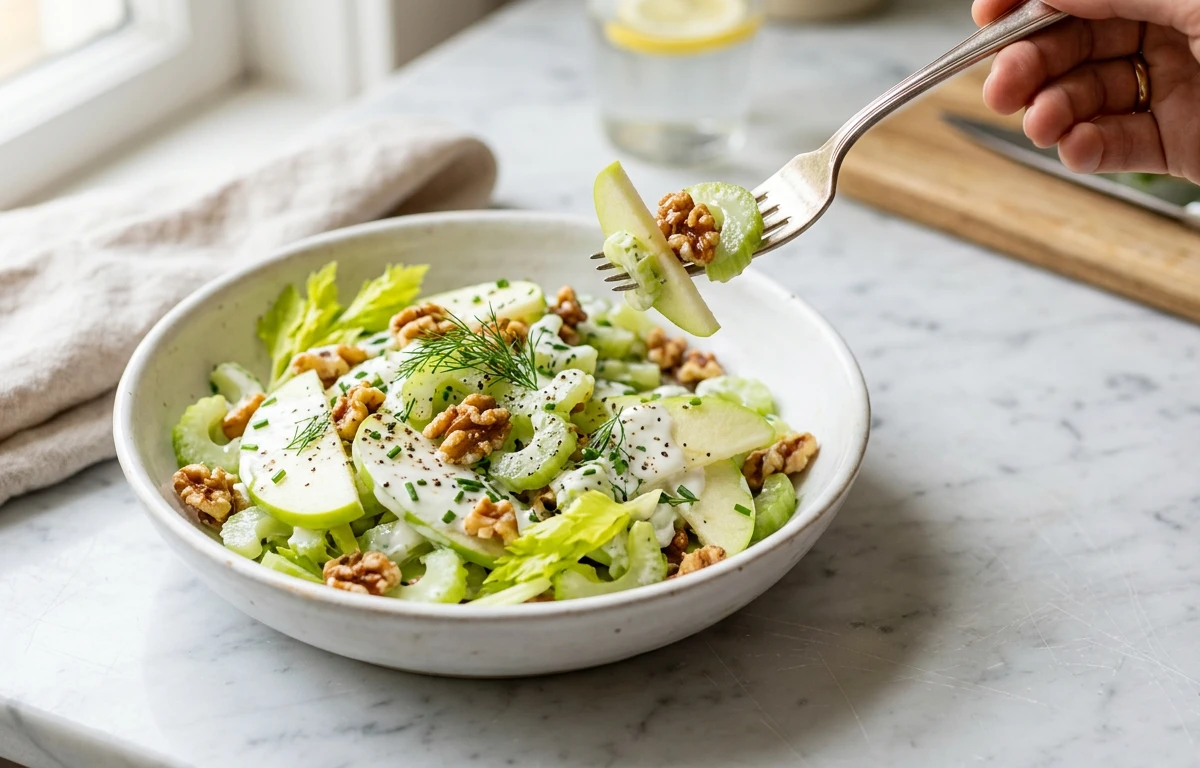
Three ways to eat it
Beyond just a raw stick, celery can be a star in simple, healthy dishes.
Want healthy snacks and meals planned for you — without the effort?
Our meal planner incorporates high-fiber, low-calorie foods like celery into a balanced week, with portions and macros already calculated and a single grocery list at the end.
Build my weekly plan →SOURCES & REFERENCES · 3
One more thing
Eating well is rarely about willpower. It’s about having a short list of dinners you actually want to eat. Pick two from this list. Make them next week. The rest will follow.
If you want these on autopilot, our weekly meal planner can drop the picks above into your calendar with one click and build a single grocery list from the merged ingredients.
FREQUENTLY ASKED QUESTIONS
Frequently asked questions
Is celery really a 'negative calorie' food?
Not technically. While it's incredibly low in calories (16 per 100g), your body uses only a fraction of those calories for digestion. So you still get a small net calorie gain, but it's so minimal that celery is an outstanding food for weight management.
Is celery juice good for you?
Eating whole celery is much better. Juicing removes the fiber, which is one of its main benefits for gut health and feeling full. You also concentrate the natural sodium and lose the satisfying crunch. It's not harmful, but it's far from a miracle cure.
Can you eat the leaves of celery?
Absolutely! Celery leaves are tender and have a more concentrated celery flavor. They are great chopped and used as an herb to finish soups, salads, or stocks. Don't throw them away.
Is celery good for people with diabetes?
Yes, it's an excellent choice. It's extremely low in carbohydrates and has a negligible effect on blood sugar, making it a safe and healthy vegetable to eat freely.
METHODOLOGY
How this article was created
Built using verified nutrition databases, culinary research, and traditional cooking knowledge — every claim is cross-referenced against the sources listed in the article.
· USDA data· Culinary research· Quality reviewed
Read our methodology →TRANSPARENCY
About this content
Articles are curated using trusted food databases (USDA FoodData Central, IFCT), culinary literature, and dietary guidelines, then structured by our editorial team for clarity, accuracy, and usefulness.
· Verified data sources· Culinary research· Quality reviewed
Read our editorial policy →RELATED RECIPES
Cook from this article
EXPLORE OUR MEALS
Meals that fit this article

AMERICAN · 1677 CAL
Almonds with Sliced Apple + supplement + iron
MEDITERRANEAN · 809 CAL
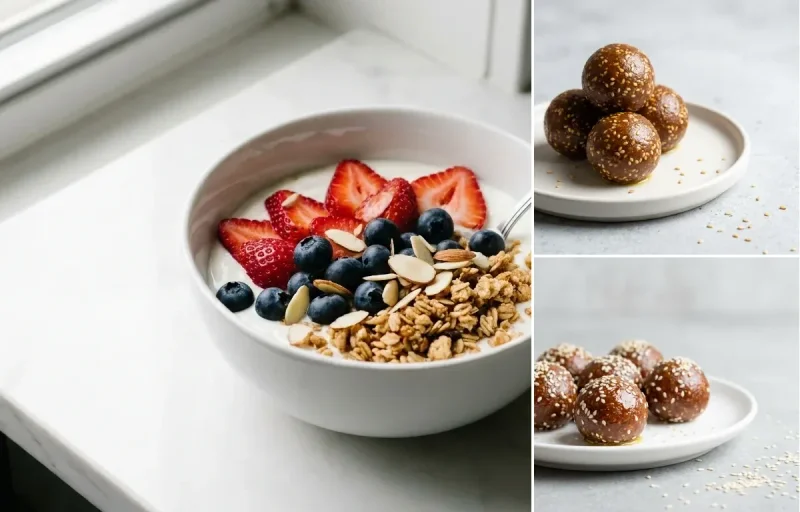
Greek Yogurt with Berries Almonds and Granola + supplement + iron

GENERAL_HEALTHY · 705 CAL
Banana with Peanut Butter Pregnancy + supplement + iron

MODERN · 982 CAL
Hummus with Crudits and Pita with Fresh Orange Snack + supplement + iron
TAGGED
KEEP READING