That beautiful, bitter purple leaf you often see in fancy salad mixes? That's radicchio, and it's time we gave it the attention it deserves. Many people are put off by its signature bitterness, but that's precisely where its magic lies. It's a signal of potent plant compounds that are incredibly good for you. Think of it not as a plain lettuce, but as a complex, crisp vegetable with character and a surprisingly gentle impact on your body.
↑ Radicchio's deep color is a sign of its antioxidant content.
The Beautiful, Bitter Truth
Radicchio is a type of chicory, and its defining feature is a pleasant, assertive bitterness. In a world of bland greens, radicchio stands out. That bitterness isn't a flaw; it's a feature, coming from a compound called lactucopicrin, which has been studied for its potential health effects. It's also what makes it such a brilliant counterpoint to sweet, salty, and fatty foods in the kitchen.
So, the first step is to stop wishing it tasted like iceberg lettuce. Embrace the complexity. When you do, you unlock a vegetable that's not only delicious but also incredibly low in calories and carbs while offering a unique set of nutrients.
IN ONE LINE
Embrace the bitterness: this vibrant, crunchy leaf is exceptionally low-calorie, low-carb, and packed with antioxidants that are great for your gut and overall health.
Radicchio nutrition facts
Here’s the nutritional profile for a 100-gram serving of raw radicchio, which is about one and a quarter cups, chopped.
The numbers are almost laughably small, and that's the point. With only 23 calories and 3.6 grams of net carbs, radicchio is what we call a 'free food' in dietetics — you can eat a lot of it for very little caloric cost. While it's not a powerhouse of macronutrients, its real value lies in the micronutrients and phytochemicals not listed on a standard label, like Vitamin K and anthocyanins.
Radicchio's glycemic index
Glycemic index (GI) measures how quickly a food raises blood sugar. For non-starchy vegetables like radicchio, the GI is so low it's rarely measured and considered negligible. With minimal carbohydrates and some fiber, it has virtually no impact on blood glucose levels, making it an exceptional choice for anyone managing blood sugar.
GLYCEMIC INDEX · RADICCHIO vs COMMON FOODS
Radicchio has a negligible glycemic impact
Radicchio
non-starchy
LOW
Apple
whole fruit
LOW
Watermelon
whole fruit
HIGH
White bread
refined
HIGH
SCALE 0–90
04590
How to make radicchio delicious
The trick to radicchio is managing its bitterness. You can lean into it, or you can tame it. Here are a few simple techniques.
01
Tame the bitterness.
Don't like the sharp bite? Soak the chopped leaves in ice water for 30 minutes. It mellows the flavor significantly.
02
Apply heat.
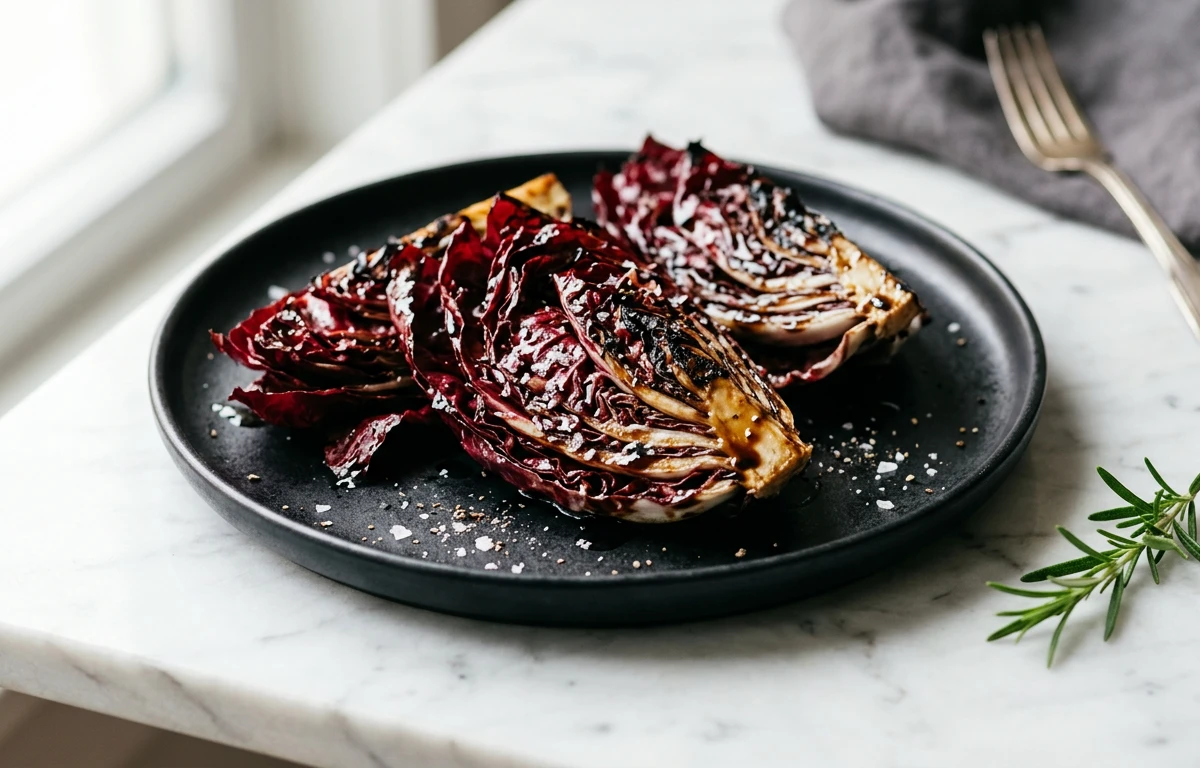
Grilling or roasting radicchio wedges transforms them. The bitterness recedes and a surprising sweetness comes forward. Drizzle with olive oil, salt, and pepper.
03
Shred it finely.
When using it raw in salads, slice it into thin ribbons. This distributes the flavor so you get a little bit of complexity in each bite, not one big bitter chunk.
04
Balance with fat, salt, or sweet.
This is key. Pair radicchio with cheese, nuts, balsamic vinegar, honey, or fruit. The contrast is what makes it so special.
What radicchio is good for
01
A major antioxidant source
Its deep red-purple color comes from anthocyanins, powerful antioxidants that help protect your cells from damage.
High
anthocyanins
02
Excellent for gut health
Radicchio is rich in inulin, a type of prebiotic fiber that feeds the beneficial bacteria in your gut, supporting a healthy microbiome.
Prebiotic
fiber
03
Supports weight management
At only 23 calories per 100 grams, its high water content and crisp texture help you feel full with virtually no caloric penalty.
23
calories
04
Great for bone health
Radicchio is loaded with Vitamin K, a crucial nutrient for directing calcium to your bones and supporting proper blood clotting.
>100%
Vit K DV
What to pair radicchio with
Radicchio's bitter edge is a gift in the kitchen. It cries out for bold partners that provide contrast. Think sweet, salty, and fatty.
Eat freely — or be mindful?
Three ways to eat it
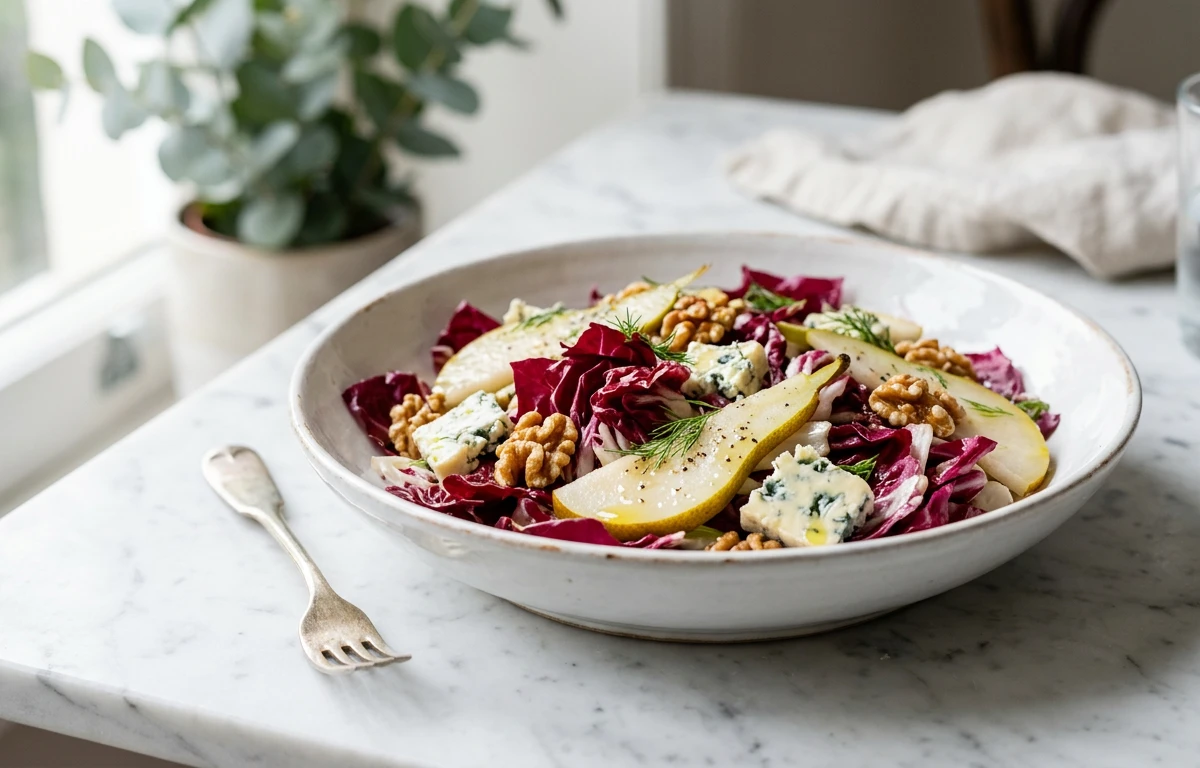
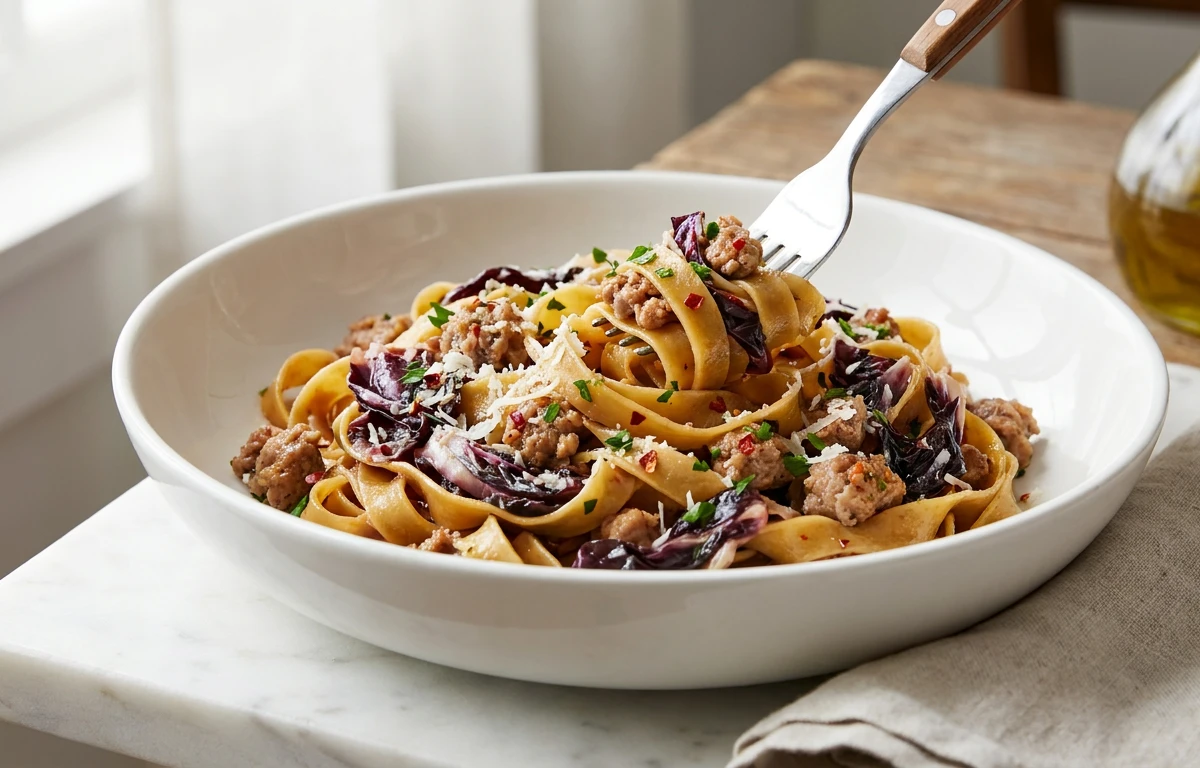
Ready to try it? Here are three simple ways to get radicchio on your plate, from raw and crunchy to warm and mellow.
Want more interesting vegetables in your week — without the planning?
Our meal planner can help you incorporate foods like radicchio into a balanced week, pairing them with the right ingredients for delicious, healthy meals. We do the calculations so you can just enjoy the food.
Build my weekly plan →SOURCES & REFERENCES · 3
One more thing
Eating well is rarely about willpower. It’s about having a short list of dinners you actually want to eat. Pick two from this list. Make them next week. The rest will follow.
If you want these on autopilot, our weekly meal planner can drop the picks above into your calendar with one click and build a single grocery list from the merged ingredients.
FREQUENTLY ASKED QUESTIONS
Frequently asked questions
Is radicchio just a type of red cabbage?
No, they're completely different plants. Radicchio is a member of the chicory family, related to endive, and has a distinct bitter flavor. Red cabbage is a brassica, related to broccoli, and is generally sweeter and crunchier.
How do you get the bitterness out of radicchio?
You can't remove it completely, but you can mellow it. The two best ways are to soak the leaves in ice-cold water for about 30 minutes, or to cook it. Grilling or roasting brings out its natural sweetness and reduces the bitter bite significantly.
Can you eat radicchio raw?
Absolutely. It's most commonly eaten raw in salads. The key is to slice it thinly and pair it with balancing flavors like sweet fruits (pear, orange), fatty nuts or cheeses (walnuts, gorgonzola), and a good vinaigrette.
Is radicchio good for keto?
Yes, it's one of the best vegetables for a ketogenic diet. It's extremely low in net carbohydrates (about 3.6g per 100g) and can be used to add bulk, crunch, and nutrients to meals without impacting ketosis.
METHODOLOGY
How this article was created
Built using verified nutrition databases, culinary research, and traditional cooking knowledge — every claim is cross-referenced against the sources listed in the article.
· USDA data· Culinary research· Quality reviewed
Read our methodology →TRANSPARENCY
About this content
Articles are curated using trusted food databases (USDA FoodData Central, IFCT), culinary literature, and dietary guidelines, then structured by our editorial team for clarity, accuracy, and usefulness.
· Verified data sources· Culinary research· Quality reviewed
Read our editorial policy →RELATED RECIPES
Cook from this article
EXPLORE OUR MEALS
Meals that fit this article

AMERICAN · 1677 CAL
Almonds with Sliced Apple + supplement + iron

MEDITERRANEAN · 809 CAL
Greek Yogurt with Berries Almonds and Granola + supplement + iron

GENERAL_HEALTHY · 705 CAL
Banana with Peanut Butter Pregnancy + supplement + iron

MODERN · 982 CAL
Hummus with Crudits and Pita with Fresh Orange Snack + supplement + iron
TAGGED
KEEP READING