The radish is one of the most underrated vegetables in the crisper drawer. We see it as a peppery garnish, a bit player in a salad. But that spicy crunch is a clue: there's more going on here than you think. For something that's mostly water, a radish packs a surprising amount of vitamin C, very few carbs, and a satisfying crispness for almost no calories. It's time we stopped slicing them thin and started seeing them as a proper snack.
↑ More than just a garnish — radishes are a low-calorie, low-carb nutritional bargain.
The crunchy cure for snack boredom
Let's be honest, snacking can get dull. You cycle through the same handful of nuts, the same piece of fruit. The radish is the pattern-breaker. It's crisp, it's peppery, and it's shockingly low in calories. That spicy kick comes from compounds called glucosinolates, the same family of molecules that give mustard and horseradish their bite. They're not just for flavor; they're part of what makes cruciferous vegetables like radishes so interesting to researchers.
But for everyday eating, the appeal is simpler: it's a vegetable you can eat like a piece of fruit, no cooking required, that delivers a satisfying crunch for almost zero nutritional cost.
IN ONE LINE
A crisp, low-calorie, low-carb vegetable that delivers a surprising amount of vitamin C and satisfying crunch for almost no calories.
Radish nutrition facts
Here's the nutritional profile for a 100-gram serving of raw radishes, which is about one cup of sliced radishes.
The numbers are almost comically small, which is the whole point. You get texture, volume, and a notable hit of vitamin C for a caloric load that barely registers. The 1.8 grams of net carbs (total carbs minus fiber) is why radishes are so popular on ketogenic and low-carb diets.
Radish glycemic index
Glycemic index (GI) measures how quickly a food raises blood sugar. A score under 55 is low. Non-starchy vegetables like radish, lettuce, and cucumber are so low in carbohydrates that their GI is generally not measured, or is considered to be negligible. They simply don't have enough sugar or starch to cause a meaningful blood sugar response.
For context, even a very low-GI fruit is significantly higher on the scale. A radish is one of the most blood-sugar-friendly foods you can eat.
GLYCEMIC INDEX · RADISH vs COMMON FOODS
Radish has a negligible effect on blood sugar
Radish
non-starchy veg
LOW
Cherries
whole fruit
LOW
Apple
whole fruit
LOW
Watermelon
whole fruit
HIGH
White bread
refined
HIGH
SCALE 0–90
04590
The smart way to eat them
You can do a lot more with a radish than just slice it onto a salad. Here are a few ways to get the most out of them.
01
Eat them whole and raw.
This is where you get the maximum crunch and peppery bite. Just wash them and eat them like an apple. A sprinkle of flaky salt is all they need.
02
Don't peel them.
The red skin is perfectly edible and contains nutrients. Just give them a good scrub.
03
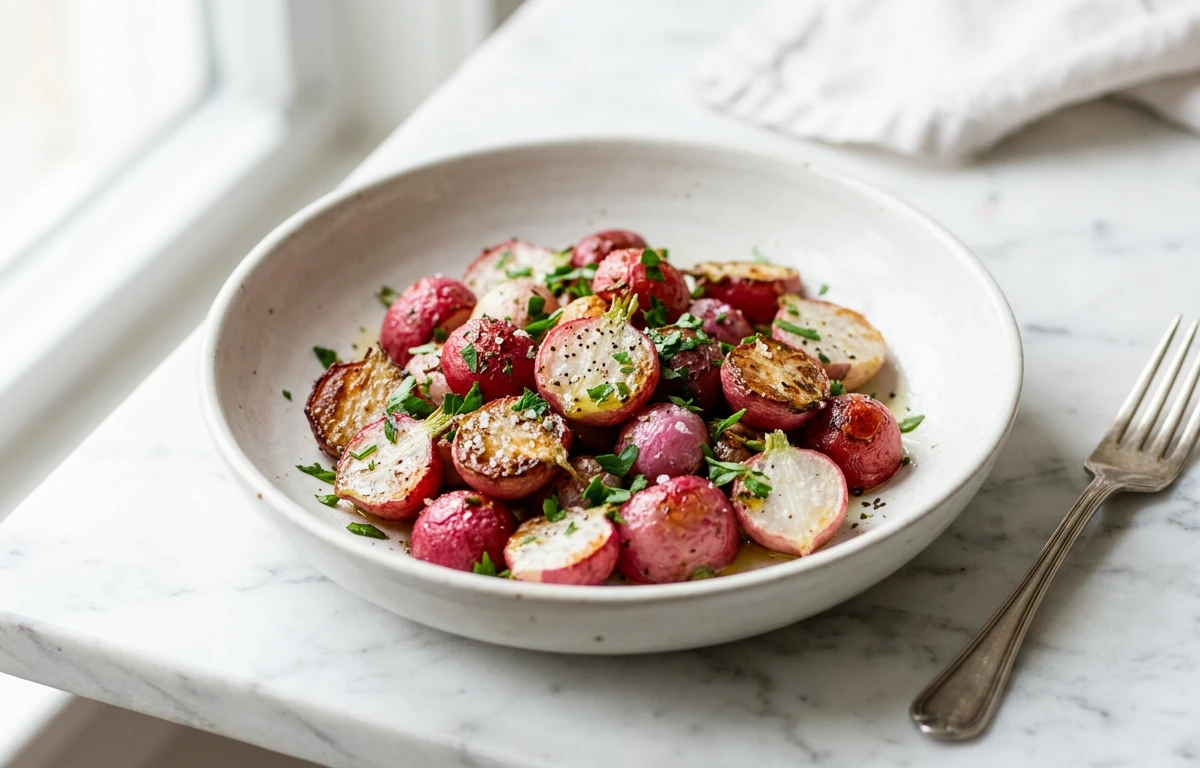
Try roasting them.
This is a game-changer. Roasting at a high heat (400°F / 200°C) with olive oil transforms them. The flesh becomes soft and juicy, and the peppery bite mellows into a surprising sweetness.
04
Use the greens.
Don't throw away the tops! Radish greens are edible and delicious. Sauté them with garlic like you would spinach, or blend them into a pesto.
05
Pair with fat.
The classic French appetizer of radishes with butter and salt exists for a reason. The creamy fat balances the radish's sharp bite perfectly.
What radishes are good for
01
Effortless weight management
At just 16 calories a cup, radishes offer crunch, volume, and hydration, helping you feel full for a tiny caloric cost.
16
calories
02
Excellent for blood sugar
With almost no digestible carbs, radishes have a negligible effect on blood glucose, making them a safe and healthy choice for diabetics.
<2g
net carbs
03
A surprising vitamin C boost
A single 100-gram serving provides 16% of your daily vitamin C, which is crucial for immune function and skin health.
16%
vit C DV
04
Hydration and crunch
Radishes are over 95% water. Eating them is a crunchy, satisfying way to contribute to your daily fluid intake.
>95%
water
05
Supports low-carb & keto diets
Their extremely low carbohydrate content makes them an ideal vegetable for bulking up meals on a keto or low-carb plan without moving the carb needle.
Keto
friendly
What to pair radishes with
The peppery bite of a radish is its superpower. It cuts through richness and adds a fresh, clean contrast. Pair it with fats and creams for best effect.
Eat freely — or be mindful?
Three ways to eat them
Move beyond the salad bowl with these three simple preparations that highlight the radish's versatility.

Want more smart vegetable swaps worked into your week?
Our meal planner helps you discover versatile, low-calorie vegetables like radishes and pairs them with protein and fibre for steady energy, with portions and macros already calculated.
Build my weekly plan →This guide is general information, not medical advice. If you have a health condition or take medication, consult your doctor or a registered dietitian before making big changes to your diet.
SOURCES & REFERENCES · 3
One more thing
Eating well is rarely about willpower. It’s about having a short list of dinners you actually want to eat. Pick two from this list. Make them next week. The rest will follow.
If you want these on autopilot, our weekly meal planner can drop the picks above into your calendar with one click and build a single grocery list from the merged ingredients.
FREQUENTLY ASKED QUESTIONS
Frequently asked questions
Are radishes good for weight loss?
Yes, they are excellent for weight loss. They are very low in calories (16 per 100g), high in water, and provide a satisfying crunch that can help curb cravings for less healthy snacks.
Are radishes keto-friendly?
Absolutely. With only 1.8 grams of net carbs per 100-gram serving, radishes are a perfect vegetable for a ketogenic diet. You can eat them raw, roasted, or use them as a low-carb stand-in for potatoes in some recipes.
Is it better to eat radishes raw or cooked?
Both are great! Raw radishes have a peppery bite and maximum crunch, and retain all of their vitamin C. Cooked (especially roasted) radishes become milder, sweeter, and juicy. It just depends on the flavor and texture you're looking for.
Can you eat the green tops of radishes?
Yes, and you should! Radish greens are packed with nutrients and have a peppery flavor similar to arugula. They can be sautéed with garlic, blended into pesto, or added to soups and stews.
METHODOLOGY
How this article was created
Built using verified nutrition databases, culinary research, and traditional cooking knowledge — every claim is cross-referenced against the sources listed in the article.
· USDA data· Culinary research· Quality reviewed
Read our methodology →TRANSPARENCY
About this content
Articles are curated using trusted food databases (USDA FoodData Central, IFCT), culinary literature, and dietary guidelines, then structured by our editorial team for clarity, accuracy, and usefulness.
· Verified data sources· Culinary research· Quality reviewed
Read our editorial policy →RELATED RECIPES
Cook from this article
EXPLORE OUR MEALS
Meals that fit this article

AMERICAN · 1677 CAL
Almonds with Sliced Apple + supplement + iron

MEDITERRANEAN · 809 CAL
Greek Yogurt with Berries Almonds and Granola + supplement + iron

GENERAL_HEALTHY · 705 CAL
Banana with Peanut Butter Pregnancy + supplement + iron

MODERN · 982 CAL
Hummus with Crudits and Pita with Fresh Orange Snack + supplement + iron
TAGGED
KEEP READING