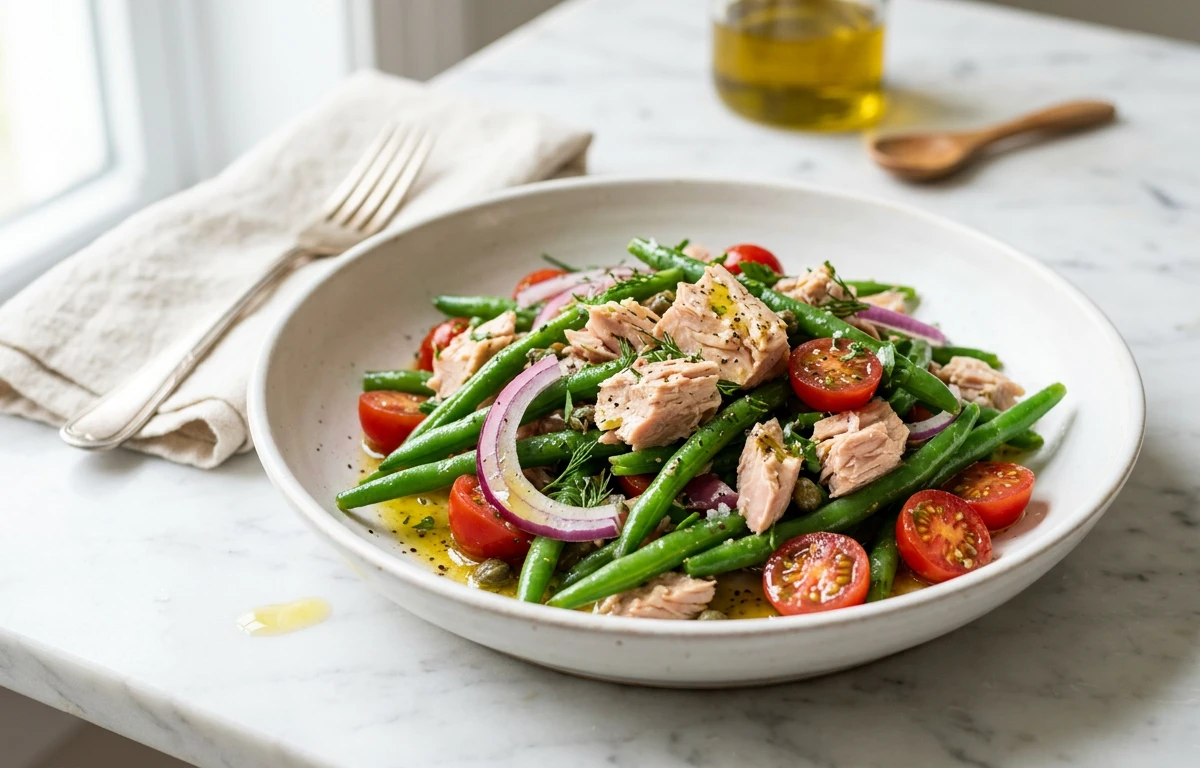
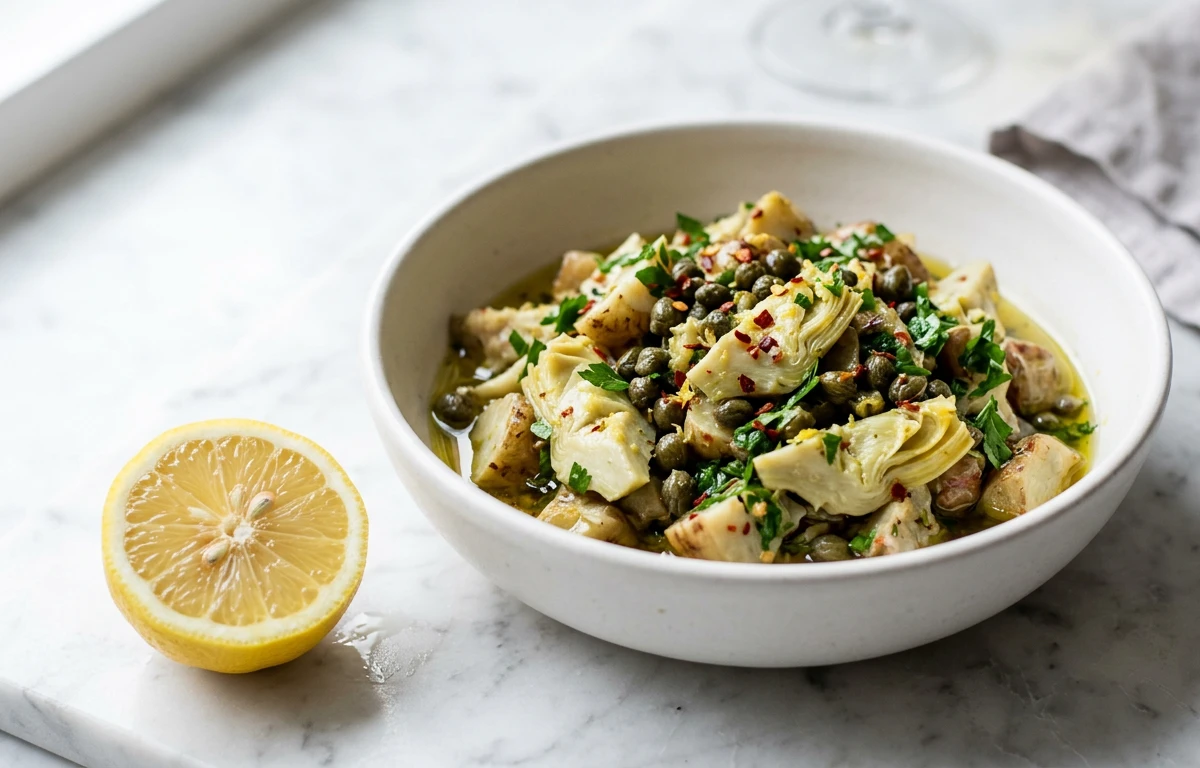
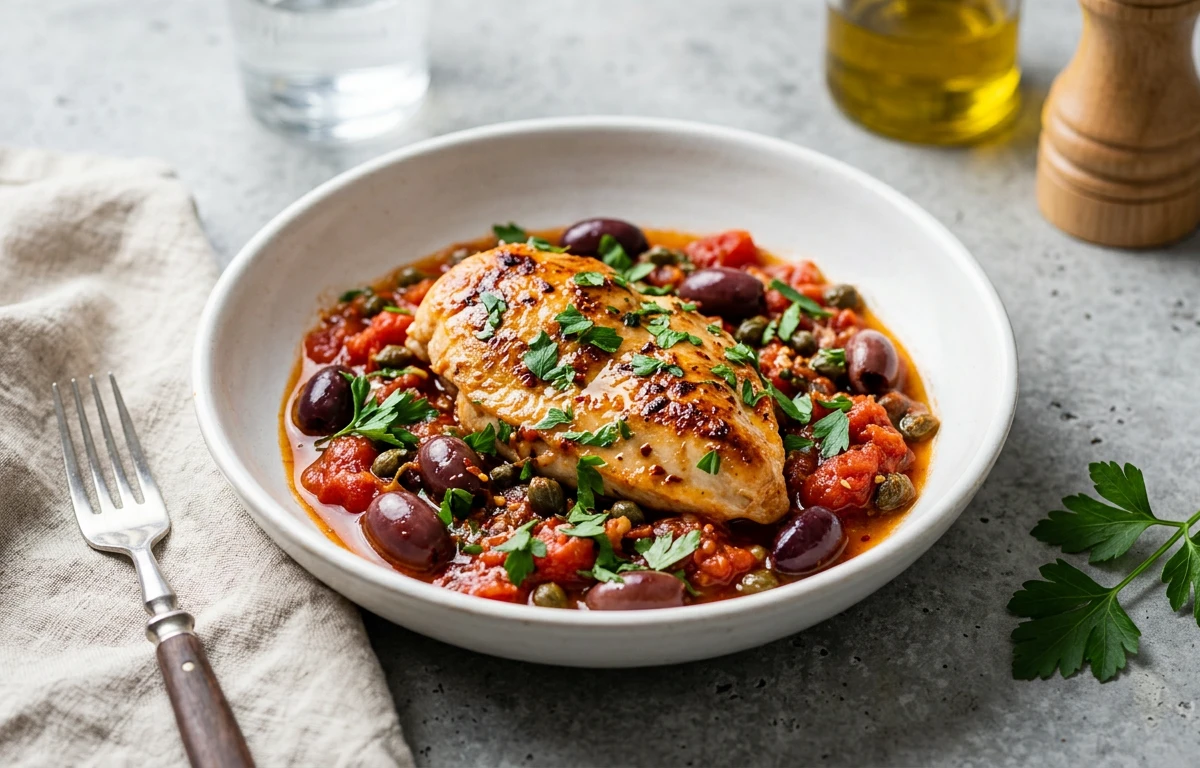
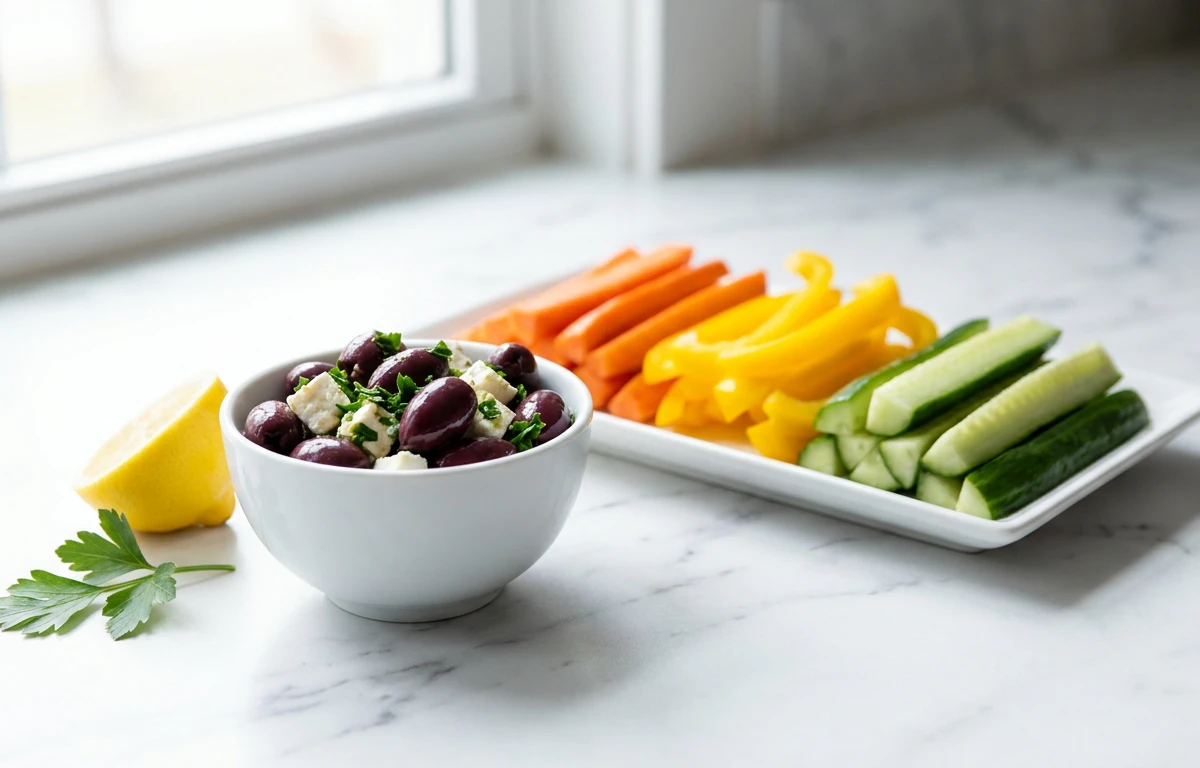
Other10 recipes
capers.
VegetarianVeganGluten-freeDairy-freeNut-freePeanut-freeSoy-freeEgg-freeShellfish-freeHoney-freeAlcohol-freeFermented
ALSO KNOWN AS
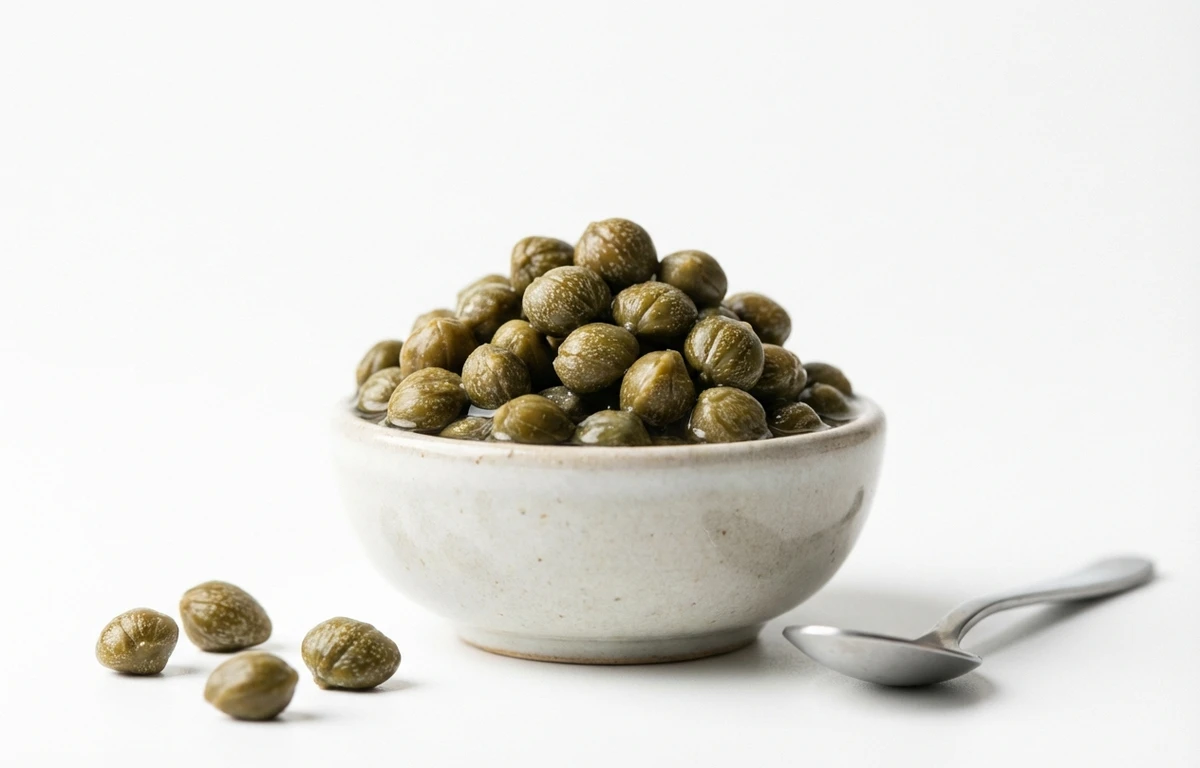
caper budspickled capersalcaparraskabranonpareil capersbrined capers
SERVING
CALORIES
37
PROTEIN
2.4g
CARBS
4.9g
FAT
0.90g
FIBER
3.2g
NUTRITION PROFILE · per 100 g
Everything in this ingredient.
MACRONUTRIENTS
Calories37.3kcal—
Protein2.4g5%
Carbohydrates4.9g2%
Fiber3.2g11%
Sugar0.40g1%
Total fat0.90g1%
Saturated fat0.20g1%
Trans fat0g—
Cholesterol0mg0%
Water83.8g—
MINERALS
Sodium2348mg102%
Potassium40mg1%
Calcium40mg3%
Iron1.7mg9%
Magnesium33mg8%
Phosphorus10mg1%
Zinc0.30mg3%
Copper0.40mg44%
Manganese0.10mg4%
Selenium0.20µg0%
VITAMINS
Vitamin A7.0µg1%
Vitamin C4.3mg5%
Vitamin D0µg0%
Vitamin E0.90mg6%
Vitamin K24.6µg21%
Thiamin (B1)0.02mg2%
Riboflavin (B2)0.14mg11%
Niacin (B3)0.65mg4%
Pantothenic acid (B5)0.03mg1%
Vitamin B60.02mg1%
Folate (B9)23µg6%
Vitamin B120µg0%
%DV based on a 2,000 cal diet. Source: USDA FoodData Central. A dash in the %DV column means there’s no established Daily Value for that nutrient.
MEASUREMENT CONVERSIONS
How much is what.
1 cup140g
1 tablespoon8.8g
1 teaspoon2.9g
1 oz28.4g
1 lb453.6g
1 ml0.6g
1 liter592g
1 piece0.2g
HEALTH BENEFITS
Why eat it.
- ✓Rich in quercetin and kaempferol antioxidants
- ✓Low in calories for high flavor impact
- ✓Good source of Vitamin K for bone health
- ✓Contains fiber which aids digestion
- ✓May help in managing blood sugar levels
COOKING TIPS
In the kitchen.
- 1Rinse under cold water before use to remove excess salt
- 2Add toward the end of cooking to preserve their delicate flavor
- 3Mash into sauces or dressings for a salty, tangy punch
STORAGE
Keep it fresh.
- Keep submerged in their brine to prevent drying out
- Store in the refrigerator after opening
- Can last up to 9-12 months if properly sealed and chilled
FAQ
Frequently asked questions.
How long do capers last after opening?
When kept in their brine and refrigerated, capers can last for 9 to 12 months.
What is a good substitute for capers?
Chopped green olives or finely diced pickles (cornichons) are the best substitutes for their salty, tangy profile.
Are capers a vegetable?
Capers are actually the unripened flower buds of the Capparis spinosa bush.
Why are capers so salty?
They are cured in a heavy salt brine or packed in dry salt to preserve them and develop their flavor.
What is the difference between capers and caper berries?
Capers are the small buds, while caper berries are the fruit that grows after the bud has flowered; berries are larger and contain seeds.
How do I choose the best capers?
Look for 'nonpareil' capers, which are the smallest and most prized for their delicate texture and concentrated flavor.
Can capers be frozen?
It is not recommended as freezing changes their texture, making them mushy once thawed.
Do I need to cook capers?
No, they can be eaten straight from the jar, though they are often added to warm dishes like pasta or chicken piccata.
Are capers healthy?
They are very low in calories but extremely high in sodium; use them sparingly if you are monitoring salt intake.
RECIPES
Cook with capers.
10 recipes · sorted by what’s quick