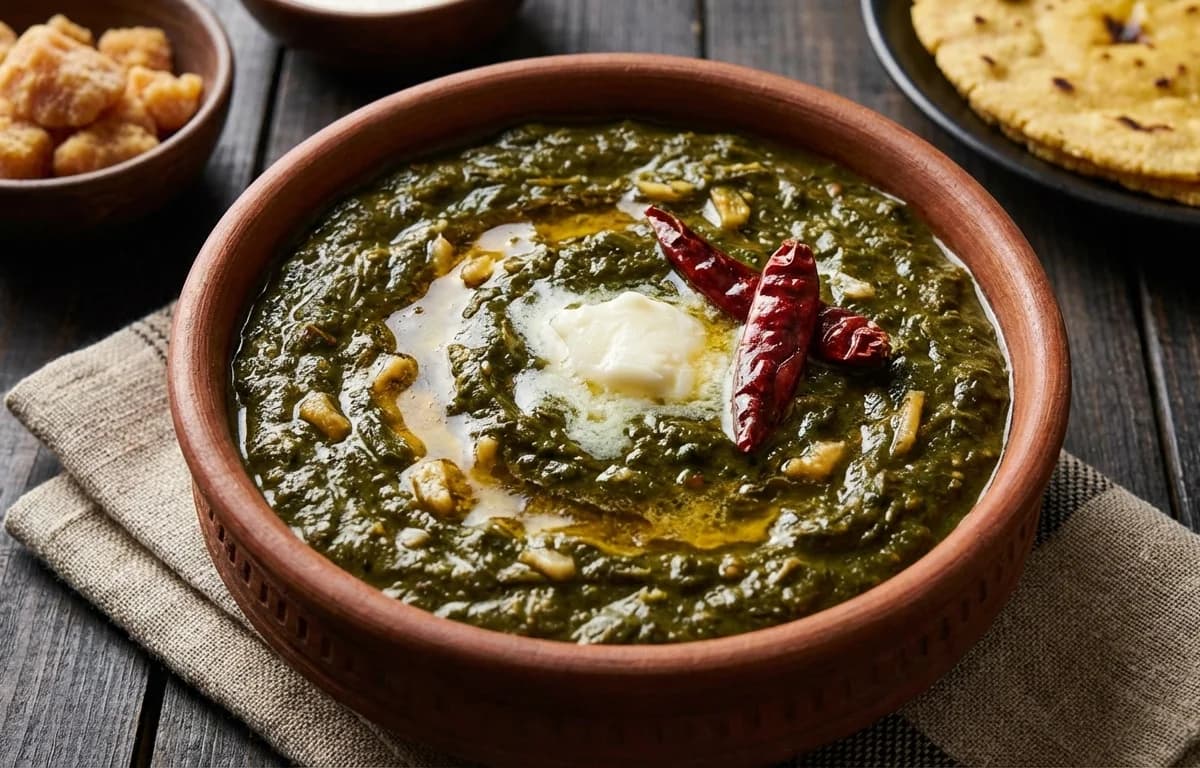
A classic Punjabi winter delicacy made from a blend of mustard greens, spinach, and bathua. This slow-cooked, creamy green curry is best enjoyed with Makki di Roti and a generous dollop of white butter.
Prep25 min
Cook60 min
Servings4
Serving size: 1 serving
389cal
9gprotein
27gcarbs
29g
Ingredients
500 g Mustard Greens (one large bunch, tough stems removed)
250 g Spinach (one medium bunch)
250 g Bathua (optional but highly recommended for authentic taste)
A classic Punjabi flatbread made from maize flour, with a rustic texture and slightly sweet corn flavor. Traditionally served hot with Sarson ka Saag and a generous dollop of butter, it's a winter staple in North India.
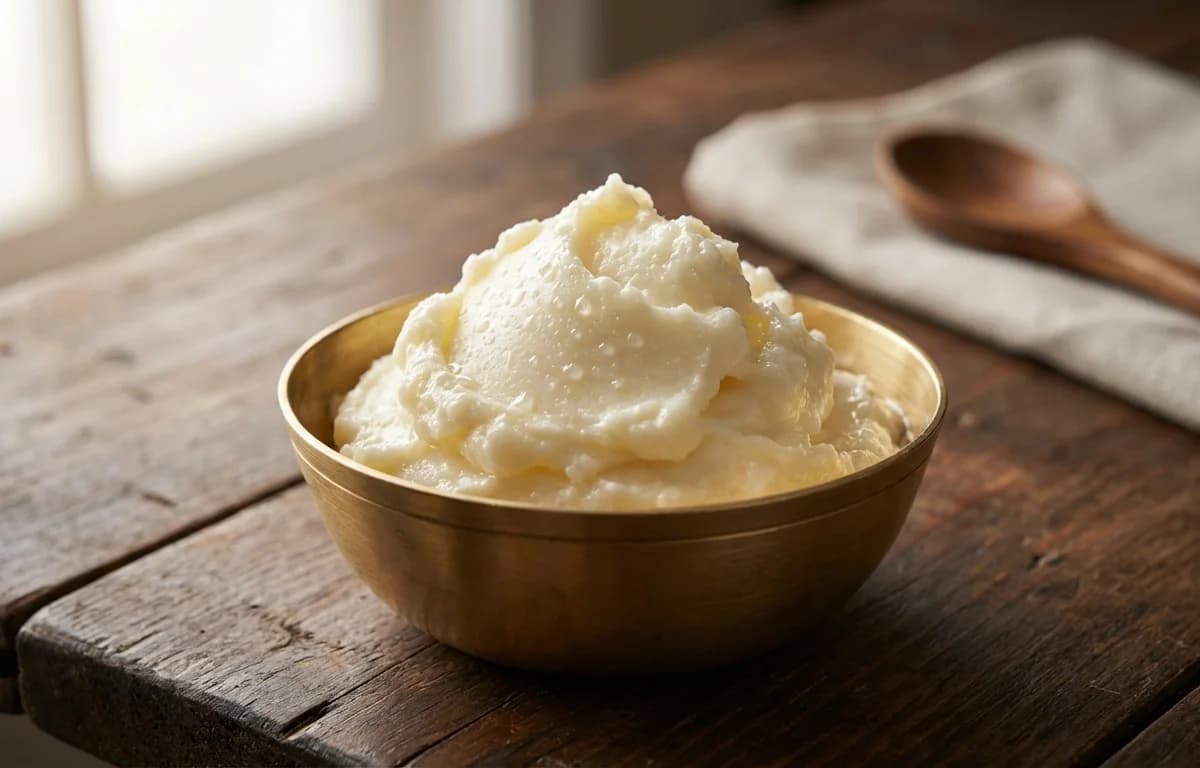
Creamy, fresh homemade butter made the traditional Indian way. This unsalted white butter, or 'safed makkhan', is rich, pure, and perfect on parathas or rotis. Made by churning full-fat cream, it separates into glorious butter and nutritious buttermilk.
A warm, comforting Indian tea sweetened with earthy jaggery instead of sugar. Spiced with ginger and cardamom, it's the perfect cozy beverage for a chilly day, but be careful not to curdle the milk!
Prep5 min
Cook10 min
Servings4
Serving size: 1 serving
About Sarson da Saag, Makki di Roti, White Butter and Gur ki Chai
Iron-boosting Sarson da Saag with Makki di Roti & white butter. A fiber-rich, soul-satisfying homestyle meal!
This punjabi dish is perfect for dinner. With 1047.31 calories and 18.87g of protein per serving, it's a nutritious choice for your meal plan.
Other Cuisines to Explore
Discover authentic meals from cuisines around the world.
3 g Red Chili Powder (1 tsp, Kashmiri or Deggi Mirch recommended)
9 g Salt (1.5 tsp, adjust to taste)
2 g Dried Red Chili (2 whole chilies for final tempering)
1 g Asafoetida (1/4 tsp, also known as Hing)
240 ml Water (1 cup, for pressure cooking)
60 g White Butter (for serving, optional)
Instructions
1
Prepare the Greens
Trim and discard the thick, tough lower stems of the mustard greens. Keep the tender stems and leaves.
Wash the mustard greens, spinach, and bathua thoroughly in a large bowl of water 2-3 times to remove all grit and dirt.
Roughly chop all the washed and drained greens.
2
Pressure Cook the Greens
Place the chopped greens in a 3-5 liter pressure cooker.
Add half of the chopped ginger, half of the chopped garlic, slit green chilies, 1 tsp of salt, and 1 cup of water.
Secure the lid and pressure cook on medium heat for 4-5 whistles, or for about 15-20 minutes, until the greens are completely soft and wilted.
3
Blend and Thicken the Saag
Allow the pressure to release naturally. Open the cooker.
Using an immersion blender, blend the cooked greens directly in the cooker to a coarse, rustic paste. Avoid making a smooth puree for authentic texture.
Place the cooker back on low heat. In a small bowl, mix the maize flour with 1/4 cup of water to create a smooth, lump-free slurry.
Gradually pour the slurry into the saag, stirring continuously to prevent lumps from forming.
Simmer the saag on low heat for 20-25 minutes, stirring every few minutes. This slow cooking process is crucial to cook the maize flour and develop a creamy consistency.
4
Prepare the Masala (Tadka)
While the saag simmers, heat 2 tbsp of ghee in a separate pan (kadai) over medium heat.
Add the remaining chopped ginger and garlic. Sauté for about a minute until fragrant.
Add the finely chopped onions and cook until they turn soft and golden brown, which takes about 7-8 minutes.
Stir in the tomato puree, turmeric powder, and red chili powder. Cook this masala until the ghee begins to separate from the mixture, about 5-6 minutes.
5
Combine and Finish
Pour the prepared masala into the simmering saag. Mix thoroughly to combine.
Taste and adjust the seasoning, adding the remaining 1/2 tsp of salt if needed.
Let the saag simmer for another 5-10 minutes, allowing the flavors to meld together beautifully.
6
Final Tempering and Serving
Just before serving, prepare the final tempering. Heat the remaining 2 tbsp of ghee in a small tadka pan.
Once the ghee is hot, add the asafoetida and the whole dried red chilies. Sizzle for 20-30 seconds until the chilies darken slightly.
Pour this sizzling tempering over the hot saag.
Serve immediately with Makki di Roti, jaggery, and a generous dollop of white butter.
345cal
4gprotein
48gcarbs
16gfat
Ingredients
2 cup Makki ka Atta (Also known as yellow maize flour)
1 tsp Ajwain (Also known as carom seeds)
0.75 tsp Salt (Adjust to taste)
1.5 cup Hot Water (Use as needed for kneading)
4 tbsp Ghee (For cooking and serving)
Instructions
1
Prepare the Dough
In a large mixing bowl (parat), combine the makki ka atta, ajwain, and salt. Mix well.
Gradually pour in hot water, a little at a time, using a spoon to mix the flour until it forms a crumbly mixture.
Once the mixture is cool enough to touch, begin kneading. Use the heel of your palm to push and press the dough for 5-7 minutes until it becomes smooth, soft, and pliable. If it feels dry, add a teaspoon of hot water.
Cover the dough with a damp cloth and let it rest for 15 minutes. This helps the flour absorb the water properly.
2
Shape the Rotis
After resting, knead the dough again for a minute. Divide it into 8 equal-sized balls.
Take one ball and flatten it slightly. Place it on a piece of parchment paper or a greased plastic sheet.
Using your fingertips and palm, gently pat and press the dough outwards to form a circle about 5-6 inches in diameter and about 1/4 inch thick. Alternatively, cover with another sheet of plastic and use a rolling pin very lightly.
Don't worry about perfectly round shapes or cracked edges; this rustic appearance is characteristic of Makki di Roti.
3
Cook the Rotis
Heat a tawa (flat griddle) over medium heat. A cast-iron tawa works best.
Carefully lift the shaped roti from the parchment paper and place it onto the hot tawa.
Cook for about 1-2 minutes on the first side, until you see the color change slightly and small bubbles appear.
Flip the roti. Apply about 1/2 teaspoon of ghee on the semi-cooked side.
After another minute, flip it again. Apply ghee to the other side.
Gently press the roti with a spatula, especially around the edges, and cook for another 2-3 minutes, flipping occasionally, until both sides have golden-brown spots and it's cooked through.
Repeat the process for all the remaining dough balls.
4
Serve Immediately
Serve the Makki di Roti hot, straight from the tawa. Top with a dollop of white butter (makhan) or more ghee.
It pairs perfectly with Sarson ka Saag and a side of jaggery (gur) and onions.
Ensure the malai (heavy cream) is well-chilled. For best results, also chill the large bowl and the whisk attachment of your stand mixer (or beaters for a hand mixer) for 15-20 minutes in the refrigerator.
Place the chilled malai into the cold bowl.
2
Begin Churning
Start churning the malai on a low speed for 2 minutes to prevent splashing. Gradually increase the speed to medium-high.
Continue churning for 5-7 minutes. The cream will first thicken into a whipped cream consistency with soft peaks, then progress to stiff peaks.
3
Watch for Separation
Keep churning for another 5-8 minutes. The mixture will start to look grainy and curdled. This is the sign that the butterfat is separating from the liquid.
Suddenly, you will see a clear separation: yellowish, lumpy solids (butter) and a thin, milky liquid (buttermilk).
4
Consolidate the Butter
Once separated, reduce the mixer speed to low and pour in 1 cup of ice-cold water. This helps the butter firm up and separate completely.
Mix on low for another 30-60 seconds. The butter will clump together into one large mass.
5
Wash the Butter
Turn off the mixer. Pour the liquid buttermilk into a separate container to save for other uses. Use a spatula to press the butter against the side of the bowl to squeeze out more buttermilk.
Gather the butter into a ball. Add the remaining 2 cups of ice-cold water and the ice cubes to the bowl.
Using your clean hands or a spatula, gently knead and press the butter ball under the ice water. The water will become cloudy. Discard the water and repeat this washing process 2-3 times until the water runs clear. This step is crucial for removing all buttermilk, which extends the butter's shelf life.
6
Shape and Store
Once washed, press the butter firmly to squeeze out any remaining water.
Shape the butter into a block, log, or small balls as desired.
Store in an airtight container in the refrigerator for up to 2 weeks. For longer storage, you can freeze it for up to 3 months.
2 cup Whole Milk (Full-fat milk provides the best creamy texture.)
4 tbsp Jaggery (Use powdered or finely grated jaggery for best results.)
4 tsp Black Tea Leaves (Assam or CTC (Crush, Tear, Curl) tea works best.)
1.5 inch Ginger (Freshly grated or crushed.)
4 pcs Green Cardamom Pods (Lightly crushed to release flavor.)
1 inch Cinnamon Stick
4 pcs Cloves
Instructions
1
In a medium saucepan, combine 2 cups of water, grated ginger, crushed cardamom pods, cinnamon stick, and cloves. Bring the mixture to a rolling boil over medium-high heat and let it boil for 2-3 minutes to infuse the water with the spices.
2
Add the black tea leaves to the boiling spice water. Reduce the heat to low and simmer for 2 minutes. This step develops the color and flavor of the tea.
3
Pour in 2 cups of milk and increase the heat to medium. Allow the chai to come to a boil, watching it closely to prevent it from overflowing. As soon as it starts to rise, reduce the heat to low and simmer for another 1-2 minutes to thicken slightly.
4
Turn off the heat completely. Let the saucepan sit for 60-90 seconds until it stops bubbling. This is the most critical step to prevent the milk from curdling when jaggery is added.
5
Add the grated or powdered jaggery to the saucepan. Stir gently with a spoon until the jaggery is fully dissolved.
6
Using a fine-mesh tea strainer, pour the hot chai into serving cups. Serve immediately and enjoy.