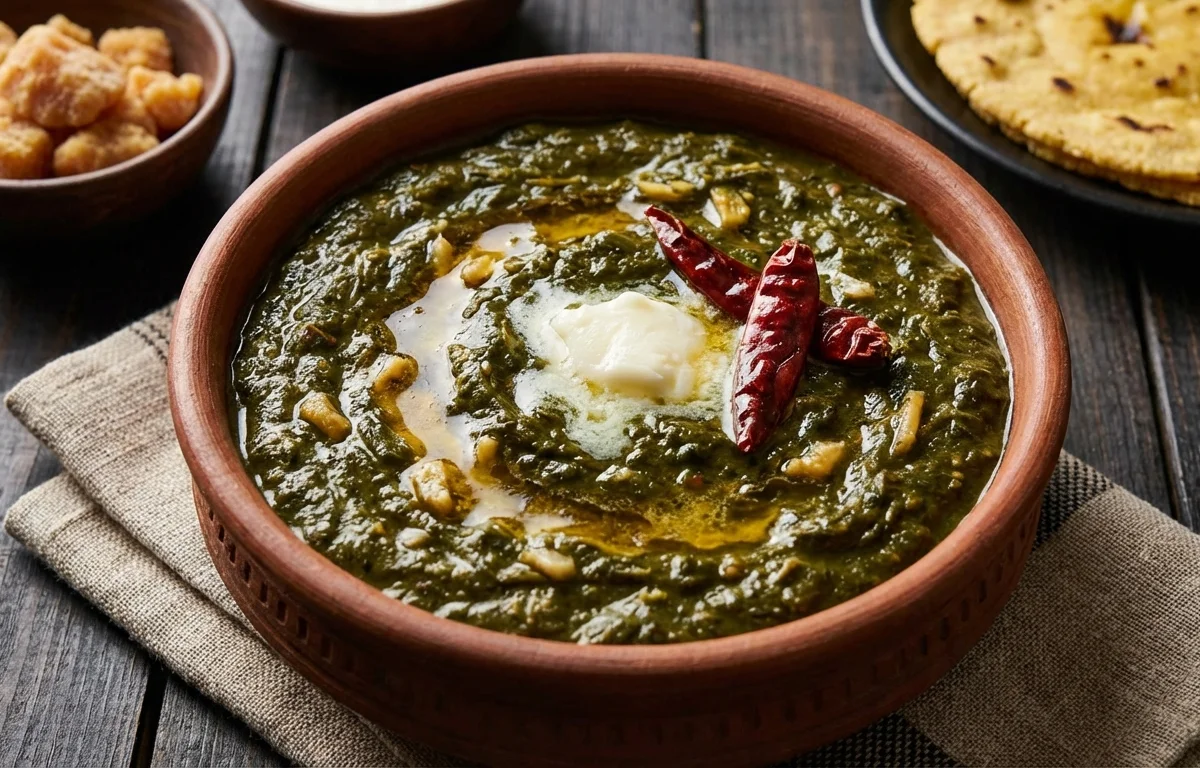
Sarson da Saag
A rustic Punjabi winter favorite made with mustard greens, spinach, and bathua, slowly cooked until silky and deeply savory. A little cornmeal gives it body, while ginger, garlic, and green chili keep the flavor bright and warming.
For 4 servings
- prep · ~20 min
Prep the greens and aromatics.
1.Wash mustard greens, spinach, and bathua very well to remove any grit.2.Trim the thick stems from the mustard greens and roughly chop all the greens.3.Chop the onion, tomatoes, ginger, and garlic.4.Slit the green chilies.TIPGrit hides in leafy greens, so rinse them in several changes of water. - boil · ~30 min
Cook the greens until soft.
1.Add mustard greens, spinach, bathua, green chilies, turmeric powder, salt, and water to a large pot.2.Bring to a boil over medium-high heat.3.Lower the heat, cover loosely, and cook until the greens are very soft and wilted.4.Stir once or twice during cooking so the greens cook evenly. - mix · ~5 min
Mash the cooked greens.
Lightly cool the greens, then mash them with a hand masher or blend briefly for a coarse texture. Stir in the makki ka atta and mix well so it thickens the saag as it cooks.
TIPKeep the texture slightly coarse for an authentic village-style saag. - simmer · ~15 min
Slow cook the saag.
Return the mashed greens to low heat and cook for 12 to 15 minutes, stirring often, until the cornmeal loses its raw taste and the saag turns thick and silky.
- temper · ~10 min
Make the ghee tempering.
1.Heat ghee in a pan over medium heat.2.Add the chopped onion and cook until light golden.3.Add ginger and garlic, then sauté until fragrant.4.Add tomato and cook until soft and jammy.5.Add red chili powder and mix for a few seconds.TIPKeep the heat medium once the chili powder goes in so it colors the ghee without burning. - assemble · ~5 min
Combine the tempering with the saag.
Pour the hot onion-tomato tempering into the simmering saag and mix well. Cook for 5 more minutes so the flavors come together.
- serve
Serve the sarson da saag hot.
What to keep in mind.
7 tips from the recipe — small details that make a real difference to the final dish.
- 1Wash the greens in several bowls of water, not just under the tap, because mustard greens and bathua often hold fine grit.
- 2Do not over-blend the cooked greens; a slightly coarse mash gives sarson da saag its traditional rustic texture.
- 3Stir the makki ka atta in only after the greens are mashed so it disperses evenly and does not form lumps.
- 4Simmer the saag gently after adding cornmeal until the raw flour smell disappears; that is the cue it is properly cooked.
- 5Cook the tomato in the ghee tempering until it turns jammy and the fat starts to separate for a fuller, sweeter finish.
- 6If the saag thickens too much as it sits, loosen it with a splash of hot water while reheating and simmer briefly.
- 7Sarson da saag tastes even better the next day after the greens and tempering have had time to meld.
Adapt it for your goals.
Vegan
Replace ghee with mustard oil or a neutral oil for a plant-based version that still keeps the saag rich and aromatic.
low spiceLow-spice
Use fewer green chilies and skip the red chili powder if you want the earthy flavor of the greens to stay front and center.
no bathuaNo-bathua
If bathua is unavailable, increase spinach slightly; the saag will be milder and less earthy but still delicious.
smokySmoky
Use a little mustard oil in the tempering or add a touch of roasted garlic for a deeper, more robust Punjabi-style finish.
Why this is on our healthy list.
Leafy Green Richness
Mustard greens, spinach, and bathua bring a wide mix of vitamins, minerals, and plant compounds to this winter dish.
Good Source of Fiber
The blend of greens, onion, and tomato makes the saag naturally fiber-rich, which helps make it satisfying.
Warming Aromatics
Ginger, garlic, and green chili add bold flavor along with beneficial plant compounds commonly valued in traditional home cooking.
Frequently asked questions
Yes. You can increase the spinach or mustard greens instead. Bathua adds earthiness, but the saag will still work well without it.



.webp)