Makki di Roti
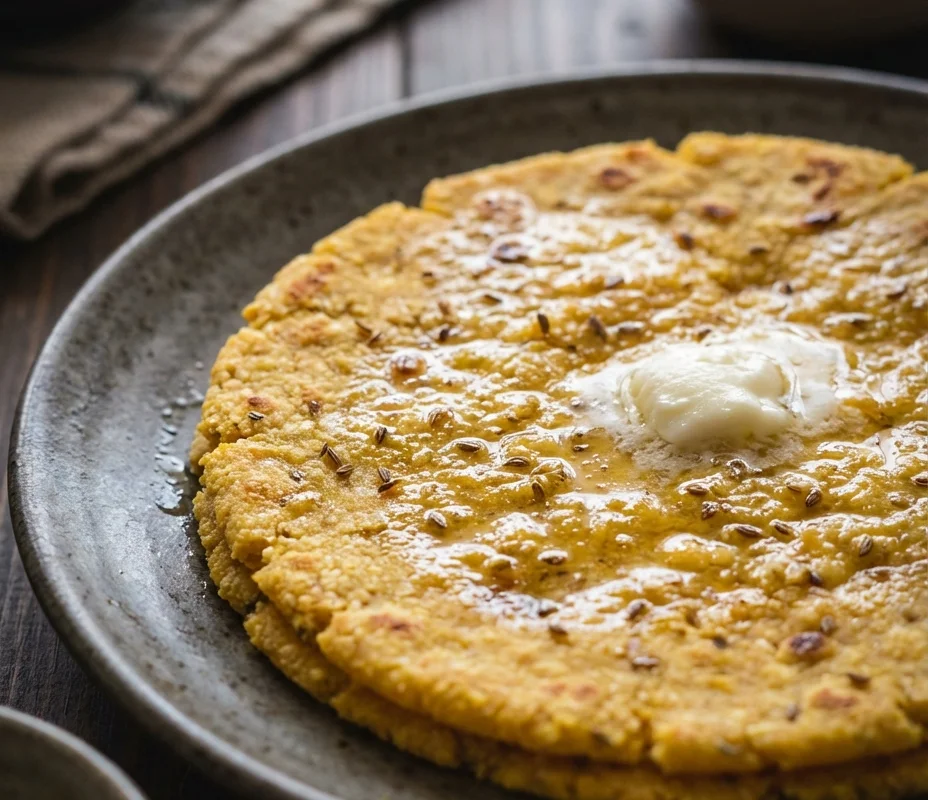
Rustic Punjabi flatbreads made with cornmeal, warm water, and a little salt. These soft, hearty rotis have a gentle earthy flavor and are best served hot with sarson ka saag and a dab of ghee.
For 4 servings
- mix
Mix the dry ingredients.
Add makki atta, whole wheat flour, and salt to a wide bowl. Mix well so the flour and salt are evenly combined.
- knead · ~5 min
Knead a soft dough.
Pour in the warm water a little at a time and gather the flour into a soft dough. Knead gently until it comes together without dry patches.
TIPMakki dough cracks easily, so keep it soft and warm rather than firm. - rest · ~10 min
Cover and rest the dough.
Cover the dough and let it rest for 10 minutes so the flour hydrates and the dough is easier to shape.
- prep · ~8 min
Shape the rotis.
1.Divide the dough into 4 equal portions.2.Take one portion and press it gently between your palms to make a ball.3.Pat it out between sheets of parchment or on a damp cloth into a 5 to 6 inch round.4.Smooth the edges with damp fingers if small cracks appear.TIPPatting by hand works better than rolling because this dough is delicate. - fry · ~8 min
Cook the rotis on a hot tawa.
1.Heat a tawa over medium heat.2.Lift one shaped roti carefully and place it on the hot tawa.3.Cook until the surface looks dry and light spots appear, about 1 to 2 minutes.4.Flip and cook the other side for 1 to 2 minutes more. - fry · ~7 min
Brush with ghee and finish cooking.
Spread a little ghee on both sides and cook each roti until golden spots appear and it is cooked through. Repeat with the remaining dough.
TIPKeep the heat medium so the roti cooks inside before the outside darkens too much. - serve
Serve hot.
What to keep in mind.
7 tips from the recipe — small details that make a real difference to the final dish.
- 1Use warm, not hot, water and add it gradually; makki dough should feel soft and slightly tacky, never stiff.
- 2Shape each roti just before it goes on the tawa, because makki dough dries and cracks quickly if left uncovered.
- 3If the dough keeps breaking at the edges, knead in 1 to 2 teaspoons of warm water and press again with damp fingers.
- 4Patting between parchment sheets makes transfer easier than rolling and helps keep the roti evenly thick.
- 5Wait for the top surface to lose its raw look before flipping; turning too early can make the roti split.
- 6Cook on medium heat throughout so the center cooks through before the outside develops deep brown spots.
- 7Stack cooked rotis in a cloth-lined container to keep them soft and warm until serving.
Adapt it for your goals.
Gluten-free
Skip the optional whole wheat flour and shape the rotis carefully between parchment for a fully gluten-free version.
ajwainAjwain
Add a pinch of ajwain to the dough for a more aromatic roti that pairs especially well with saag and winter curries.
methiMethi
Mix in a little finely chopped fresh methi for extra savory flavor and a more rustic Punjabi-style flatbread.
veganVegan
Replace ghee with a neutral oil or vegan butter so you keep the soft texture without dairy.
Why this is on our healthy list.
Naturally hearty grain base
Makki atta gives these rotis a filling, rustic grain base that makes the bread satisfying alongside simple saag or dal.
Low-ingredient flatbread
With mainly cornmeal, water, salt, and a little ghee, this is a straightforward homemade bread without unnecessary additives.
Can be made gluten-free
When prepared without the optional whole wheat flour, makki di roti suits people avoiding wheat while still offering traditional flavor.
Frequently asked questions
The dough is likely too dry or too cool. Add a little warm water, keep the dough covered, and smooth cracks with damp fingers as you pat it out.



.webp)