Arbi Masala Fry
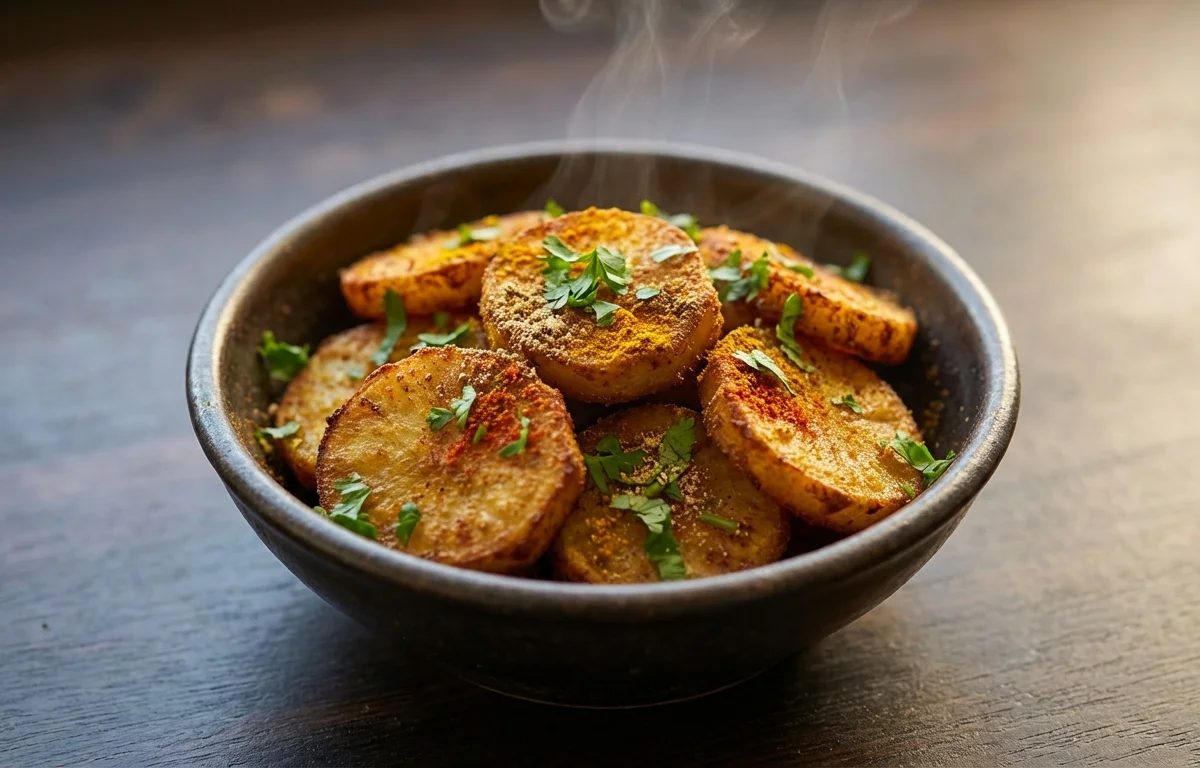
Tender colocasia gets boiled, sliced, and pan-fried with simple Indian spices until crisp at the edges and soft inside. It makes a comforting side dish that pairs especially well with dal, rasam, or curd rice.
For 4 servings
- boil · ~18 min
Boil the arbi until just tender.
1.Add arbi and water to a pot and bring to a boil.2.Add the salt meant for boiling water.3.Cook until the arbi is just tender and a knife slips in with slight resistance, about 15-18 minutes.4.Drain the water and let the arbi cool enough to handle.TIPDo not overboil the arbi or it will break apart in the pan. - prep · ~5 min
Peel and slice the arbi.
Peel the cooled arbi and slice into thick rounds or halves, keeping the pieces fairly even so they fry at the same pace.
- temper · ~1 min
Heat the oil and crackle the cumin.
Heat oil in a wide pan over medium heat. Add cumin seeds and let them sizzle, then add asafoetida and turmeric powder.
TIPUse a wide pan so the arbi sits in a single layer and crisps better. - fry · ~10 min
Pan-fry the arbi with the spices.
1.Add the sliced arbi to the pan and toss gently to coat in the spiced oil.2.Sprinkle in red chili powder, coriander powder, and the salt meant for frying.3.Cook on medium heat, turning gently every few minutes, until the edges are golden and lightly crisp, about 8-10 minutes.4.Finish with dry mango powder and toss once more.TIPTurn the pieces gently with a flat spatula so they stay intact. - garnish
Garnish with coriander leaves.
- serve
Serve hot as a side dish.
What to keep in mind.
7 tips from the recipe — small details that make a real difference to the final dish.
- 1Boil the arbi only until a knife meets slight resistance; overcooked pieces will crumble while frying.
- 2Let the boiled arbi cool before peeling and slicing so the rounds stay neat and do not turn mushy.
- 3Keep the slices fairly thick and even, or the thinner pieces will crisp too fast and break.
- 4Use a wide pan and avoid crowding; arbi browns best when it sits mostly in a single layer.
- 5After adding the arbi, leave it undisturbed for a minute or two between turns so a crust can form.
- 6Add the amchur right at the end to keep its tang bright instead of dulling in the hot oil.
- 7Leftovers re-crisp well in a tawa or skillet; avoid microwaving if you want to keep the edges crisp.
Adapt it for your goals.
Low-oil
Roast the boiled, spiced arbi on a lined tray or air-fry it with less oil for a lighter version that still gets crisp edges.
jainJain
Skip the asafoetida if needed and use a Jain-friendly hing substitute; the dish still works well with cumin, coriander, chili, and amchur.
south indianSouth-indian
Add curry leaves and a little crushed black pepper during tempering for a version that pairs especially well with rasam rice.
extra spicyExtra-spicy
Increase the chili powder slightly and finish with slit green chilies in the pan for a hotter, more assertive fry.
Why this is on our healthy list.
Fiber-Rich Root Vegetable
Arbi provides dietary fiber, which can make this side dish more filling and satisfying alongside rice and dal.
Digestive Spice Support
Cumin, hing, and coriander are traditional spices often used in arbi dishes to make the starchy root feel lighter and more balanced.
Modest Oil, Big Flavor
Because the dish relies on pan-frying with spices rather than deep-frying, it delivers strong flavor with relatively little oil.
Frequently asked questions
It was likely overboiled. Cook it only until just tender, cool it well, and slice thickly before frying.