Assamese Jolpan
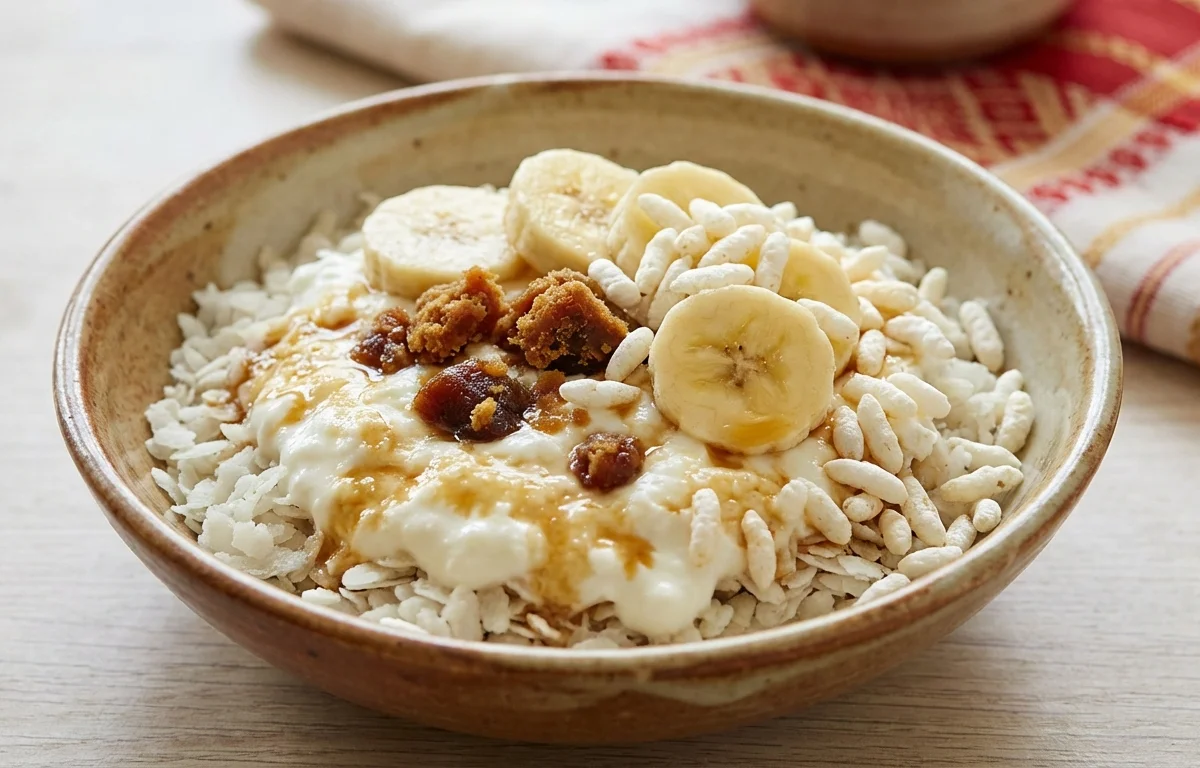
A classic Assamese breakfast plate built around flattened rice, puffed rice, creamy curd, jaggery, and banana. It is light, soothing, and satisfying, with lovely contrasts of soft, crisp, sweet, and mildly tangy flavors in every bite.
For 4 servings
- prep · ~5 min
Soften the poha.
Rinse the poha quickly under water and drain well. Let it rest for 5 minutes until soft but not mushy.
TIPDo not soak the poha for long or it will turn pasty. - mix · ~1 min
Prepare the curd mixture.
Whisk the yogurt in a bowl until smooth. Stir in the milk if you want a looser, spoonable texture.
- assemble · ~3 min
Assemble the jolpan.
1.Divide the softened poha into 4 serving bowls.2.Add the muri over the poha.3.Top with sliced banana.4.Spoon yogurt over each bowl.5.Finish with grated jaggery on top. - serve
Serve immediately.
Mix lightly just before eating so the puffed rice keeps some crunch while the poha stays soft.
What to keep in mind.
6 tips from the recipe — small details that make a real difference to the final dish.
- 1Rinse the thick poha very briefly, then drain completely; trapped water makes the jolpan heavy and pasty.
- 2Assemble just before serving so the muri stays crisp instead of turning chewy in the yogurt.
- 3If your yogurt is sour, add a little extra jaggery or use sweeter banana to keep the balance traditional and mellow.
- 4Grate or crumble the jaggery finely so it melts slightly into the curd and coats every spoonful.
- 5Use just-ripe bananas with a few speckles; underripe fruit tastes starchy and overripe slices collapse quickly.
- 6For make-ahead prep, keep softened poha, whisked curd, sliced banana, and muri separate and combine at the last minute.
Adapt it for your goals.
Vegan
Swap yogurt and milk for thick unsweetened plant yogurt or lightly reduced coconut milk for a dairy-free version with similar creaminess.
low sugarLow-sugar
Reduce the jaggery and rely more on ripe banana sweetness if you want a gentler, less sweet breakfast bowl.
richer curdRicher-curd
Use thick homemade dahi without milk for a denser, more traditional-feeling bowl with a creamier finish.
fruit forwardFruit-forward
Add seasonal Assamese-style breakfast fruits alongside banana for more freshness and a slightly more festive jolpan platter.
Why this is on our healthy list.
Probiotic Dairy Base
Fresh yogurt brings beneficial cultures and a soothing tang, while also adding protein and creaminess to the breakfast.
Quick Energy from Grains
Poha and muri are easy-to-digest rice-based grains that make this dish light on the stomach yet filling enough for breakfast.
Naturally Sweetened
Banana and jaggery provide sweetness with more character than refined sugar, while banana also contributes potassium and fiber.
Frequently asked questions
You can rinse and rest it shortly before serving, but avoid soaking it too early because it can become mushy and lose its separate texture.