
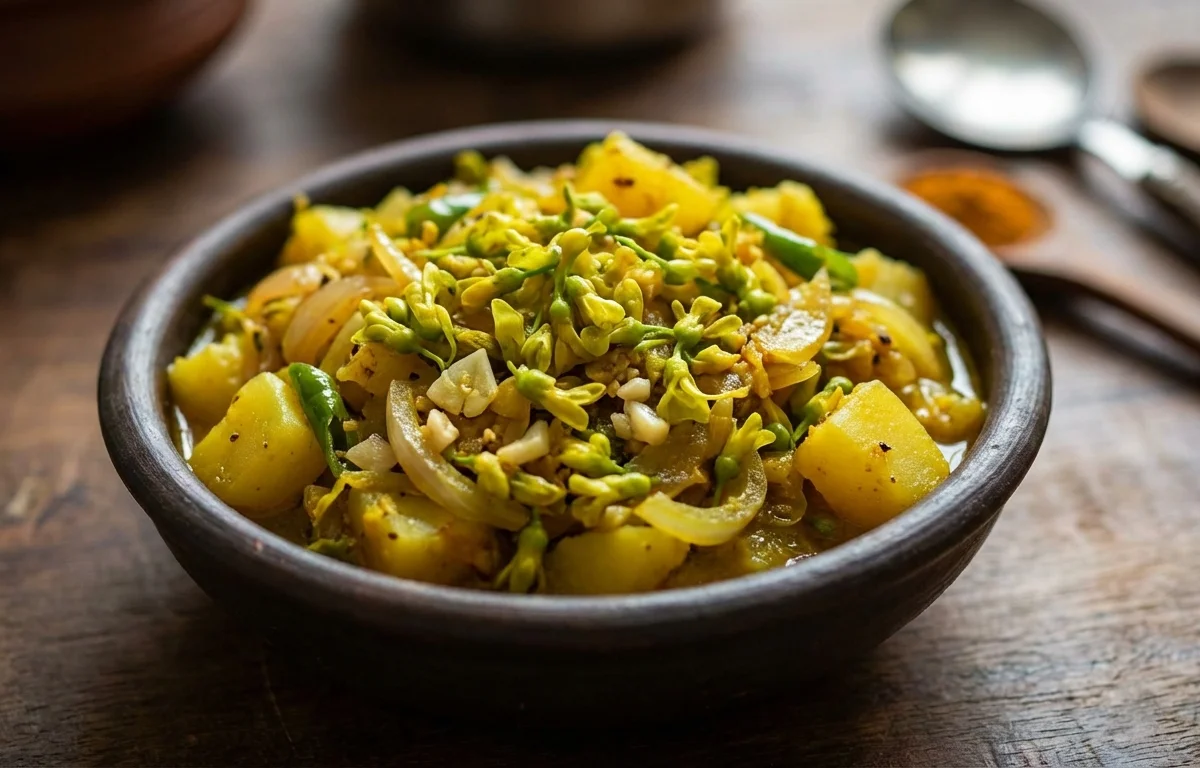
Bhekuri Tita Phool Bhaji
A simple, rustic Bengali stir-fry made with the tender flowers and leaves of the Bhekuri plant, a foraged green with a distinct, pleasant bitterness. Tempered with kalonji and green chilies in mustard oil, this earthy dish celebrates the wild flavors of Bengal and pairs beautifully with steamed rice.
For 4 servings
- prep · ~10 min
Clean and prep the Bhekuri greens.
Pluck the tender Bhekuri flowers and leaves from the stems. Discard any woody stalks. Wash thoroughly in several changes of water to remove all dirt. Roughly chop the cleaned greens and set aside to drain completely.
TIPSoak the greens in salted water for 10 minutes if they are particularly gritty. - saute · ~3 min
Heat mustard oil and temper with kalonji.
1.Heat mustard oil in a kadai over medium heat until it reaches its smoking point.2.Once the oil smokes lightly, lower the heat and let it cool for 20 seconds.3.Add kalonji seeds and let them sizzle and splutter for 15 seconds.TIPHeating mustard oil to its smoking point removes the raw pungency and brings out a nutty aroma. - saute · ~1 min
Sauté the garlic and green chilies.
1.Add sliced garlic to the pan and sauté until fragrant and light golden (30-40 seconds).2.Add slit green chilies and sauté for another 15 seconds. - saute · ~10 min
Cook the chopped greens.
1.Add the chopped Bhekuri greens to the pan.2.Sprinkle salt and sugar, then toss well with the tempering.3.Sprinkle 2 tablespoons of water over the greens and cover the pan with a lid.4.Cook on low heat for 8-10 minutes, stirring occasionally to prevent sticking.TIPCovering the pan traps steam, helping the greens wilt and cook without requiring extra oil. - saute · ~4 min
Dry out any remaining moisture.
Remove the lid and increase the heat slightly. Stir-fry continuously for another 3-4 minutes until all the excess water evaporates and the bhaji looks dry and glossy.
- serve
Serve the Tita Phool Bhaji.
Transfer to a serving bowl. Serve immediately as part of a Bengali meal with steamed rice and dal, placing a wedge of gondhoraj lime on the side.
What to keep in mind.
6 tips from the recipe — small details that make a real difference to the final dish.
- 1Do not skip heating the mustard oil to its smoking point—it mellows the pungency and develops a nutty aroma essential to the dish.
- 2Wash the Bhekuri greens in several changes of water, then soak them in salted water for 10 minutes if they feel gritty.
- 3Covering the pan while the greens cook traps steam, allowing them to wilt without needing extra oil.
- 4After steaming, remove the lid and stir-fry on high heat to dry out the bhaji—this gives it the classic dry, glossy finish.
- 5A pinch of sugar is optional but recommended: it rounds the bitterness without making the dish sweet.
- 6This bhaji tastes best fresh, but you can store leftovers in the fridge for up to 24 hours; reheat in a dry pan.
Adapt it for your goals.
Low-oil
Reduce mustard oil to 1 tbsp and use a non-stick pan; the steaming step will still keep the greens tender without the extra fat.
VeganVegan
The recipe is already vegan—simply ensure the sugar used is organic or labeled vegan.
SpicierSpicier
Add 1-2 more slit green chilies or a pinch of red chili flakes with the kalonji for extra heat.
With coconutWith coconut
Sprinkle 2 tbsp of fresh grated coconut over the bhaji just before serving for a subtle sweetness and texture contrast.
Why this is on our healthy list.
Bitter greens aid digestion
Bhekuri greens are naturally bitter, which can stimulate digestive juices and support healthy digestion.
Rich in foraged micronutrients
Wild greens like Bhekuri are typically high in iron, calcium, and vitamins A and C from the leaves and flowers.
Low in calories, high in fiber
This stir-fry uses minimal oil and relies on the greens' natural bulk, making it a light yet filling side dish.
Mustard oil provides healthy fats
Mustard oil contains monounsaturated and polyunsaturated fatty acids, including omega-3s, in moderate amounts.
Frequently asked questions
Bhekuri is a wild, foraged Bengal green with edible flowers and leaves. If unavailable, substitute with a mix of tender amaranth leaves and young spinach for a similar texture.





-curry.webp)
.webp)