Bhindi Bhaja
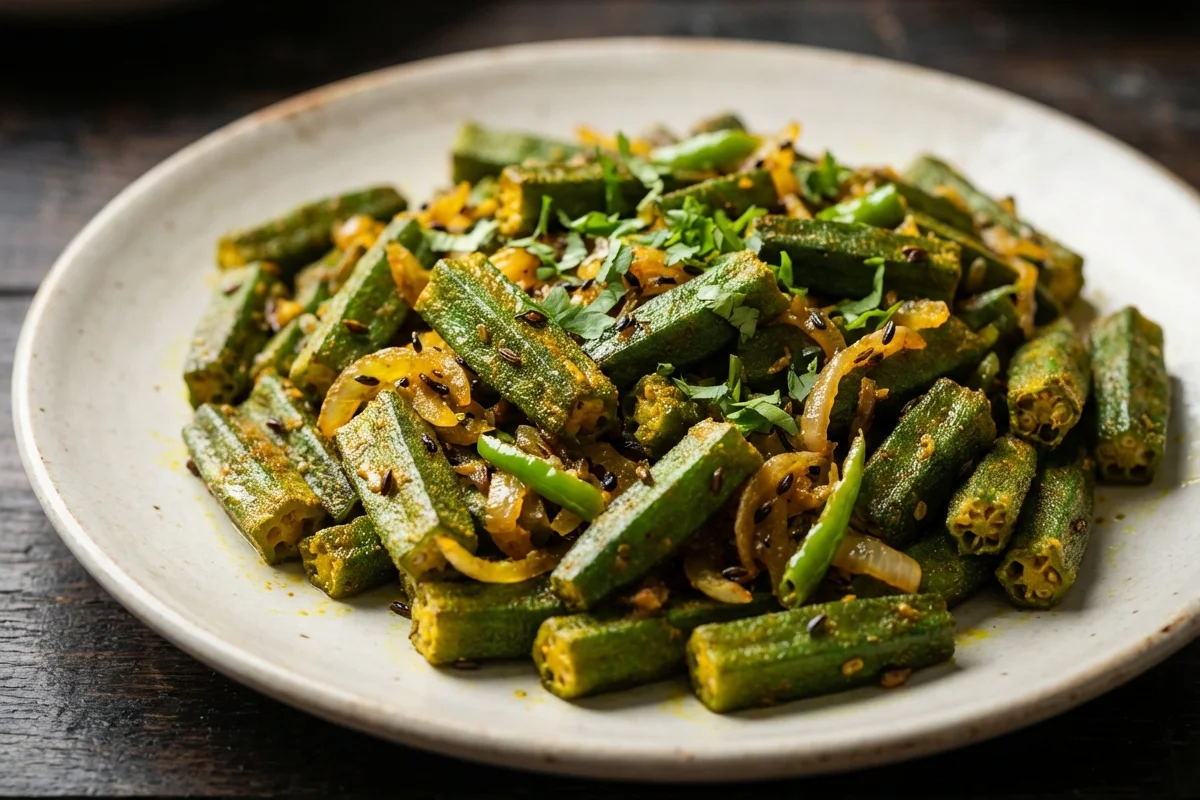
Crispy, spiced pan-fried okra straight from an Odia kitchen. Slender bhindi are sliced thin and cooked in minimal oil until beautifully charred and crisp, with a nutty fragrance from dry-roasted cumin and red chili. A simple, everyday sabzi that pairs wonderfully with steamed rice and dal.
For 4 servings
- prep · ~10 min
Wash and dry the bhindi, then slice into thin rounds.
Wash the bhindi thoroughly and pat them completely dry with a clean kitchen towel. Trim the tops and tips, then slice into thin rounds.
TIPDry the bhindi very well — any moisture will make them slimy while cooking. - saute · ~2 min
Heat oil and temper with cumin and dried red chili.
1.Heat mustard oil in a wide kadhai or pan over medium heat until it smokes lightly.2.Add cumin seeds and let them crackle for about 15 seconds.3.Add broken dried red chilies and sauté until fragrant, another 20 seconds. - fry · ~2 min
Add the sliced bhindi and spread in an even layer.
1.Add the sliced bhindi to the pan and spread it out in an even layer.2.Let it cook undisturbed for 2 minutes on medium-high heat to get some char.TIPDon't stir too often — letting it sit helps crisp up the bhindi and prevents sliminess. - fry · ~1 min
Season with turmeric, red chili powder, and salt.
1.Sprinkle turmeric powder, red chili powder, and salt evenly over the bhindi.2.Gently toss to coat the bhindi with the spices, being careful not to break the slices. - fry · ~9 min
Fry until crisp and golden, stirring occasionally.
Continue cooking on medium heat for another 8 to 10 minutes, stirring gently every couple of minutes, until the bhindi is deeply golden, crisp, and cooked through.
TIPThe bhindi is done when it shrinks slightly and the edges turn crispy and brown. - garnish
Garnish with fresh coriander leaves and serve hot.
Remove from heat, garnish with chopped coriander leaves, and serve immediately with steamed rice and dal.
What to keep in mind.
6 tips from the recipe — small details that make a real difference to the final dish.
- 1Pat the bhindi bone-dry after washing to prevent sliminess during cooking.
- 2Use a wide, heavy-bottomed pan for even charring and better heat distribution.
- 3Mustard oil is traditional; let it reach its smoking point before tempering for authentic flavor.
- 4Resist stirring frequently — letting the bhindi sit undisturbed builds the sought-after char.
- 5Toss the bhindi gently after seasoning to avoid breaking the thin rounds.
- 6Cook until the bhindi shrinks slightly and the edges turn crispy brown — that's your doneness cue.
Adapt it for your goals.
Low-oil
Use a non-stick pan and reduce oil to 1 tbsp. The okra will char less but still cook through, ideal for those watching oil intake.
garlic kickGarlic kick
Add 4-5 thinly sliced garlic cloves along with the cumin seeds. This adds a pungent, savory layer that complements the okra's earthiness.
crunchy peanutCrunchy peanut
Toss in 2 tbsp of roasted peanuts after the okra is cooked. The extra crunch and nuttiness make this a heartier side dish.
with onionWith onion
Add 1 medium sliced onion after tempering and cook until translucent before adding okra. This creates a more substantial, sweeter version.
Why this is on our healthy list.
Rich in Dietary Fiber
Okra is an excellent source of soluble and insoluble fiber, which supports healthy digestion and helps maintain stable blood sugar levels.
High in Vitamin C
Fresh okra provides a good amount of vitamin C, an antioxidant that supports immune function and skin health.
Low in Calories
This dish uses minimal oil and only a few spices, making it a light, low-calorie sabzi that fits well into weight-conscious diets.
Contains Vitamin K
Okra is a natural source of vitamin K, which is important for blood clotting and maintaining bone health.
Frequently asked questions
Sliminess usually comes from moisture. Make sure the bhindi is completely dry before slicing and avoid overcrowding the pan so the heat stays high enough to evaporate juices quickly.