
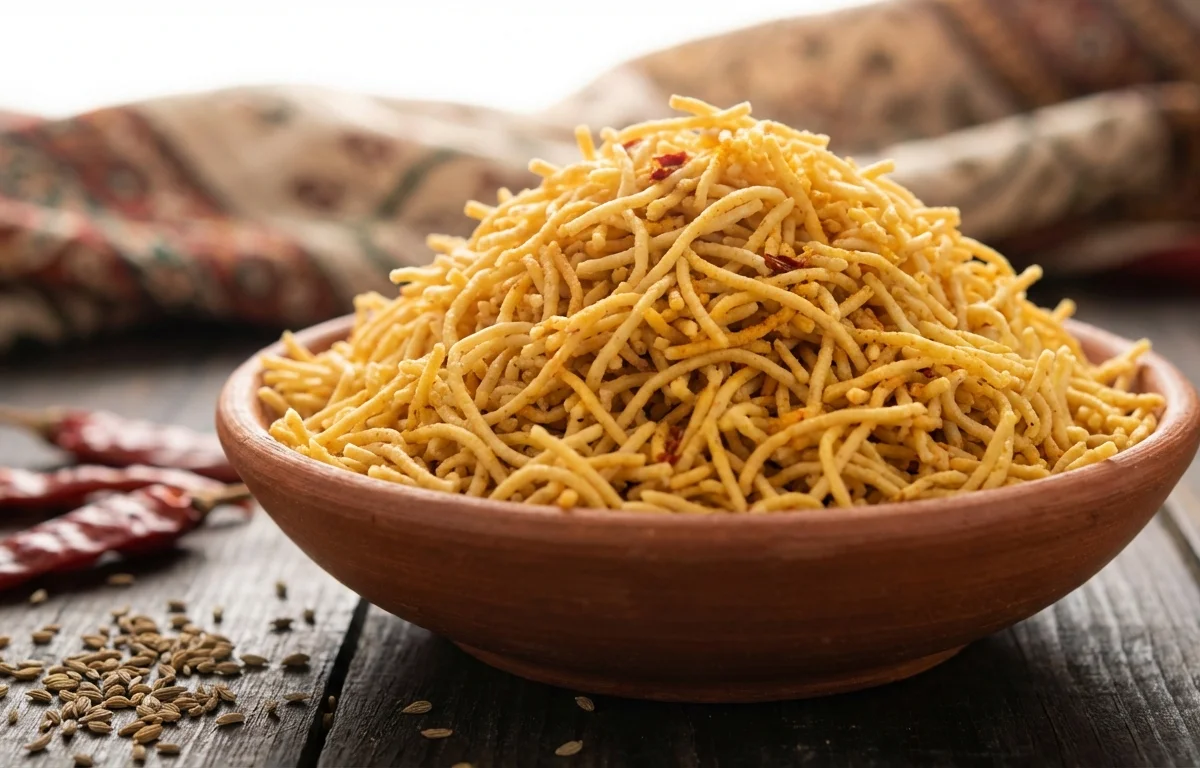
Bikaneri Bhujia
Thin, crisp strands of spiced moth bean and gram flour dough, fried until golden and crunchy. This famous Bikaner snack is light, peppery, and perfect for munching on its own or sprinkling over chaat.
For 8 servings
- mix · ~3 min
Mix the flours and spices.
1.Add moth bean flour and chickpea flour to a wide bowl.2.Add salt, red chili powder, black pepper, clove powder, and asafoetida.3.Pour in 2 tbsp oil and rub it through the flour until evenly mixed.TIPRubbing the oil well into the flour helps the bhujia fry up lighter and crisper. - knead · ~5 min
Make a soft dough.
Add water little by little and knead into a soft, smooth dough that can be pressed easily through a sev maker. It should be softer than roti dough but not runny.
TIPIf the dough feels stiff, the bhujia will break while pressing. - rest · ~10 min
Rest the dough.
Cover the dough and let it rest for 10 minutes so the flour hydrates evenly.
- fry · ~5 min
Heat the oil and fill the sev press.
Heat oil for deep frying in a kadai over medium heat. Grease the inside of a sev press lightly, then fill it with a portion of the dough fitted with a fine bhujia or sev plate.
TIPKeep the oil on medium heat; very hot oil browns the bhujia before it turns crisp. - fry · ~7 min
Press and fry the bhujia.
1.Press thin strands of dough directly into the hot oil in a circular motion.2.Fry without crowding the pan until the bubbling reduces and the strands turn light golden, 2 to 3 minutes.3.Flip gently once if needed so the bhujia cooks evenly.TIPDo not let the bhujia turn deep brown; it continues to crisp as it cools. - assemble · ~10 min
Drain and cool the bhujia.
Lift the fried bhujia with a slotted spoon and drain well. Cool completely on a plate or tray before lightly crushing into shorter strands.
- serve
Store or serve the bhujia.
What to keep in mind.
6 tips from the recipe — small details that make a real difference to the final dish.
- 1If the sev press feels hard to squeeze, knead in a teaspoon or two of water; stiff dough makes broken, uneven strands.
- 2Use the finest bhujia plate, not a thick sev disc, to get the signature delicate Bikaneri texture.
- 3Fry in small batches so the strands stay separate and the oil temperature does not drop too quickly.
- 4Pull the bhujia out when it is just light golden; it crisps further as it cools and darkens fast in hot oil.
- 5Cool completely before crushing or storing, otherwise trapped steam will soften the crunch.
- 6For longer crispness, store in an airtight steel tin or jar away from humidity and warm kitchens.
Adapt it for your goals.
Extra-spicy
Increase red chili slightly and add a touch more black pepper for a hotter tea-time snack with a stronger Bikaneri kick.
chaat toppingChaat-topping
Keep the strands very fine and fry them a shade lighter so they stay airy and easy to sprinkle over poha, dahi chaat, or bhel.
garlicGarlic
Add a small pinch of garlic powder to the dough for a more robust, modern namkeen flavor that pairs well with drinks.
Why this is on our healthy list.
Legume-Based Protein
Moth bean flour and chickpea flour both come from pulses, so this snack offers plant-based protein compared with starch-only fried snacks.
More Satisfying Than Refined Snacks
The pulse flours provide some fiber and body, which can make bhujia feel more substantial than snacks made only with refined flour.
Digestive Spice Support
Asafoetida, black pepper, and clove are traditional spices that add aroma and may help make a legume-based snack feel easier to digest.
Frequently asked questions
The dough is usually too stiff or under-hydrated. Add a little water, knead again until soft and smooth, and let it rest briefly before pressing.



.webp)
.webp)
.webp)