Bombil Fry
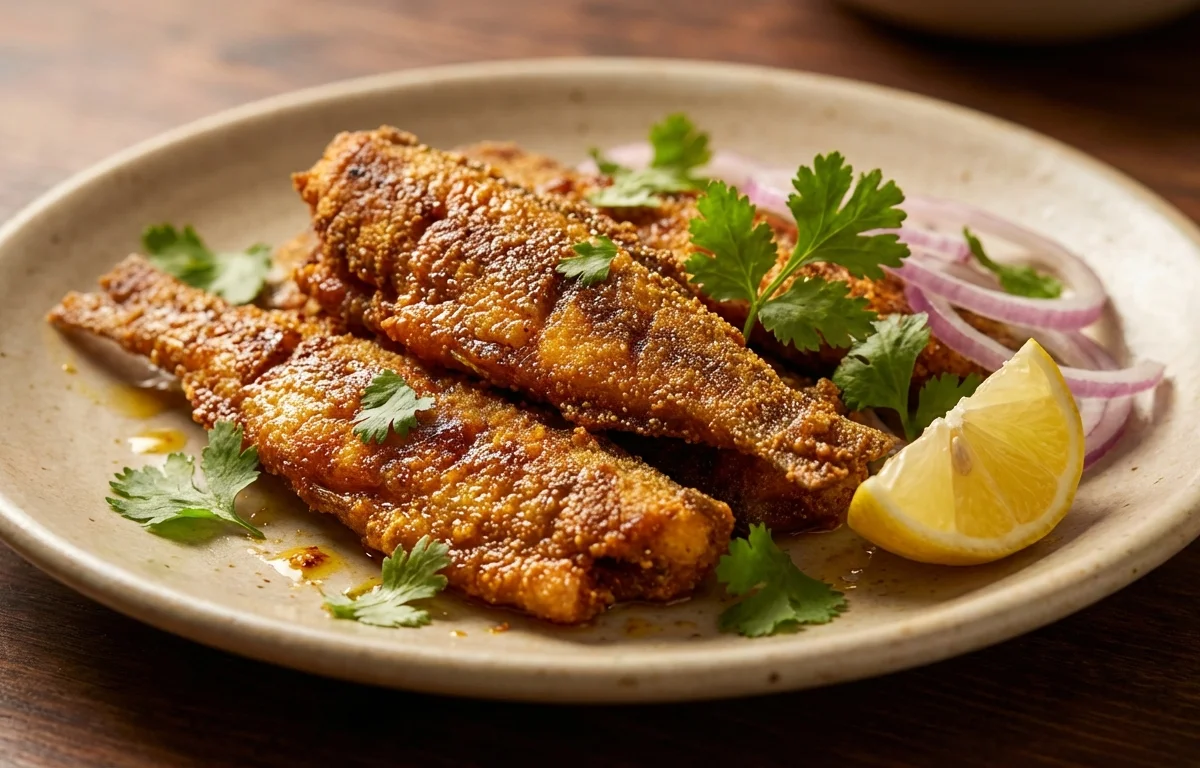
Fresh Bombay duck fish coated with a simple spiced semolina crust and pan-fried until golden and crisp outside while staying soft and delicate inside. This coastal favorite is especially good with lemon and sliced onion.
For 4 servings
- prep · ~5 min
Prep the fish.
Check the bombil for any remaining bones, then pat it very dry with a clean cloth or paper towel so the coating sticks well and the fish fries crisp.
- mix · ~2 min
Make the spice marinade.
Mix lemon juice, ginger-garlic paste, red chili powder, turmeric powder, and salt in a shallow plate to form a loose paste.
- rest · ~10 min
Coat the fish and let it rest.
Rub the spice marinade all over the bombil on both sides. Let it rest for 10 minutes so the fish picks up the flavor.
TIPHandle bombil gently while coating because the flesh is delicate and tears easily. - mix · ~3 min
Prepare the crust.
Spread the rice flour and semolina on a plate and mix them together. Press each marinated fish lightly in the mixture to coat both sides evenly.
- fry · ~6 min
Pan-fry the bombil.
1.Heat oil in a wide pan over medium heat.2.Place the coated fish gently in the pan in a single layer.3.Cook the first side until golden and crisp, about 3 minutes.4.Turn carefully and cook the other side until crisp and the fish is just done, about 2 to 3 minutes more.TIPKeep the heat medium so the crust turns crisp without burning before the fish cooks through. - serve
Serve hot.
What to keep in mind.
6 tips from the recipe — small details that make a real difference to the final dish.
- 1Pat the bombil very dry before marinating; extra surface moisture makes the coating slip off in the pan.
- 2Do not marinate too long after adding lemon juice, or the delicate flesh can turn mushy.
- 3Use a wide pan and fry in a single layer so the semolina crust crisps instead of steaming.
- 4Turn the fish only once with a flat spatula; bombil is fragile and can break if handled repeatedly.
- 5If the coating looks patchy after resting, dust a little extra semolina just before frying for better crunch.
- 6Serve immediately with lemon wedges and sliced onion, because the crust softens as the fish sits.
Adapt it for your goals.
Low-oil
Shallow-fry with less oil on a well-heated pan or cook in an air fryer after lightly brushing with oil for a lighter version.
extra spicyExtra-spicy
Add a little more red chili powder or a pinch of pepper to the marinade if you want a sharper, hotter coastal-style fry.
gluten freeGluten-free
Use only rice flour and skip semolina for a fully gluten-free crust while keeping the fish crisp.
rava forwardRava-forward
Increase the semolina slightly for a crunchier, more textured outer crust that pairs well with soft bombil.
Why this is on our healthy list.
Good Source of Protein
Bombil provides protein, making this fry a satisfying dish that can be served as a starter or main.
Lighter Than Deep-Fried Versions
This recipe is pan-fried with a modest amount of oil rather than deep-fried, keeping the preparation comparatively lighter.
Digestive Spice Support
Ginger, garlic, turmeric, and lemon add flavor while contributing traditional ingredients often valued in everyday home cooking.
Frequently asked questions
Bombil is very delicate, so pat it dry, coat gently, and turn it only once with a broad spatula after the first side has crisped well.



.webp)