Cheesy Scrambled Eggs
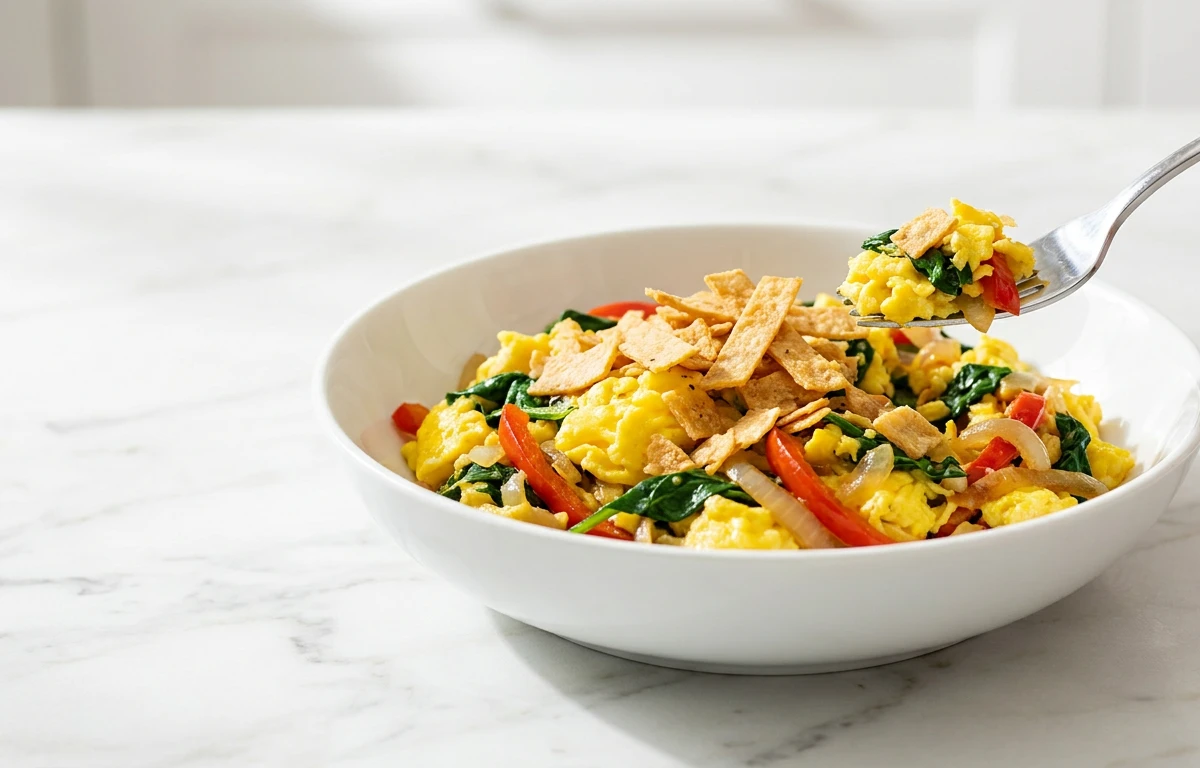
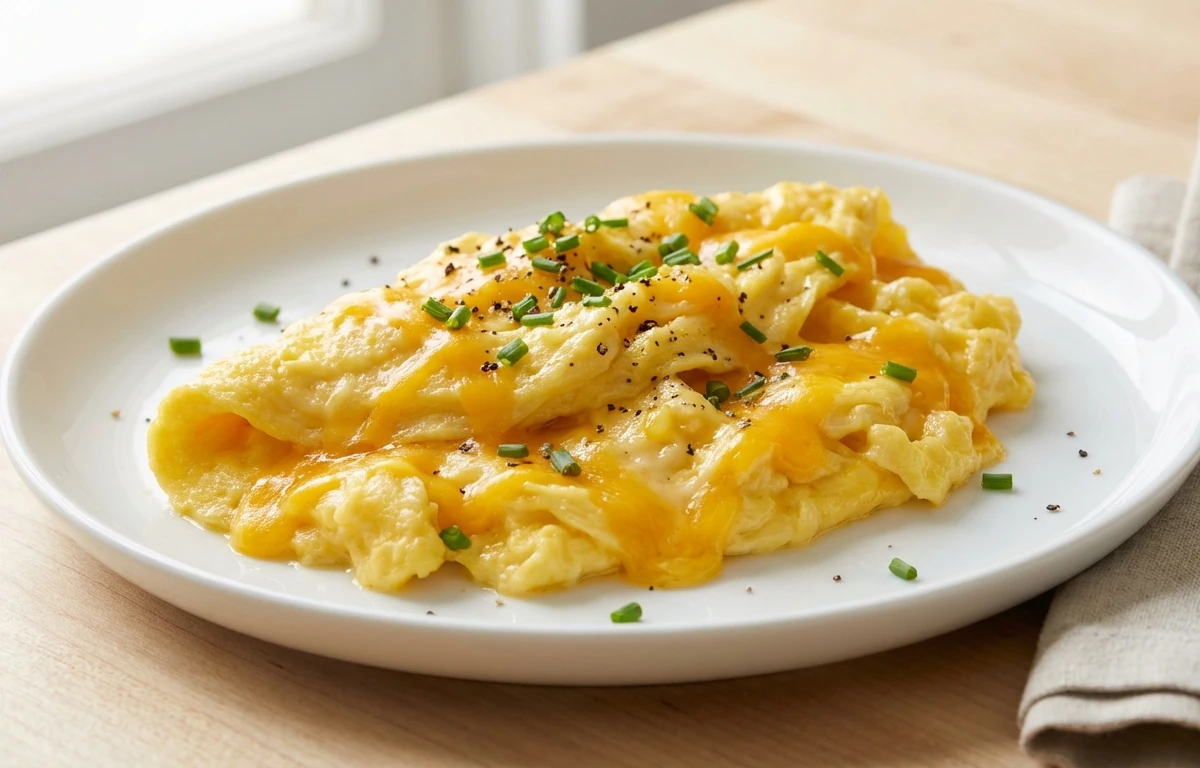
Soft, fluffy scrambled eggs folded with melted cheddar cheese until perfectly creamy. This quick American breakfast staple takes just 10 minutes from pan to plate and pairs beautifully with buttered toast and crispy bacon.
For 2 servings
- prep · ~1 min
Whisk the eggs.
1.Crack 4 large eggs into a medium mixing bowl.2.Add a pinch of salt and whisk vigorously for 30 seconds until uniform and slightly frothy — no streaks of white should remain.TIPWhisking well now means no white streaks in the final scramble. - prep · ~1 min
Shred the cheese and chop the chives.
Shred a quarter cup of sharp cheddar on the large holes of a box grater. Finely chop enough chives to yield a teaspoon for garnish.
- prep · ~1 min
Melt the butter over low heat.
Place the nonstick skillet over low heat and add 1 tablespoon of butter. Let it melt gently and foam without browning — this takes about a minute.
TIPLow heat is the single most important step for soft scrambled eggs. Rushing with high heat gives you dry, rubbery curds. - other · ~4 min
Cook the eggs slowly, stirring constantly.
1.Pour the whisked eggs into the buttered skillet.2.Let them sit undisturbed for 15 seconds until a thin layer sets around the edges.3.Using a silicone spatula, gently push the set curds from the edges toward the center.4.Continue pushing and folding slowly for 3 to 4 minutes, until eggs are mostly set but still glossy and slightly wet on top.TIPConstant gentle movement creates small, tender curds instead of large rubbery masses. - other · ~1 min
Fold in the cheese and finish off the heat.
1.Remove the skillet from the heat immediately — carryover cooking will finish the eggs.2.Sprinkle the shredded cheddar evenly over the eggs and fold gently for 30 seconds until the cheese melts in ribbons.3.Grind a pinch of black pepper over the top.TIPThe eggs should still look a little custardy when you pull them — they set further on the plate. - serve
Serve immediately on warm plates.
Spoon the cheesy scrambled eggs onto warm plates, scatter chopped chives over each portion, and serve right away with buttered toast.
What to keep in mind.
6 tips from the recipe — small details that make a real difference to the final dish.
- 1Whisk the eggs until uniformly frothy to ensure airy, tender curds.
- 2Use a nonstick skillet and a silicone spatula for easy folding without sticking.
- 3Cook the eggs on low heat—patience yields creamy, soft curds, not rubbery ones.
- 4Remove the pan from heat before adding cheese to prevent overcooking.
- 5Serve immediately on warm plates; eggs continue to set and can turn dry if left in the pan.
- 6Pre-shred cheese from a block for better melting and flavor than pre-shredded bags.
Adapt it for your goals.
Low-fat
Replace half the butter with nonstick spray and use reduced-fat cheddar to cut calories while keeping the creamy texture.
high proteinHigh-protein
Add 2 tablespoons of cottage cheese or ricotta along with the eggs for extra protein and an even creamier mouthfeel.
jainJain
Omit the chives and black pepper, and use a plant-based butter substitute; ensures no root vegetables or pungent spices are used.
gourmetGourmet
Swap cheddar for Gruyère or fontina and top with truffle salt for an elegant twist on classic American scrambled eggs.
vegetable loadedVegetable-loaded
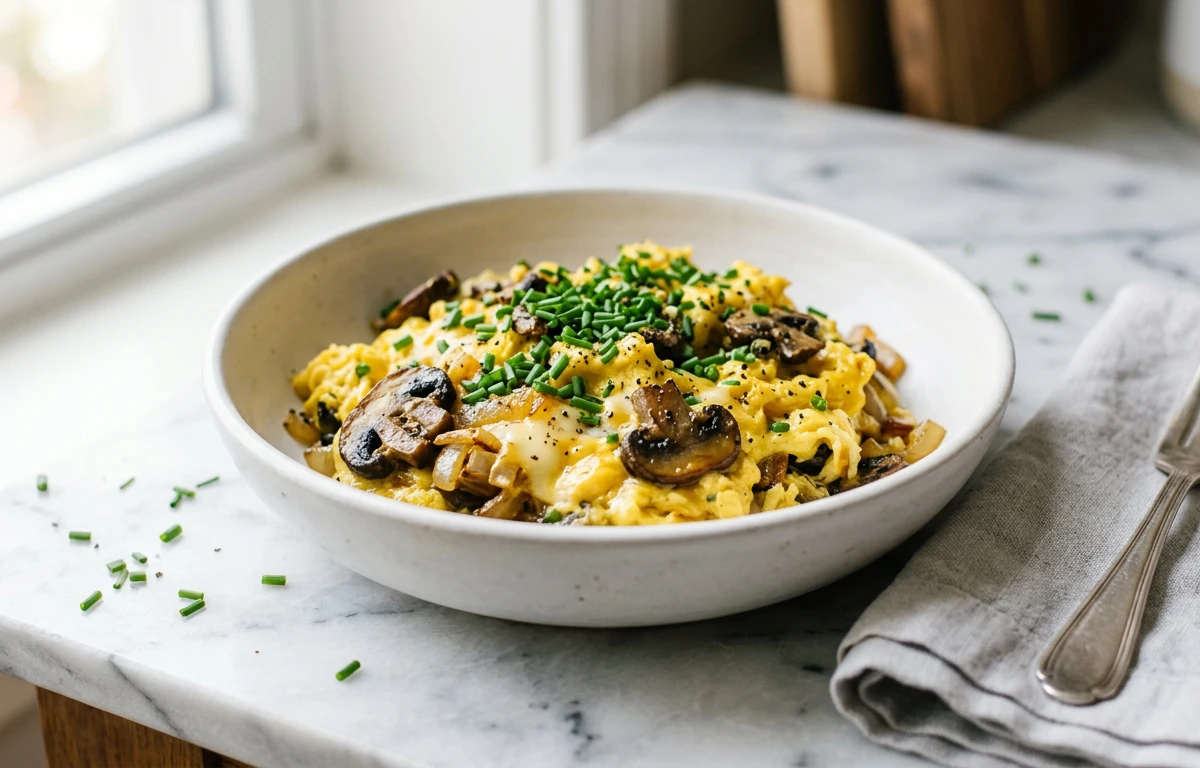
Sauté finely diced bell peppers and mushrooms before adding eggs, then fold in cheese for extra nutrients and color.
Why this is on our healthy list.
High in Protein
Eggs provide about 6 grams of high-quality protein each, supporting muscle repair and satiety throughout the morning.
Rich in Vitamin D
Eggs are one of the few natural food sources of vitamin D, which supports bone health and immune function.
Contains Calcium
Cheddar cheese adds calcium for strong bones and teeth, contributing about 200 mg per quarter-cup serving.
Low Carb Friendly
This dish contains virtually no carbohydrates, making it suitable for low-carb or keto dietary patterns.
Frequently asked questions
Brown spots mean the heat was too high—always cook on low. Watery eggs usually come from overheating or adding salted cheese too early; fold it in off the heat.