Chitau Pitha
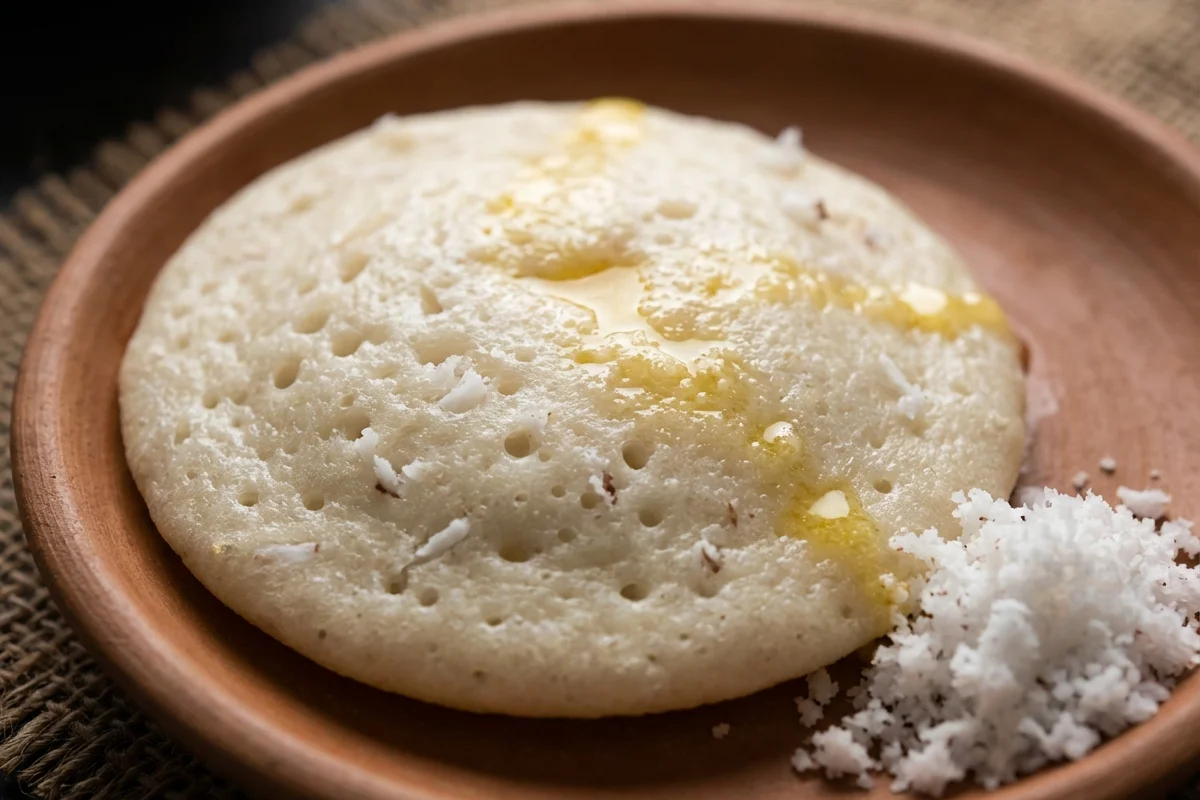
A soft, lacy rice pancake from Odisha, Chitau Pitha is made with a simple fermented rice batter and cooked gently in a covered pan. It turns out light, spongy, and lovely with jaggery, milk, or a mild curry on the side.
For 8 servings
- prep · ~360 min
Soak the rice.
Wash the rice well, then soak it in enough water for 6 hours or overnight.
- mix · ~10 min
Grind the batter.
1.Drain the soaked rice.2.Grind the rice with grated coconut and water for grinding to a smooth, pourable batter.3.Add salt and mix well.4.Transfer the batter to a bowl. - rest · ~480 min
Ferment the batter.
Cover the bowl and leave the batter in a warm place for 8 hours, until lightly fermented and a little airy.
TIPThe batter should smell mildly tangy, not sour. In cool weather, give it a little more time. - mix · ~2 min
Thin the batter if needed.
Stir the fermented batter gently. Add the measured water little by little to get a thin batter that pours easily, similar to neer dosa batter.
- steam · ~3 min
Cook the Chitau Pitha.
1.Heat a small nonstick or well-seasoned pan over medium heat and lightly grease it with oil.2.Pour a small ladle of batter into the center and let it spread naturally into a small round pancake.3.Cover the pan and cook until the top looks set and tiny holes appear, about 2 to 3 minutes.4.Do not flip; lift it out once the bottom is cooked and the top is no longer wet.TIPKeep the heat gentle. High heat browns the bottom too fast and the pitha loses its soft, spongy texture. - serve · ~15 min
Repeat and serve warm.
Grease the pan lightly as needed and cook the remaining batter the same way to make 8 Chitau Pitha. Serve warm.
What to keep in mind.
7 tips from the recipe — small details that make a real difference to the final dish.
- 1Keep the batter thinner than regular dosa batter so it spreads on its own and forms the characteristic tiny holes.
- 2Stir the fermented batter gently before cooking; vigorous mixing can knock out the air that makes Chitau Pitha spongy.
- 3Use a lid that fits well, since the trapped steam is what cooks the top without flipping.
- 4If the bottom browns before the top sets, lower the heat and add a few drops more batter-thinning water next round.
- 5A well-seasoned small pan gives the best shape; too large a pan can make the pitha overly thin and dry.
- 6Stack cooked pitha in a covered plate or cloth-lined container to keep them soft until serving.
- 7The batter can be refrigerated after fermentation for a day; bring it closer to room temperature before cooking.
Adapt it for your goals.
Jaggery-sweet
Serve the plain pitha with melted jaggery, milk, or coconut for a traditional sweet breakfast or prasad-style pairing.
savory sideSavory-side
Pair with a mild potato curry or light ghuguni if you want a more filling, savory Odia-style meal.
no coconutNo-coconut
Skip the grated coconut in the batter for a plainer version with a slightly cleaner rice flavor and lighter texture.
mini pithaMini-pitha
Make smaller rounds for easier handling and softer centers; useful when serving a crowd or making a breakfast platter.
Why this is on our healthy list.
Light Fermented Batter
The gently fermented rice batter can be easier to digest than an unfermented one and gives the pitha its airy texture.
Low Added Fat Cooking
Only a little oil is used to grease the pan, so the finished pitha stays soft without needing deep-frying.
Naturally Gluten Free
Made from rice and coconut, this dish suits people who avoid wheat-based breakfasts and pancakes.
Frequently asked questions
It should look slightly airy and smell mildly tangy, not sharply sour. In cooler weather, it may need more time than 8 hours.