
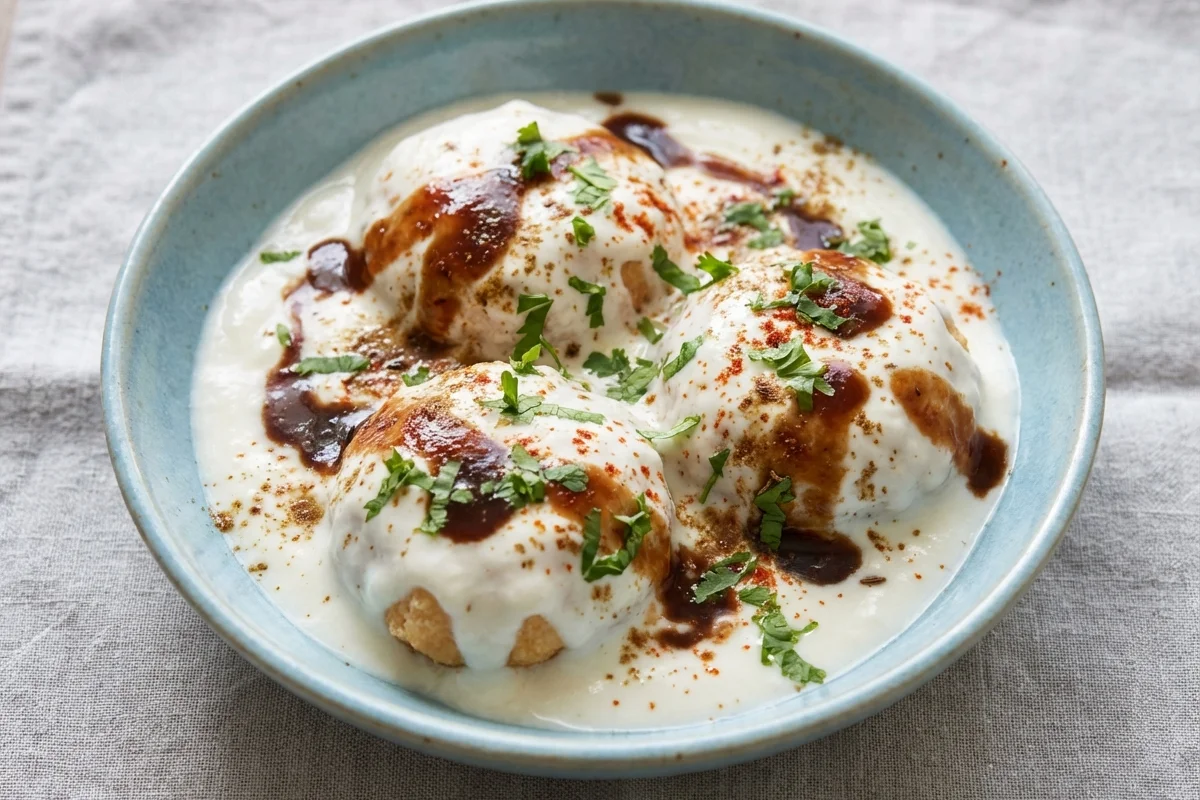
Doi Bora
Soft lentil fritters soaked in lightly seasoned yogurt make this beloved Bengali snack cool, tangy, and satisfying. A little sweetness, roasted spice, and tamarind on top give every bite its classic street-style finish.
For 8 servings
- prep · ~360 min
Soak the urad dal.
Wash the urad dal well and soak it in plenty of water for 6 hours. Drain completely before grinding.
TIPDrain the dal very well so the batter stays thick and fluffy. - mix · ~7 min
Grind the batter.
1.Add the soaked urad dal to a grinder with ginger and green chili.2.Grind to a smooth, thick batter using very little water.3.Add the salt and beat the batter for 2 to 3 minutes until light.TIPA light batter gives softer bora, so beat in a little air before frying. - fry · ~15 min
Fry the bora.
1.Heat the oil for frying in a deep pan over medium heat.2.Drop small spoonfuls of batter into the hot oil.3.Fry until puffed and pale golden on all sides.4.Lift them out and drain briefly.TIPKeep the heat medium so the bora cook through without turning too dark. - rest · ~10 min
Soak the fried bora in water.
Mix the water and a pinch of salt in a bowl. Add the warm bora and soak for 10 minutes until softened.
- mix · ~3 min
Make the doi mixture.
Whisk the yogurt with sugar, black salt, and roasted cumin powder until smooth and lightly seasoned.
- assemble · ~4 min
Squeeze and arrange the bora.
Gently press each soaked bora between your palms to remove excess water without breaking it. Arrange them in a shallow serving dish.
- assemble · ~20 min
Cover the bora with yogurt.
Pour the whisked yogurt over the bora so they are well coated. Chill for 15 to 20 minutes if you like them extra cool.
- garnish · ~1 min
Finish with spice and tamarind.
Sprinkle red chili powder and drizzle the tamarind paste over the top just before serving.
- serve
Serve the doi bora cold.
What to keep in mind.
7 tips from the recipe — small details that make a real difference to the final dish.
- 1Grind the soaked urad dal with as little water as possible; a thick batter makes bora that puff instead of spreading flat.
- 2Beat the batter until noticeably lighter before frying; that trapped air is what gives doi bora its soft, sponge-like center.
- 3Fry only to pale golden, not deep brown, so the bora stay tender and absorb the yogurt well.
- 4Soak the warm bora in salted water while they are still fresh from frying; they soften more evenly and lose excess oil.
- 5Squeeze each soaked bora very gently between your palms so it keeps its shape but does not water down the yogurt.
- 6Chill after pouring on the yogurt, then add tamarind and chili just before serving so the topping stays bright and defined.
- 7If the yogurt feels too thick after chilling, loosen it with a spoonful or two of cold water before covering the bora.
Adapt it for your goals.
Low-oil
Shape smaller bora and shallow-fry or use a paniyaram-style pan for a lighter version with less absorbed oil.
no chiliNo-chili
Skip the green chili in the batter and use only cumin and tamarind on top for a milder, kid-friendly doi bora.
street styleStreet-style
Increase the tamarind drizzle slightly and finish with extra black salt and roasted cumin for a sharper Kolkata-style chaat feel.
sweet tangySweet-tangy
Add a little more sugar to the yogurt if you prefer the softer, sweeter balance common in some Bengali home versions.
Why this is on our healthy list.
Plant-Based Protein from Urad Dal
The urad dal bora contribute lentil-based protein, making the snack more filling than a plain fried chaat.
Probiotic Dairy Base
Yogurt adds beneficial cultured dairy along with creaminess, helping balance the richer fried fritters.
Digestive Spice Support
Ginger, roasted cumin, and black salt bring traditional digestive flavors that pair especially well with lentils and yogurt.
Frequently asked questions
The batter was likely too thin or not beaten enough. Keep added water minimal and beat well so the urad batter becomes airy before frying.


