Finnan Haddie
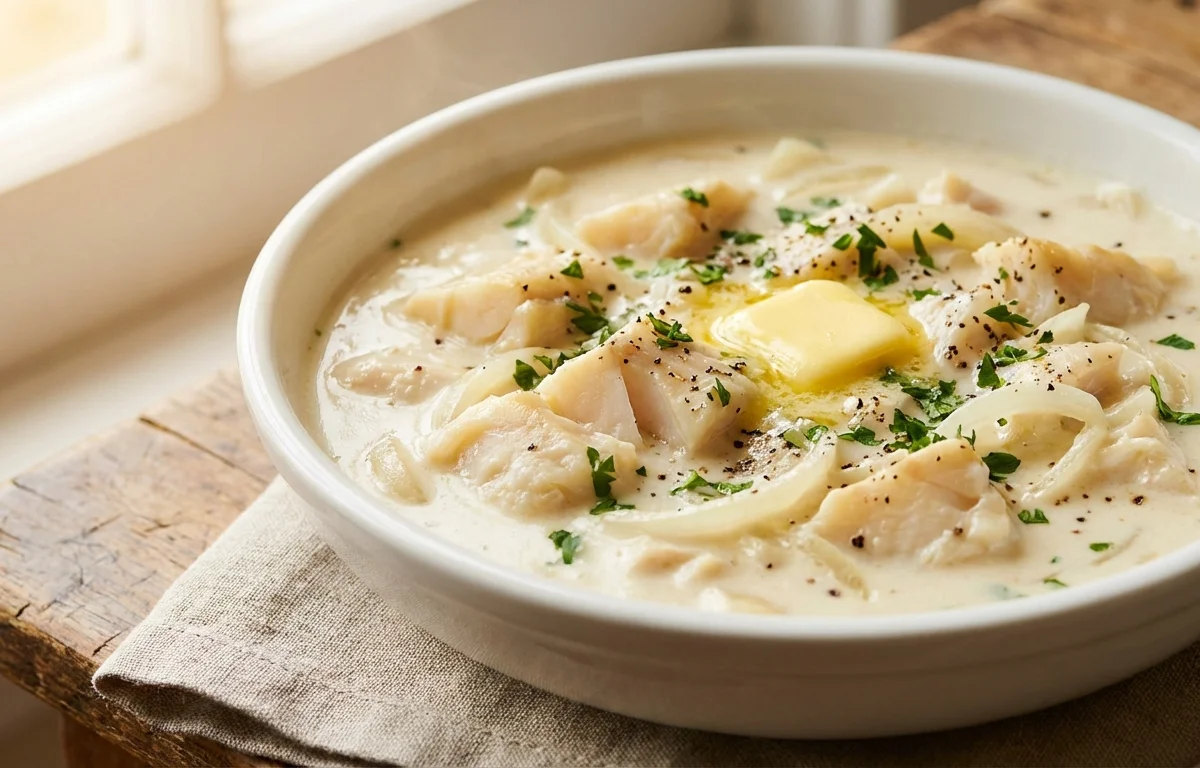
Delicately smoked haddock with a golden hue, gently poached in milk until it flakes into tender, savory chunks. This Scottish classic, named after the village of Findon, delivers a subtle smoky depth balanced by rich creaminess when paired with butter and a soft poached egg on top.
For 4 servings
- prep · ~2 min
Prepare the smoked haddock.
Check the fish for any remaining pin bones and remove them with tweezers. Cut the fillet into 4 equal portions.
- simmer · ~10 min
Poach the fish in milk.
1.Place the haddock pieces skin-side down in a large skillet.2.Pour in the milk, water, and add bay leaves with black peppercorns.3.Bring to a bare simmer over medium heat — do not let it boil.4.Cover and poach gently for 8-10 minutes until the flesh flakes easily with a fork.TIPKeep the heat low; boiling toughens the fish and makes the milk separate. - mix · ~4 min
Poach the eggs.
Bring a separate pan of water to a gentle simmer. Add a pinch of salt. Crack each egg into a small cup, then slide it into the water. Poach for 3-4 minutes until the whites are set but the yolks remain runny.
TIPA dash of vinegar in the poaching water helps the egg whites hold their shape. - assemble · ~2 min
Plate the Finnan Haddie.
1.Lift the fish carefully with a slotted spatula and place on warmed plates.2.Top each portion with a pat of butter so it melts over the hot fish.3.Settle a poached egg beside or on top of the fish.4.Grind black pepper over everything and scatter with fresh parsley. - serve
Serve immediately with lemon wedges.
Place a lemon wedge on each plate. Serve at once while the fish is warm and the egg yolk is still runny.
What to keep in mind.
6 tips from the recipe — small details that make a real difference to the final dish.
- 1Use undyed smoked haddock for a natural pale-gold color and cleaner flavor.
- 2Keep the milk at a bare simmer—any bubbling will overcook the fish and curdle the milk.
- 3If the fish is heavily salted from smoking, soak it in cold water for 15 minutes before cooking.
- 4Save the poaching milk to use as a light sauce or as the base for chowder the next day.
- 5Let the fish rest on a paper towel for a minute after poaching to avoid watery plates.
- 6For perfectly runny yolks, poach eggs just before the fish is done so both are hot at serving.
Adapt it for your goals.
Low-fat
Swap whole milk for a mix of 1% milk and a splash of half-and-half to cut fat while keeping a creamy finish.
smoked whitefishSmoked whitefish
Replace haddock with any hot-smoked whitefish like cod or pollock for a similar but milder result.
cheesy topCheesy top
Sprinkle grated cheddar over the poached fish and place under the broiler for 2 minutes until bubbly.
herb infusionHerb infusion
Add a sprig of fresh thyme and a strip of lemon zest to the poaching milk for extra aromatic depth.
Why this is on our healthy list.
High-Quality Protein
Smoked haddock provides a lean source of protein essential for muscle repair and overall health.
Rich in B Vitamins
The fish and eggs deliver B12, niacin, and B6, supporting energy metabolism and nerve function.
Low in Saturated Fat
When made with whole milk and minimal butter, this dish stays relatively low in saturated fats.
Good Source of Selenium
Haddock is naturally rich in selenium, an antioxidant that supports thyroid health and immunity.
Frequently asked questions
Yes, just look for hot-smoked haddock that is not dyed yellow; the flavor will be similar but slightly less delicate.