Hard Seltzer
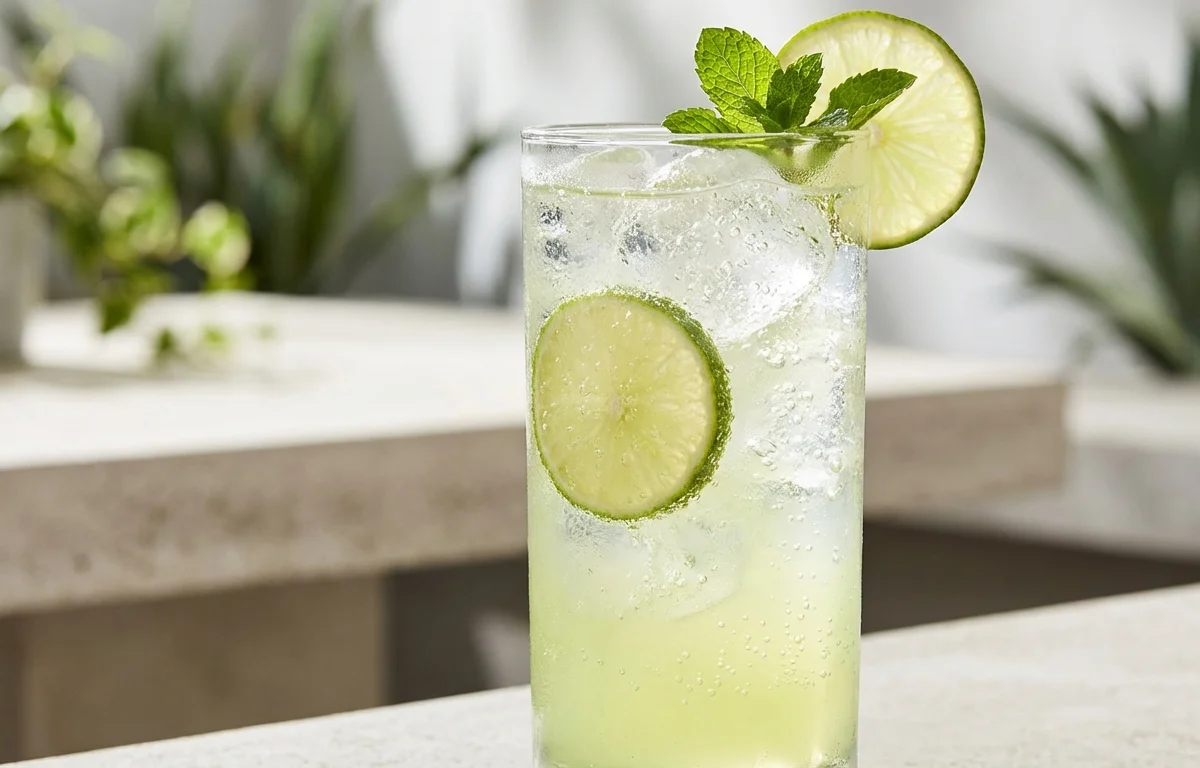
A crisp, bubbly, and refreshing homemade alcoholic beverage. This guide shows you how to ferment a simple sugar wash and flavor it to create your own light and clean-tasting hard seltzer right at home. Perfect for a summer day.
For 4 servings
Sanitize your equipment. Thoroughly clean and sanitize your fermenter (a 2-liter bottle or 1-gallon carboy works well), airlock, funnel, and any spoons you will use. Proper sanitation is crucial to prevent unwanted bacteria from spoiling your seltzer.
Make the sugar wash. In a large pot, bring 500ml of the water to a boil. Remove from heat and stir in the 175g of dextrose and 1/2 tsp of yeast nutrient until fully dissolved. Add the remaining 1 liter of cold water to the pot. This will help cool the mixture down quickly. Let the sugar wash cool completely to room temperature (around 68-78°F or 20-25°C). Pitching yeast into hot liquid will kill it.
Pitch the yeast and ferment. Once the sugar wash is at room temperature, carefully pour it into your sanitized fermenter using a funnel. Sprinkle the 2g of champagne yeast over the surface of the liquid. Seal the fermenter and attach the sanitized airlock (filled with a small amount of sanitizer or vodka). Place the fermenter in a dark, temperature-stable spot (around 68-72°F or 20-22°C) for 1-2 weeks.
Check for fermentation completion. After about 10-14 days, the bubbling in the airlock should slow down or stop completely. This indicates fermentation is likely finished. The liquid should have cleared up significantly. If you have a hydrometer, the reading should be stable and close to 1.000.
Bottle and carbonate the seltzer. Sanitize four 12-16 oz pressure-safe bottles (like Grolsch-style or beer bottles), a small bowl, and your bottling equipment. In the small bowl, dissolve the 15g of priming dextrose in a small amount of boiled and cooled water to make a simple syrup. Add the fruit extract and the priming syrup to your bottling bucket or directly distribute evenly among the sanitized bottles. Carefully siphon the fermented seltzer from the fermenter into the bottles, leaving about an inch of headspace at the top. Avoid disturbing the yeast sediment at the bottom. Securely cap each bottle.
Condition and serve. Store the capped bottles at room temperature for another 1-2 weeks to allow them to carbonate naturally. After conditioning, place the bottles in the refrigerator for at least 48 hours to chill completely before opening. Open carefully, serve cold, and enjoy your homemade hard seltzer.
What to keep in mind.
6 tips from the recipe — small details that make a real difference to the final dish.
- 1Sanitation is non-negotiable. Anything that touches the seltzer after boiling must be sanitized to prevent contamination.
- 2Use a hydrometer to measure the specific gravity before fermentation and after. This is the most accurate way to confirm fermentation is complete and to calculate the final ABV.
- 3For a clearer final product, 'cold crash' the seltzer by placing the fermenter in a refrigerator for 24-48 hours before bottling. This helps the yeast settle out.
- 4Always use pressure-rated bottles designed for carbonated beverages, such as beer bottles or thick-walled swing-top bottles. Regular glass bottles can explode.
- 5Be patient. Rushing the fermentation or carbonation steps will result in a less refined final product.
- 6Experiment with different fruit extracts, purees, or even fresh zest in the bottling stage to create unique flavors.
Adapt it for your goals.
Keto
This recipe is naturally keto-friendly as the yeast consumes nearly all the sugar. Ensure fermentation is complete by checking for a final gravity near 1.000 with a hydrometer.
quickQuick
To speed up fermentation, keep the fermenter in a consistently warm spot (around 70-75°F / 21-24°C). Fermentation may finish in as little as 5-7 days.
budget friendlyBudget friendly
Use regular white table sugar (sucrose) instead of dextrose for fermentation. The flavor profile might be slightly different, but it's a very cost-effective alternative.
healthyHealthy
Instead of commercial extracts, use 1/4 cup of sterile, strained fruit puree (like raspberry or mango) per 1.5L batch for a more natural flavor. Add it just before bottling.