Hot Smoked Salmon
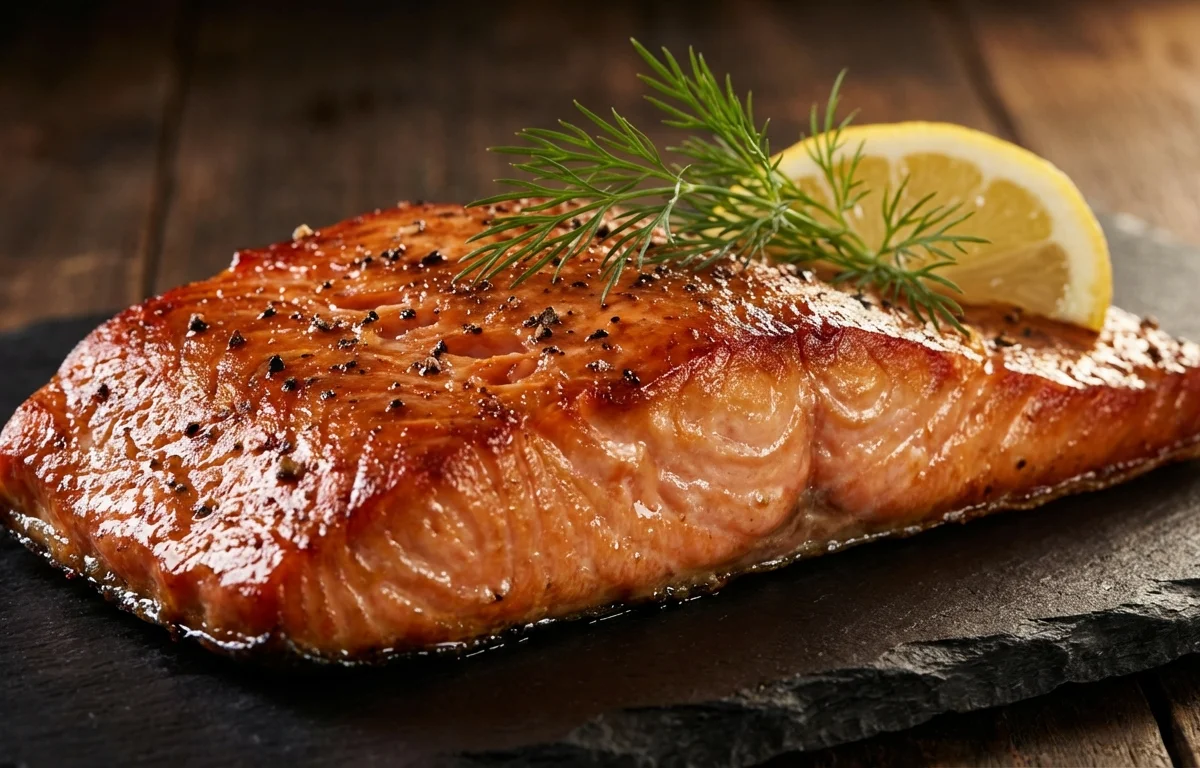
Flaky, tender salmon fillets infused with rich, smoky flavor from a low-and-slow cook over hardwood. The brown sugar and salt dry brine pulls out excess moisture, creating a gorgeous pellicle that locks in the juices while absorbing all that sweet, smoky goodness. Perfect sliced over bagels, flaked into a salad, or served warm right off the smoker.
For 4 servings
- prep
Mix the dry brine.
1.In a small bowl, combine brown sugar, salt, black pepper, and smoked paprika.2.Mix with your fingers until fully incorporated and no lumps of sugar remain. - prep
Brine the salmon fillets.
1.Pat the salmon fillets completely dry with paper towels.2.Place the fillets skin-side down on a wire rack set over a baking sheet.3.Sprinkle the brine mixture evenly over the flesh side of all fillets.4.Refrigerate uncovered for 45 to 60 minutes. The surface will become glossy and slightly tacky — this is the pellicle.TIPThe pellicle is key — it helps the smoke stick and seals in moisture. Don't skip this step. - prep
Prepare the smoker.
1.Preheat your smoker to 107°C (225°F) using indirect heat.2.Drain the soaked wood chips and add them to the smoker box or directly onto the coals.TIPAim for a consistent, light stream of smoke — not billowing white clouds which can make the fish bitter. - prep
Glaze the salmon.
1.Remove the salmon from the refrigerator. Do not rinse.2.Use a pastry brush to lightly coat the top of each fillet with maple syrup. - roast
Smoke the salmon low and slow.
1.Place the fillets skin-side down directly on the smoker grates.2.Close the lid and smoke until the internal temperature reaches 60°C (140°F) at the thickest part, about 1.5 to 2 hours.3.Check the temperature after 90 minutes. The flesh should flake easily with a fork and look opaque.TIPResist the urge to open the lid too often — every peek adds 10 minutes of cook time. - rest · ~5 min
Rest the salmon.
1.Carefully transfer the fillets to a clean plate using a wide spatula.2.Let them rest for 5 minutes before serving. - serve
Garnish with fresh dill and serve with lemon wedges.
Serve the salmon warm as a main dish with lemon wedges on the side, or flake it over a crisp salad. The smoky, sweet crust and tender, flaky interior make it a showstopper.
What to keep in mind.
6 tips from the recipe — small details that make a real difference to the final dish.
- 1Use a leave-in probe thermometer to monitor the salmon's internal temp without opening the smoker.
- 2Rinse the brown sugar in the brine through a sieve if lumpy to ensure even coverage.
- 3Let the pellicle form fully — the tacky, glossy surface is what traps smoke flavor and moisture.
- 4If your smoker runs hot, place a water pan beneath the salmon to buffer temperature swings.
- 5For easy skin removal after smoking, slide a thin spatula between the skin and flesh while the fish is still warm.
- 6Store leftover smoked salmon in an airtight container in the fridge for up to 5 days, or freeze for 3 months.
Adapt it for your goals.
Spicy maple
Add 1/2 tsp cayenne or a chopped chipotle in adobo to the maple syrup glaze for a sweet-heat kick that complements the smokiness.
citrus herbCitrus-herb
Stir 1 tsp finely grated lemon zest and 1 tbsp chopped fresh thyme into the dry brine for a bright, aromatic twist.
honey soyHoney-soy
Replace maple syrup with a mix of 1 tbsp honey and 1 tbsp soy sauce for a savory-sweet umami glaze that pairs well with the smoke.
no sugarNo-sugar
Omit the brown sugar from the brine and use a sugar-free sweetener (like allulose or erythritol) in the glaze — ideal for keto or low-sugar diets.
Why this is on our healthy list.
Rich in Omega-3s
Salmon is one of the best food sources of long-chain omega-3 fatty acids EPA and DHA, which support heart, brain, and joint health.
High-Quality Protein
Each serving provides about 35 grams of complete protein, essential for muscle repair and satiety.
Good Source of Vitamin D
Wild-caught salmon is naturally rich in vitamin D, which aids calcium absorption and immune function.
Low in Added Sugars
With only 2 teaspoons of maple syrup across four fillets, the sugar content per serving remains modest.
Frequently asked questions
Yes, but thaw it completely in the fridge, then pat very dry before brining. Frozen fish releases extra moisture, so extend the dry brine time by 15–20 minutes for a good pellicle.