Kai Rasayana
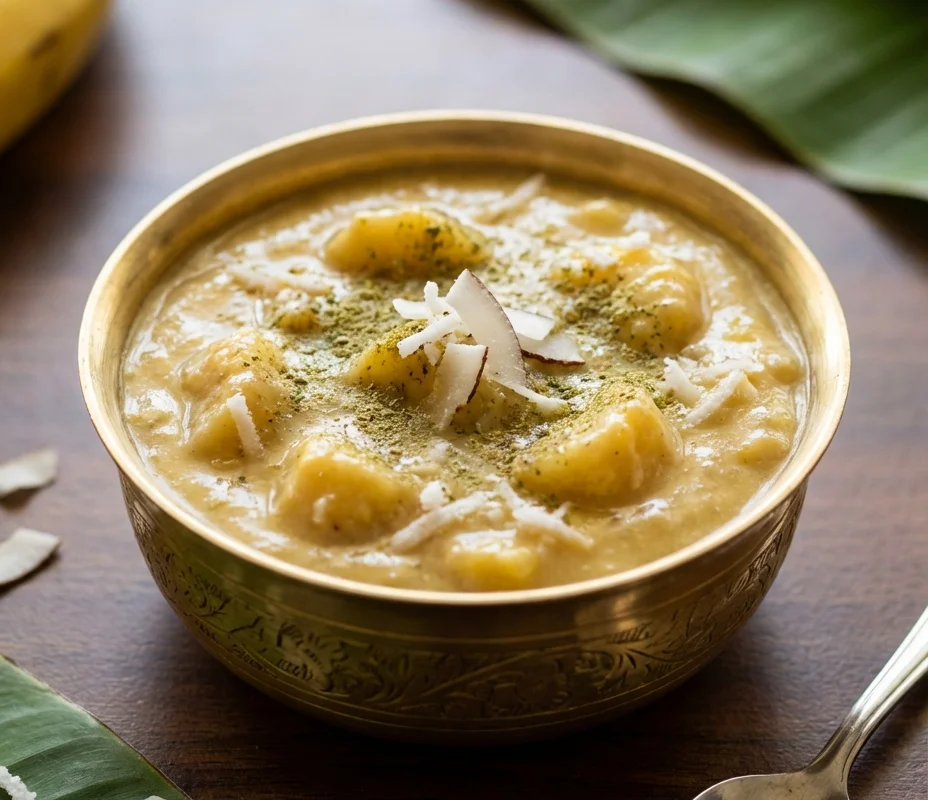
A simple Karnataka-style banana mash made with coconut, jaggery, and a gentle cardamom note. Creamy, naturally sweet, and cooling, it is often served as a quick festive side with dosa, poori, or a traditional meal.
For 4 servings
- prep
Peel and slice the bananas.
Peel the ripe bananas and slice them into a wide bowl so they are easy to mash evenly.
- mix
Mash the bananas with coconut and jaggery.
1.Add the grated fresh coconut to the bananas.2.Add the grated jaggery and cardamom powder.3.Mash and mix with clean fingers or a fork until soft, creamy, and slightly textured.TIPUse ripe but firm bananas so the rasayana tastes sweet and stays creamy instead of watery. - mix
Adjust the texture.
If the mixture feels too thick, add the milk little by little and mix again until it reaches a soft spoonable consistency.
- serve
Serve the kai rasayana fresh.
Divide into small bowls and serve right away on its own or alongside dosa, poori, or a festive meal.
What to keep in mind.
7 tips from the recipe — small details that make a real difference to the final dish.
- 1Use ripe but still firm bananas; overripe ones can turn the rasayana loose and overly mushy.
- 2Grate or crumble the jaggery finely so it dissolves evenly while you mash, without gritty bits.
- 3If your jaggery has impurities, melt it with a spoon of water, strain, cool, and then mix in.
- 4Mash lightly with fingers or a fork so some banana texture remains; it should be creamy, not pureed.
- 5Add milk only a little at a time, since bananas can release moisture as they sit.
- 6Serve soon after mixing, as banana darkens and the fresh coconut tastes best the same day.
- 7If making ahead briefly, cover tightly and refrigerate, then stir just before serving.
Adapt it for your goals.
Vegan
Skip the optional milk or loosen with a little coconut milk for a fully dairy-free version.
no milkNo-milk
Leave out milk entirely and rely on extra mashing if you prefer a thicker, more traditional spoonable texture.
less sweetLess-sweet
Reduce the jaggery slightly when the bananas are very ripe, for a fruit-forward version that is lighter on sweetness.
pooja stylePooja-style
Keep it very simple with banana, coconut, and jaggery only, omitting milk if making it for festive or offering-style meals.
Why this is on our healthy list.
Fruit-Based Energy
Bananas and jaggery provide quick energy, which suits this dish well as a light festive side or snack.
Contains Healthy Fats
Fresh coconut adds satisfying natural fats that give the dish richness and help it feel more filling.
Potassium From Bananas
The ripe bananas in Kai Rasayana contribute potassium along with natural sweetness and creamy texture.
Frequently asked questions
Ripe, sweet bananas that are still firm work best. They mash smoothly but do not make the mixture watery.