
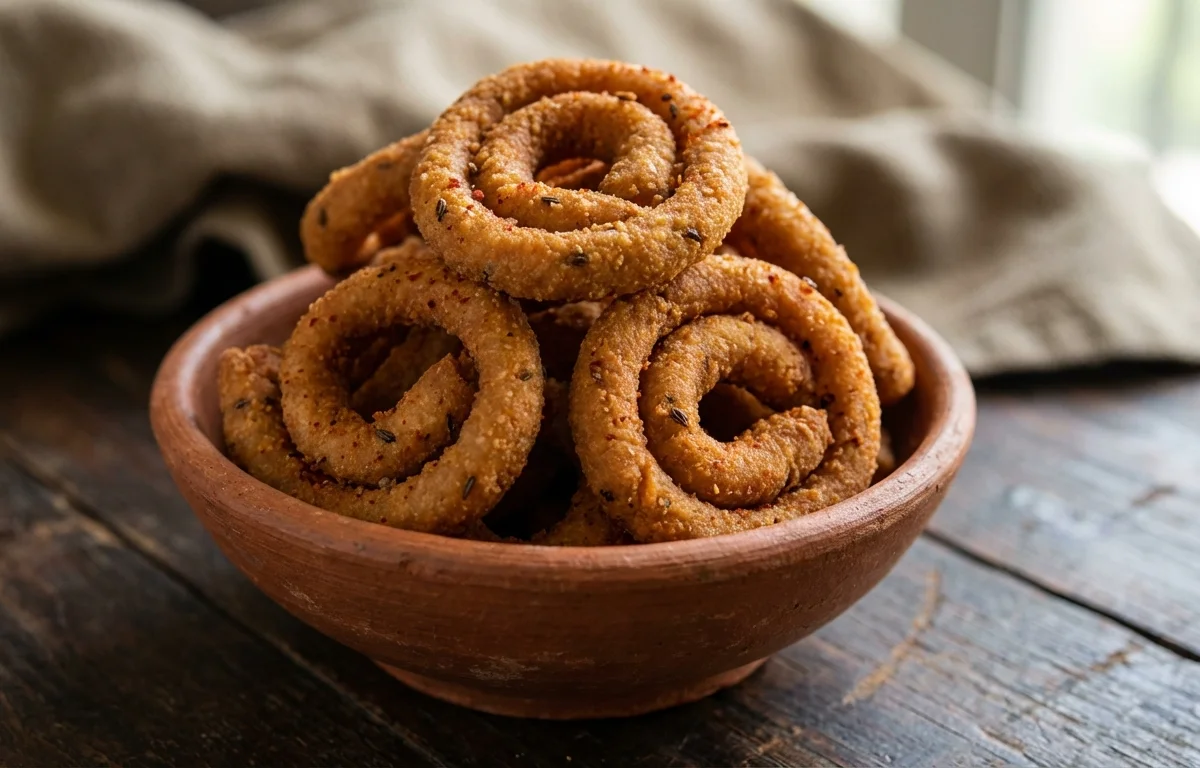
Kodbale
Crispy, crunchy deep-fried rings made from a spiced rice flour dough. This classic Karnataka snack has a subtle heat from red chili and a distinct aroma from asafoetida, making it a perfect tea-time companion that stays fresh for days.
For 4 servings
- prep · ~15 min
Soak chana dal.
Soak chana dal in hot water for 15 minutes. Drain completely and set aside.
- prep · ~5 min
Boil water for dough.
Bring 1.5 cups of water to a rolling boil. Add salt, asafoetida, and 2 tablespoons of oil to the water.
TIPHot water helps bind the rice flour and makes the dough pliable for shaping. - mix · ~10 min
Make the dough.
1.In a large mixing bowl, combine rice flour, cumin seeds, sesame seeds, chopped green chili, chopped curry leaves, grated coconut, and red chili powder.2.Add the drained chana dal and mix everything well with your fingers.3.Pour the boiling water little by little into the flour mixture, stirring continuously with a spoon.4.Once cool enough to handle, knead into a smooth, firm dough. Cover and keep aside.TIPThe dough should be stiff but pliable. If it cracks while shaping, add a few drops of warm water. - prep · ~10 min
Shape the kodbale.
1.Pinch a small lemon-sized portion of dough and roll it into a 4-inch long rope on a clean surface.2.Bring the ends together to form a ring and press gently to seal.3.Place shaped rings on a plate without overlapping. Repeat with remaining dough.TIPKeep the unused dough covered with a damp cloth to prevent drying. - fry · ~20 min
Deep fry the rings.
1.Heat oil for deep frying in a heavy-bottomed pan over medium heat.2.To test, drop a tiny piece of dough into the oil. It should sizzle and rise slowly.3.Carefully slide 6-8 rings into the hot oil. Do not overcrowd.4.Fry until golden and crispy, flipping once for even cooking, about 4-5 minutes per batch.TIPMaintain oil at medium heat. Too hot and the outside browns leaving the inside raw; too low and they absorb excess oil. - other · ~5 min
Drain and cool.
Remove fried kodbale with a slotted spoon and drain on paper towels. Let them cool completely to crisp up before storing.
TIPThey crisp up further as they cool. Store in an airtight container only when completely cool.
What to keep in mind.
6 tips from the recipe — small details that make a real difference to the final dish.
- 1Use fine store-bought rice flour for a smoother, less gritty dough.
- 2Don't skip soaking the chana dal—15 minutes in hot water ensures they soften during frying.
- 3Knead the dough while it is still warm for a more pliable texture that won't crack.
- 4Test oil temperature with a tiny dough piece: it should sizzle and rise slowly, not immediately brown.
- 5Keep formed rings covered with a damp cloth to prevent them from drying out before frying.
- 6Cool kodbale completely on paper towels before storing in an airtight container to maintain crunch.
Adapt it for your goals.
Spicy garlic
Add 1 teaspoon of finely minced garlic along with the green chili for a pungent, aromatic kick that complements the curry leaves.
pepper & jeeraPepper & jeera
Replace red chili powder with 1/2 teaspoon of coarsely crushed black pepper and double the cumin seeds for a milder, earthier flavor.
Why this is on our healthy list.
Gluten-Free Snack
Made entirely from rice flour, this snack is naturally free of gluten, making it suitable for those with gluten intolerance or celiac disease.
Source of Plant Protein
Chana dal (split chickpea lentils) add a modest amount of plant-based protein and fiber to each ring.
Antioxidant-Rich Spices
Cumin seeds, sesame seeds, and curry leaves provide antioxidants and beneficial plant compounds that support overall wellness.
Frequently asked questions
The dough is too dry. Add a few drops of warm water and knead again until smooth and pliable, ensuring the rice flour is fully hydrated.


