Konbilahi Pitika
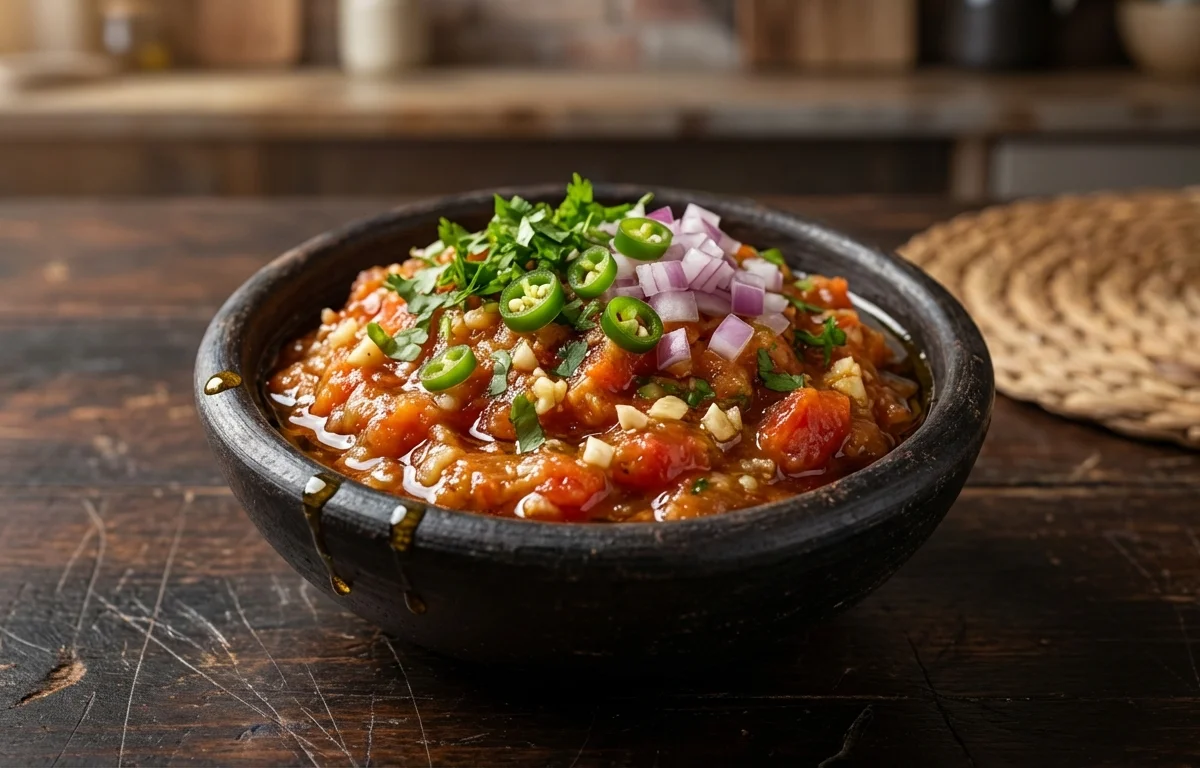
This simple Assamese mashed tomato side is smoky, sharp, and full of fresh flavor. Roasted tomatoes are mixed with onion, green chili, mustard oil, and coriander leaves for a bright pitika that goes beautifully with rice.
For 4 servings
- roast · ~8 min
Roast the tomatoes.
1.Place the tomatoes directly over a flame or on a hot griddle over medium heat.2.Turn them every minute or so until the skin is charred and the tomatoes turn soft all over.3.Take them off the heat and let them cool just enough to handle.TIPRoast until lightly blackened in spots for the best smoky flavor. - prep · ~3 min
Peel and mash the tomatoes.
1.Peel off the loose charred skin from the roasted tomatoes.2.Place the flesh in a bowl and mash well with a fork or clean hand.3.Keep the texture slightly coarse instead of making it completely smooth. - mix · ~2 min
Mix the pitika.
1.Add chopped onion, green chili, coriander leaves, mustard oil, and salt to the mashed tomatoes.2.Mix well until everything is evenly combined.3.Taste and adjust the salt if needed.TIPMustard oil is added raw here, so use a good quality one for its sharp traditional flavor. - serve
Serve the Konbilahi Pitika.
What to keep in mind.
7 tips from the recipe — small details that make a real difference to the final dish.
- 1Roast the tomatoes until fully collapsed, not just blistered, so the mash turns juicy and deeply smoky.
- 2Peel off only the loose charred skin; a few blackened bits add the rustic fire-roasted taste Assamese pitika is known for.
- 3Mash while the tomatoes are still slightly warm so the onion and chili soften just a little into the mixture.
- 4Keep the texture coarse rather than pureed; pitika should feel hand-mashed, not like a smooth chutney.
- 5Add the mustard oil at the end and mix well so its sharp aroma stays bright and doesn't get lost.
- 6If your tomatoes are very watery, drain a little excess juice before mixing to keep the pitika from turning runny.
- 7This tastes best fresh, but you can roast the tomatoes ahead and mix in the onion, chili, coriander, and oil just before serving.
Adapt it for your goals.
Low-oil
Reduce the mustard oil slightly for a lighter version while keeping the roasted tomato and chili flavors front and center.
extra smokyExtra-smoky
Roast the tomatoes entirely over open flame and leave a few charred flecks in the mash for a stronger smoky taste.
no corianderNo-coriander
Skip the coriander leaves if unavailable; the pitika will still be bright from onion, chili, and mustard oil.
milderMilder
Use fewer green chilies for a softer heat, especially if serving alongside other spicy Assamese dishes.
Why this is on our healthy list.
Tomato-Rich Side Dish
Roasted tomatoes bring beneficial antioxidants and make this a fresh vegetable-based accompaniment for rice meals.
Light and Fresh Ingredients
With mostly tomato, onion, chili, and herbs, this dish delivers strong flavor without relying on heavy cooking or rich gravies.
Herb and Chili Boost
Green chili and coriander add freshness and plant compounds that make the dish feel bright and lively.
Frequently asked questions
Yes. Roast them at high heat until the skins blister and the tomatoes soften well, though open flame gives the most traditional smoky flavor.