
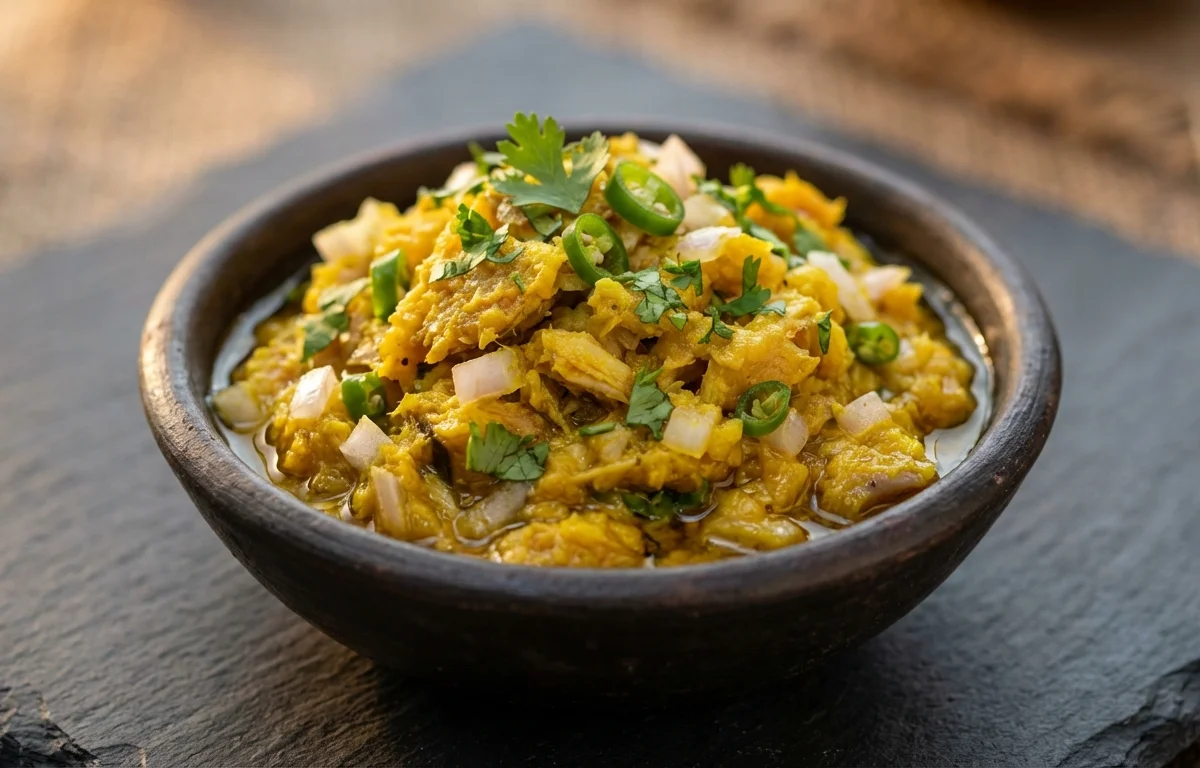
Maas Pitika
A rustic Assamese comfort dish where boiled fish is mashed with mustard oil, green chilies, and roasted tomatoes. Smoky, pungent, and deeply satisfying, this no-fuss pitika comes together in minutes and pairs perfectly with steamed rice and dal.
For 4 servings
- prep · ~10 min
Boil the fish.
1.Place fish steaks in a pan with just enough water to cover them.2.Add a pinch of salt and simmer gently until the fish is cooked through and flakes easily (8-10 minutes).3.Drain the water completely and let the fish cool slightly.TIPDo not overcook the fish or it will turn rubbery. The moment it flakes, drain immediately. - roast · ~7 min
Roast the tomatoes.
1.Place the whole tomatoes directly over a gas flame or on a hot tawa.2.Roast, turning occasionally, until the skin is completely charred and blistered on all sides.3.Let them cool slightly, then peel off the charred skin.TIPCharring the tomatoes adds a smoky depth that defines a good pitika. Don't skip this step. - mix · ~5 min
Mash and assemble the pitika.
1.Carefully remove all bones from the boiled fish — the flesh should be clean.2.In a mixing bowl, add the boneless fish, peeled roasted tomatoes, raw chopped onion, and slit green chilies.3.Pour the raw mustard oil and add the salt.4.Using your fingers or the back of a spoon, mash everything together until well blended but still slightly chunky.TIPUsing your hands to mash gives the authentic texture and lets the mustard oil coat every grain of fish. - garnish · ~1 min
Garnish with fresh coriander and serve.
Top with chopped coriander leaves. Serve immediately with steamed rice and dal.
What to keep in mind.
7 tips from the recipe — small details that make a real difference to the final dish.
- 1Use only the freshest fish for this dish; any off-flavor will be very noticeable since the fish is not heavily spiced.
- 2Drain the boiled fish thoroughly before mashing; excess water will make the pitika watery and dilute the mustard oil.
- 3Roast the tomatoes until the skin is completely charred and blackened for maximum smoky flavor.
- 4Always use raw, cold-pressed mustard oil for the authentic pungent kick; do not heat it.
- 5Adjust the number of green chilies to your heat tolerance — the raw chili provides a sharp, fiery bite.
- 6Remove every pin bone from the fish carefully; a stray bone in the mash ruins the texture.
- 7Serve the pitika immediately after mashing; it loses its fresh, vibrant character when refrigerated.
Adapt it for your goals.
Smoked Fish Pitika
Replace the boiled fish with smoked fish (like smoked mackerel) for an extra layer of smokiness that complements the roasted tomatoes.
Herb Forward PitikaHerb-Forward Pitika
Add a handful of finely chopped fresh mint or dill along with the coriander for a brighter, more aromatic finish.
Low Oil PitikaLow-Oil Pitika
Reduce the mustard oil to 1 teaspoon and replace the rest with a splash of fresh lime juice, for a lighter, tangier version.
Spicy Garlic PitikaSpicy Garlic Pitika
Crush 2-3 cloves of raw garlic into the mash for an extra pungent, savory layer that deepens the dish.
Why this is on our healthy list.
High-Quality Protein
Fish like rohu or catla provides lean, easily digestible protein essential for muscle repair and overall health.
Rich in Omega-3 Fatty Acids
Freshwater fish such as rohu is a good source of omega-3s, which support heart and brain health.
Low in Carbohydrates
This dish is naturally low in carbs, making it a suitable choice for low-carb or keto-friendly meal pairings.
Source of Vitamin C
Raw onions, green chilies, and tomatoes provide a boost of vitamin C, supporting immune function.
Frequently asked questions
Yes, but firm, oily freshwater fish like rohu, catla, or bhetki work best as they hold their shape and flavor well when boiled and mashed.



-curry.webp)
.webp)