
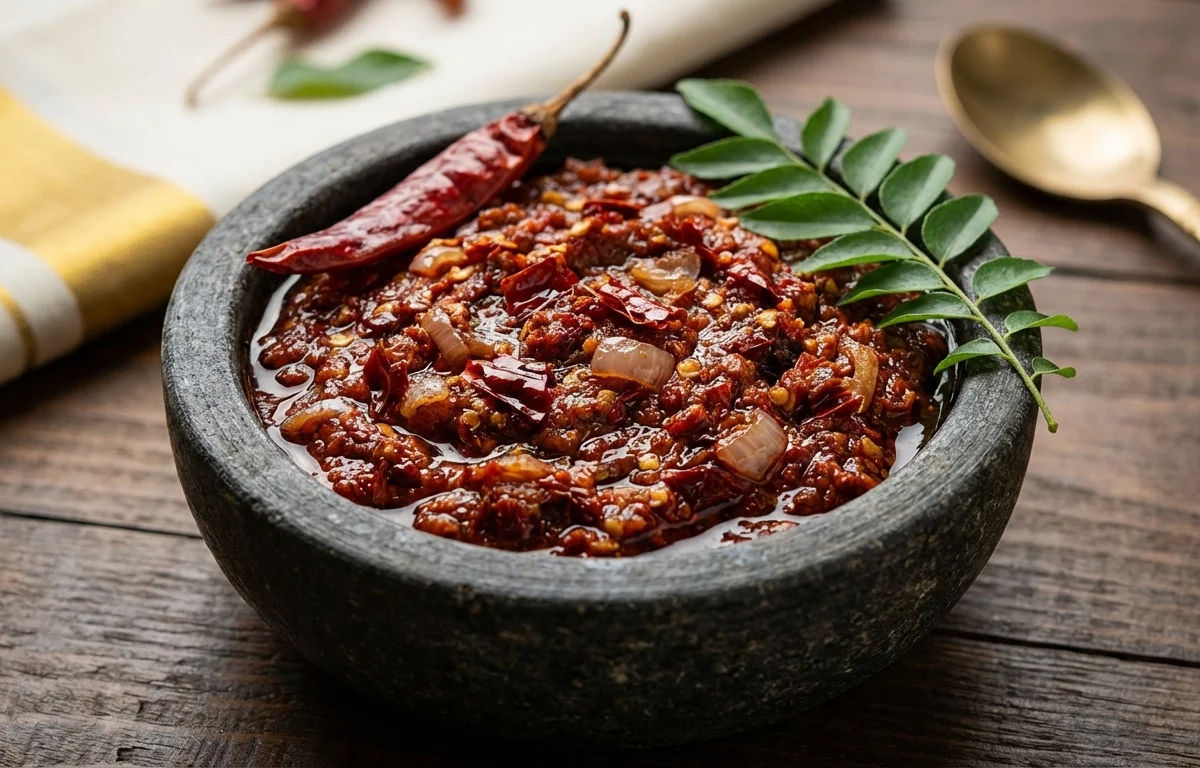
Mulaku Chammanthi
A fiery, rustic Kerala-style chutney where roasted dry red chillies are ground with fresh coconut, shallots, and tamarind. This intensely spicy, slightly tangy condiment is traditionally made on an ammikkal (stone grinder) for a coarse, chunky texture that pairs perfectly with kanji, dosa, or plain rice.
For 4 servings
- prep · ~3 min
Roast the dry red chillies.
1.Place a heavy pan or tawa over low heat.2.Add the dry red chillies and dry roast, stirring constantly.3.Roast until the chillies darken slightly, puff up, and release a smoky aroma (2-3 min).4.Remove to a plate and let them cool completely—this keeps them crisp for grinding.TIPKeep the heat low and stir continuously; even a slight burn turns the chillies bitter and unpalatable. - prep · ~1 min
Pulse the coarse ingredients.
1.Transfer the cooled roasted chillies to a mortar or small mixer grinder.2.Add salt and the ball of tamarind.3.Pulse or pound coarsely—just enough to break down the chillies into flakes without turning them into a fine powder.TIPA stone mortar (ammikkal) gives the best chunky texture and releases oils naturally. If using a mixer, use the pulse function sparingly. - mix · ~2 min
Grind the shallots and coconut together.
1.Add the peeled shallots to the mortar or grinder with the chilli mixture.2.Crush or pulse briefly until the shallots release their juices.3.Add the freshly grated coconut.4.Pound or pulse everything together into a coarse, chunky paste that holds together loosely.TIPDo not add any water. The moisture from the shallots and coconut is enough to bind the chutney, and adding water dilutes the intense kick. - mix · ~1 min
Finish with coconut oil.
1.Transfer the ground chammanthi to a serving bowl.2.Drizzle the coconut oil on top.3.Mix gently with your fingertips or a spoon to incorporate the oil throughout.TIPUse cold-pressed virgin coconut oil for the most authentic taste and aroma—it elevates the entire chutney. - serve
Serve immediately or let it rest.
Mulaku Chammanthi is best enjoyed fresh, but letting it sit for 10-15 minutes allows the flavors to meld. Serve with hot kanji (rice porridge), steamed rice, dosa, idli, or even as a fiery spread on toast.
TIPStore leftovers in the fridge in an airtight container for up to 2 days, but note that the coconut will lose its fresh brightness over time.
What to keep in mind.
6 tips from the recipe — small details that make a real difference to the final dish.
- 1Roast the dry red chillies on low heat until they just darken and puff up to avoid bitterness.
- 2Let the roasted chillies cool completely before grinding to keep them crisp for a coarse texture.
- 3Use a stone mortar (ammikkal) if available; its friction releases natural oils that a mixer cannot replicate.
- 4Do not add water when grinding — the moisture from shallots and coconut is enough to bind the chutney.
- 5Drizzle cold-pressed virgin coconut oil at the end for the most authentic Kerala flavor and aroma.
- 6Store leftover Mulaku Chammanthi in an airtight container in the fridge for up to 2 days, but note the coconut loses freshness.
Adapt it for your goals.
Mild version
Replace half the dry red chillies with Kashmiri chillies (which are milder and add color) and add 1 teaspoon of jaggery to balance the heat with a hint of sweetness for those who prefer less fire.
add aromaticsAdd aromatics
Add 1/4 teaspoon of cumin seeds and 2 garlic cloves along with the shallots for a deeper, more layered flavor profile that works well as a spread on sandwiches.
oil freeOil-free
Skip the finishing coconut oil entirely to reduce fat — the natural oils from the coconut and shallots still yield a flavorful chutney, though it will be slightly less aromatic.
Why this is on our healthy list.
Rich in Healthy Fats
Fresh coconut and coconut oil provide medium-chain triglycerides (MCTs), which are easily metabolized for quick energy and support good cholesterol levels.
Digestive Aid
Tamarind and shallots are traditionally used to stimulate digestion, and the capsaicin in red chillies can boost metabolism.
Antioxidant Load
Dry red chillies are packed with capsaicin, vitamin C, and carotenoids, which help fight inflammation and oxidative stress.
Low-Sugar Condiment
This chutney contains no added sugar, relying only on the natural sweetness of coconut and the tang of tamarind.
Frequently asked questions
Fresh coconut provides the moisture needed to bind the chutney; desiccated coconut is too dry — if using, reconstitute it with a few drops of water, but the texture and flavor will not be as good.



.webp)
.webp)