
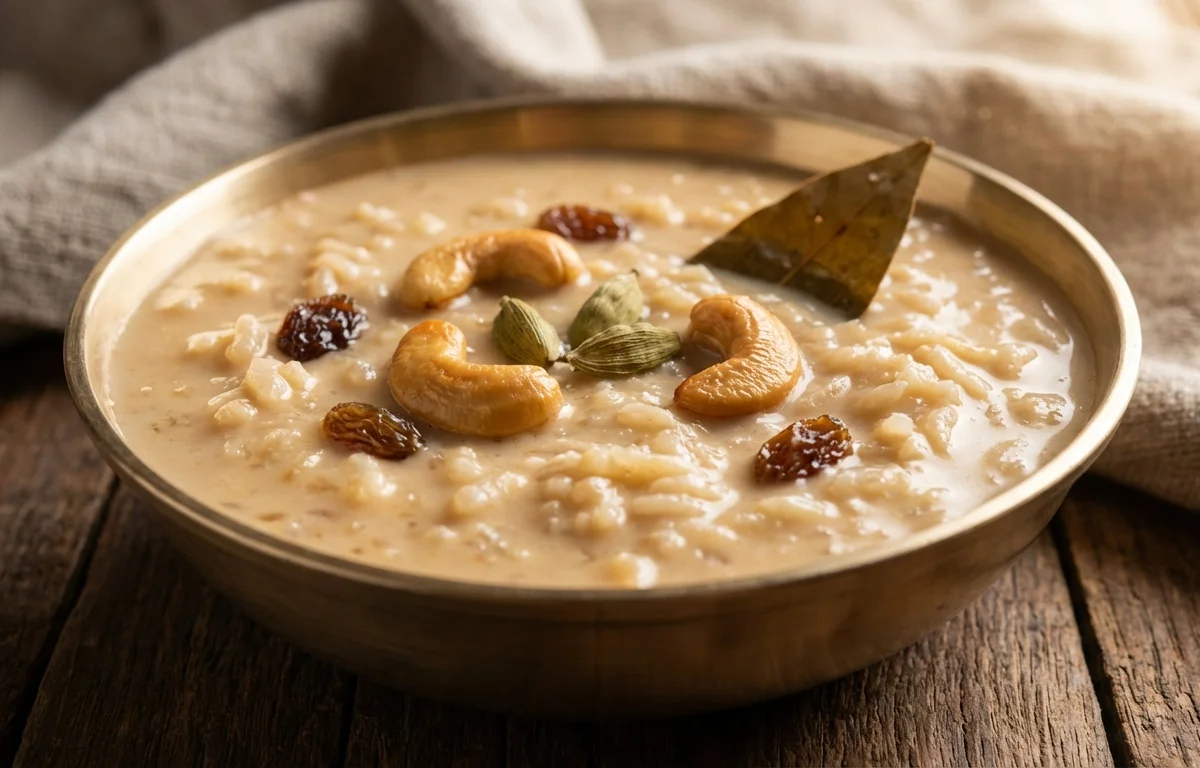
Nolen Gurer Payesh
A beloved Bengali winter dessert made by slowly cooking gobindobhog rice in milk until creamy, then sweetening it with fragrant date palm jaggery. Rich, comforting, and perfect served slightly warm or chilled.
For 4 servings
- prep · ~20 min
Prepare the rice and jaggery.
1.Wash the gobindobhog rice gently until the water runs mostly clear.2.Soak the rice in water for 20 minutes, then drain well.3.Grate or chop the nolen gur finely so it melts quickly later. - boil · ~10 min
Bring the milk to a gentle boil.
Pour the milk into a heavy pan and add the bay leaf and green cardamom. Bring it to a gentle boil over medium heat, stirring often so the milk does not catch at the bottom.
TIPUse a heavy-bottomed pan and keep the heat moderate so the milk reduces slowly without scorching. - simmer · ~30 min
Cook the rice in the milk.
1.Add the drained rice to the boiling milk and stir well.2.Lower the heat and cook uncovered, stirring every few minutes.3.Scrape down the milk solids from the sides of the pan and mix them back in.4.Cook until the rice is soft and the milk has thickened to a creamy consistency.TIPStir gently but regularly so the rice cooks evenly and the payesh stays smooth. - rest · ~10 min
Cool the payesh slightly before adding the jaggery.
Turn off the heat and let the payesh sit for 8 to 10 minutes. This keeps the milk from splitting when the nolen gur is mixed in.
TIPNever add date palm jaggery to vigorously boiling milk, or the payesh can curdle. - mix · ~3 min
Mix in the nolen gur.
1.Remove the bay leaf and cardamom pods if you like a smoother finish.2.Add the grated nolen gur little by little, stirring after each addition.3.Mix until the jaggery fully melts into the warm payesh. - garnish
Finish with cashews and raisins.
Stir in the cashews and raisins, reserving a few for the top if you like. The payesh will thicken a little more as it stands.
- serve
Serve warm or chilled.
Spoon the payesh into katoris and serve slightly warm for the best jaggery aroma, or chill for a firmer, richer texture.
What to keep in mind.
7 tips from the recipe — small details that make a real difference to the final dish.
- 1Keep the milk at a gentle simmer, not a hard boil, so it reduces evenly without catching on the base.
- 2Stir and scrape the sides of the pan regularly; those thickened milk solids give payesh its classic rich body.
- 3Add the nolen gur only after the payesh cools slightly, or the milk may split and turn grainy.
- 4Grate the jaggery finely so it melts quickly into the warm payesh without needing extra heat.
- 5If chilling, keep the payesh slightly looser in the pan because the rice and milk will thicken more in the fridge.
- 6For the best winter aroma, serve it just slightly warm rather than piping hot after the jaggery is mixed in.
- 7Gobindobhog gives the most authentic texture, but watch it closely since short-grain rice thickens the milk fast.
Adapt it for your goals.
No-nuts
Skip the cashews for an allergy-friendly version; the payesh still stays rich from reduced milk and rice.
extra gurExtra-gur
Reserve a little grated nolen gur to sprinkle on top just before serving for a stronger jaggery aroma.
festiveFestive
Lightly fry the cashews and raisins in a little ghee before adding for a more celebratory, richer finish.
lighter sweetLighter-sweet
Use a bit less nolen gur if you want the milk and cardamom notes to come through more clearly.
Why this is on our healthy list.
Calcium-Rich Dairy Base
Made with full-fat milk, this dessert provides calcium and dairy nutrients while also giving the payesh its satisfying body.
Energy-Giving Winter Dessert
Rice and date palm jaggery make it a comforting, energy-providing sweet traditionally enjoyed during colder months.
Includes Nuts and Dried Fruit
Cashews and raisins add some healthy fats, texture, and naturally occurring micronutrients beyond the milk-and-rice base.
Frequently asked questions
The jaggery was likely added while the milk was too hot or boiling. Let the payesh rest for several minutes first, then stir in the gur gradually.


