Ou Tenga Dal
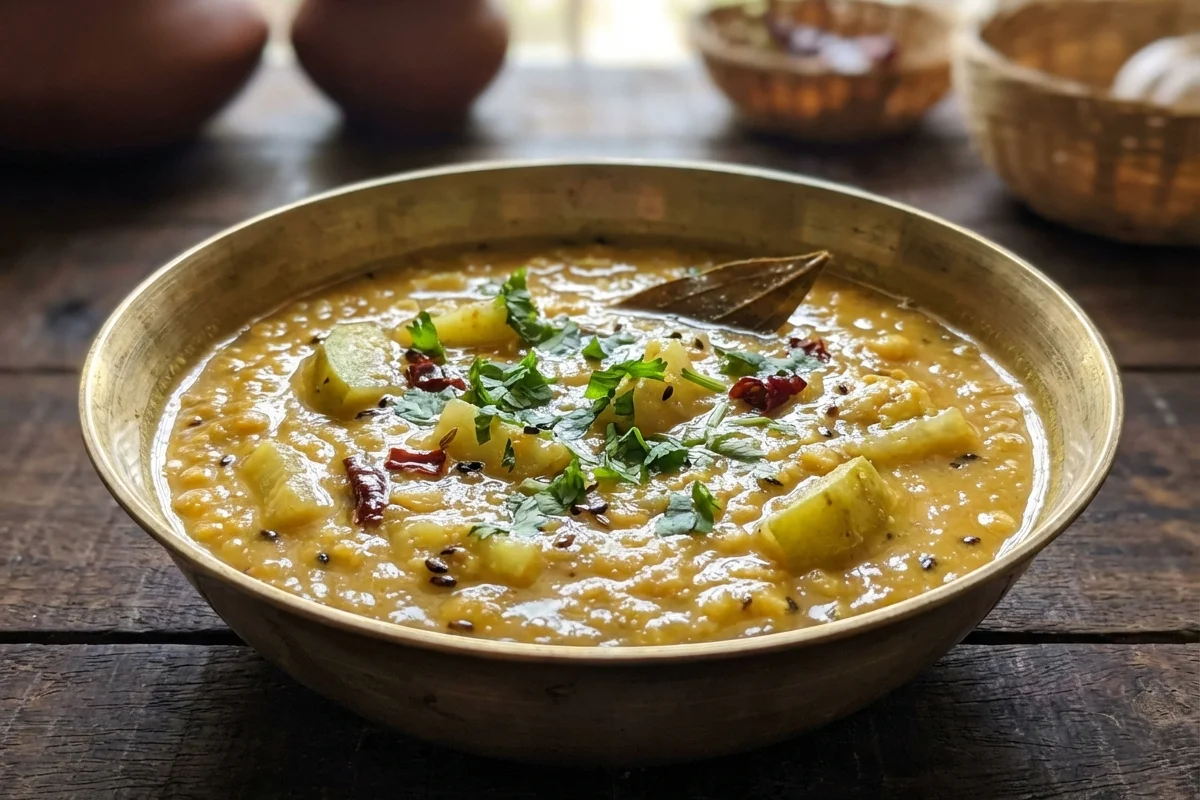
This Assamese dal brings together soft masoor dal and elephant apple for a light, tangy bowl with a gentle warmth. It is simple, comforting, and especially good with plain steamed rice on a warm day.
For 4 servings
- prep
Rinse the dal and cut the ou tenga.
Wash the masoor dal until the water runs mostly clear. Cut the elephant apple into medium pieces so it softens evenly while cooking.
- boil · ~15 min
Cook the dal with turmeric and water.
Add masoor dal, 4 cups water, and turmeric powder to a pot. Bring to a boil, then lower the heat and cook until the dal is soft and starts to break down.
- simmer · ~12 min
Add the ou tenga and simmer until tender.
Add the elephant apple pieces and salt to the pot. Simmer until the fruit turns soft and lightly flavors the dal with its sharp, sour taste.
TIPMash a few dal grains with the back of the spoon if you want a smoother body without making the dish thick. - temper · ~1 min
Make the tempering.
1.Heat mustard oil in a small pan over medium heat.2.Add mustard seeds and let them crackle.3.Add the dry red chili and fry briefly until fragrant.TIPDo not burn the chili or mustard seeds, or the tempering will taste bitter. - assemble · ~2 min
Pour the tempering into the dal.
Pour the hot tempering over the simmering dal and mix well. Let it bubble for 1 to 2 minutes so the flavors come together.
- serve
Serve hot with steamed rice.
What to keep in mind.
6 tips from the recipe — small details that make a real difference to the final dish.
- 1Add the ou tenga only after the masoor has softened; early acidity can slow the dal from breaking down properly.
- 2Keep the final texture light and pourable, not thick, since Assamese tenga dal is meant to feel delicate with rice.
- 3If the elephant apple is very mature and fibrous, peel well and cut smaller so it softens evenly in the simmer.
- 4Heat mustard oil until it just loses its raw smell before adding mustard seeds for a cleaner, nuttier tempering.
- 5Once the tempering goes into the pot, simmer only briefly so the mustard and chili aroma stays bright.
- 6This dal tastes even better after a short rest of 10 minutes, when the sourness of the ou tenga settles into the lentils.
Adapt it for your goals.
Low-oil
Use half the mustard oil for the tempering if you want a lighter finish while keeping the dish's essential mustard aroma.
spicierSpicier
Add an extra dry red chili in the tempering for a sharper heat that stands up well to the sour elephant apple.
moong dalMoong-dal
Swap masoor for split moong dal for a gentler, slightly sweeter base that still pairs nicely with the tangy fruit.
garlic temperingGarlic-tempering
Add a lightly crushed garlic clove to the tempering for a deeper, more rustic flavor if you prefer a less minimal version.
Why this is on our healthy list.
Lentil-Based Protein
Masoor dal provides plant protein and makes the dish satisfying while still keeping it light.
Good Source of Fiber
The combination of lentils and elephant apple contributes fiber that supports a filling, balanced meal with rice.
Lightly Spiced Comfort Food
With minimal oil and a simple tempering, this dal stays easygoing and less rich than many heavier curries.
Frequently asked questions
Yes, but the flavor will change. A little tomato or lemon can add tartness, though elephant apple gives this dal its distinctive Assamese character.