Pan-Seared Scallops
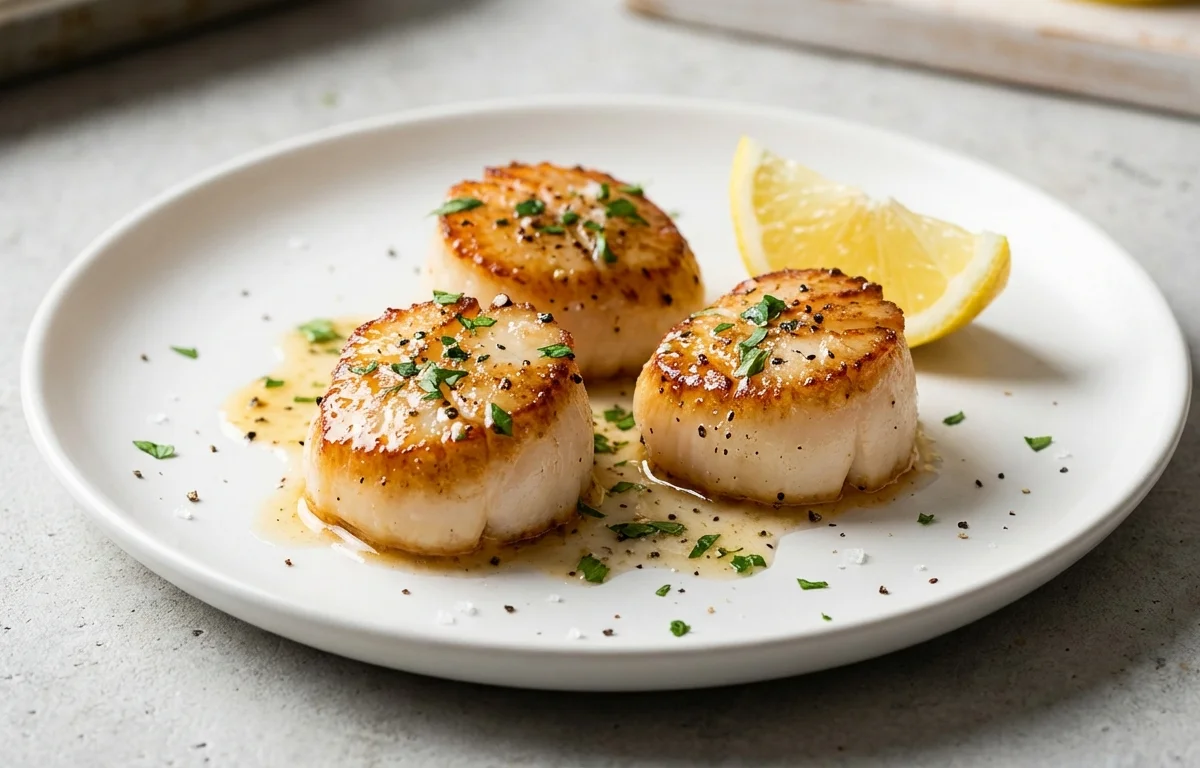
Plump, sweet sea scallops seared to golden perfection with a buttery, crisp crust. This elegant yet deceptively simple dish comes together in under 15 minutes, making it perfect for a quick weeknight dinner that feels restaurant-worthy. Serve them with a squeeze of fresh lemon to cut through the richness.
For 4 servings
- prep · ~5 min
Pat the scallops completely dry.
1.Check each scallop and remove the small side muscle if still attached.2.Lay scallops on a plate lined with paper towels.3.Pat tops thoroughly with more paper towels until the surface feels tacky, not wet.TIPDry scallops are non-negotiable for a golden sear. Any surface moisture creates steam, preventing browning. - prep · ~1 min
Season the scallops.
1.Sprinkle both sides of the scallops evenly with a pinch of salt.2.Crack a pinch of fresh black pepper over both sides.TIPSeason just before they hit the pan — salt draws out moisture if it sits too long. - fry · ~3 min
Sear the first side to a golden crust.
1.Set a cast iron skillet over medium-high heat and add olive oil.2.Once the oil is shimmering and just beginning to smoke, gently place scallops in the pan, spacing them at least 1 inch apart.3.Do not move or touch them for 2 minutes while the golden crust forms.TIPWork in batches if needed. Overcrowding drops the pan temperature and the scallops will steam instead of sear. - fry · ~2 min
Flip and baste with butter.
1.Flip each scallop using tongs.2.Add butter, smashed garlic cloves, and thyme sprigs to the pan.3.Tilt the pan slightly and spoon the foaming butter over the scallops continuously for 1 minute.4.Scallops are done when they feel slightly springy to the touch and are opaque in the center.TIPScallops cook very fast — the second side only needs about 1 to 1½ minutes. Overcooking makes them rubbery. - serve · ~1 min
Plate immediately.
1.Transfer scallops to a warm serving plate.2.Spoon any remaining pan butter over the top.3.Scatter with fresh parsley and serve with lemon wedges.
What to keep in mind.
7 tips from the recipe — small details that make a real difference to the final dish.
- 1Pat scallops with paper towels until tacky-dry to ensure a deep golden crust.
- 2Use a heavy pan like cast iron—it holds heat steady for an even, aggressive sear.
- 3Never crowd the pan; work in batches so scallops brown instead of steam.
- 4Season with salt only right before cooking to prevent moisture from pooling on the surface.
- 5Flip scallops only once—disturbing them too early tears the crust.
- 6Baste with foaming butter and aromatics in the last minute for extra flavor without overcooking.
- 7Cook until the center is just opaque and feels springy—rubbery scallops are a sign of overcooking.
Adapt it for your goals.
Herb-crusted
Press seasoned scallops into finely chopped fresh chives and parsley before searing for a fragrant green crust that adds texture and a mild onion-herb note.
spicySpicy
Add a pinch of red pepper flakes to the butter along with the garlic and thyme for a subtle heat that complements the sweetness of the scallops.
citrus herb pan sauceCitrus-herb pan sauce
After basting, deglaze the pan with a splash of dry white wine and stir in a knob of butter and fresh lemon zest for a quick, bright pan sauce.
lighterLighter
Replace half the butter with a drizzle of extra-virgin olive oil and omit the basting step—the scallops still sear beautifully with less saturated fat.
Why this is on our healthy list.
High-Quality Protein
Sea scallops are an excellent lean protein source, providing all essential amino acids with very little fat.
Rich in Selenium
Scallops are one of the best food sources of selenium, an antioxidant mineral that supports thyroid function and immune health.
Good Source of B12
A serving of scallops delivers a significant amount of vitamin B12, essential for nerve health and red blood cell formation.
Low in Calories
At roughly 100 calories per 100g, scallops offer a nutrient-dense, satisfying meal component that fits into calorie-conscious diets.
Frequently asked questions
Look for an opaque, pale white center that feels slightly springy when pressed—overcooked scallops become firm and rubbery.