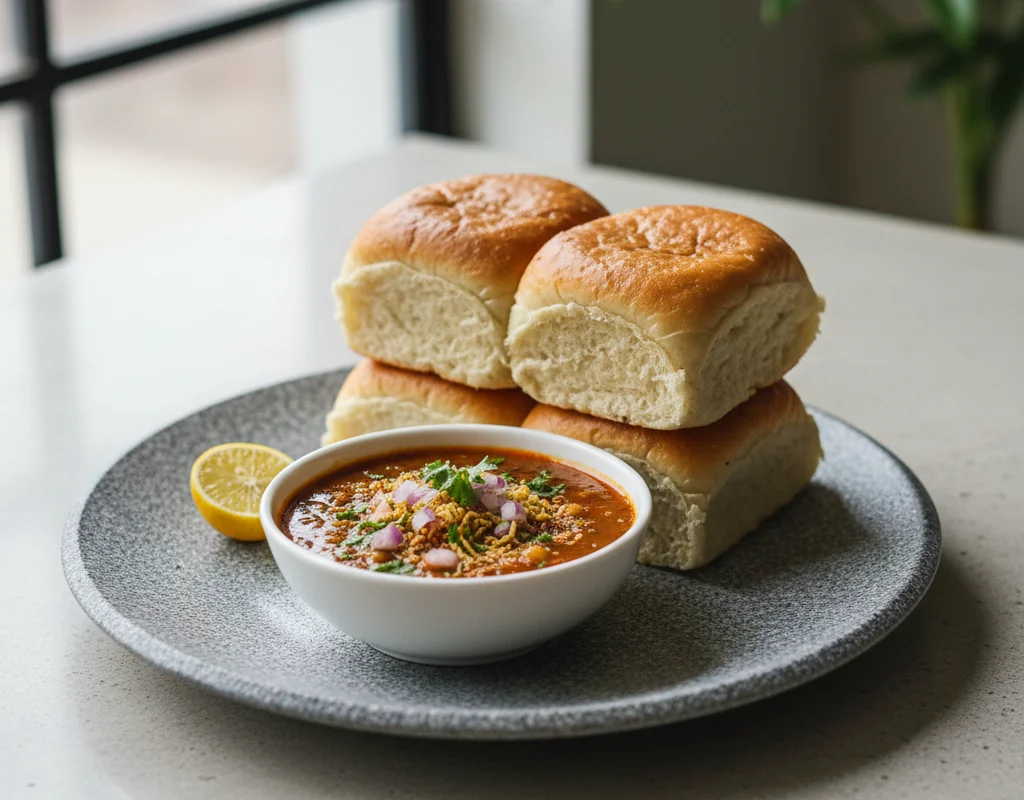
Pav
Discover how to make classic Mumbai-style Ladi Pav at home. These feather-light, soft, and fluffy bread rolls are perfect for soaking up curries, making Vada Pav, or simply enjoying with a dollop of butter. A truly satisfying baking project!
For 6 servings
- mix
Activate the yeast.
In a small bowl, combine the lukewarm water, sugar, and active dry yeast. Stir gently and set it aside for 5-10 minutes until the mixture becomes frothy and bubbly.
TIPIf the yeast doesn't froth, it might be inactive. It's best to start over with a fresh packet of yeast. - knead
Knead the dough.
1.In a large mixing bowl, combine the all-purpose flour and salt.2.Make a well in the center and pour in the frothy yeast mixture, warm milk, and melted butter.3.Mix everything together to form a shaggy dough.4.Transfer the dough to a lightly floured surface and knead for 8-10 minutes until it's smooth, soft, and elastic.TIPThe dough should spring back when you gently press it with a finger. This indicates it's well-kneaded. - rest
Let the dough rise.
Place the kneaded dough in a lightly greased bowl. Cover it with a damp cloth or plastic wrap and let it rise in a warm, draft-free place for 60-90 minutes, or until it has doubled in size.
- prep
Shape the pavs.
1.Gently punch down the risen dough to release the air.2.Divide the dough into 12 equal portions.3.Take each portion and roll it into a smooth ball, tucking the edges underneath.4.Arrange the dough balls close to each other in a greased 9x9 inch baking tray. They should be just touching. - rest
Proof the shaped rolls.
Cover the baking tray with a damp cloth and let the pavs rise for another 30-45 minutes. They will become puffy and merge together.
- bake
Bake the pavs.
1.Preheat your oven to 190°C (375°F).2.Gently brush the tops of the risen pavs with a milk wash (2 tbsp milk).3.Bake for 15-20 minutes, or until the tops are golden brown.4.The internal temperature should be around 90°C (195°F). - serve
Finish and serve.
As soon as the pavs are out of the oven, brush them generously with melted butter. This keeps the crust soft. Let them cool in the pan for a few minutes before serving warm.
What to keep in mind.
5 tips from the recipe — small details that make a real difference to the final dish.
- 1Ensure your milk and water are lukewarm, not hot. Hot liquid can kill the yeast.
- 2Kneading is crucial for developing gluten, which gives the pav its soft, chewy texture. Don't skip this step.
- 3Placing the dough balls close together in the pan helps them rise upwards, resulting in taller, softer sides.
- 4A milk wash gives the pav a beautiful golden-brown color. For a shinier crust, you can use an egg wash instead.
- 5Store leftover pav in an airtight container at room temperature for up to 3 days.
Adapt it for your goals.
Healthy
Replace half of the all-purpose flour with whole wheat flour (atta) for added fiber. You might need a little extra water to get the right dough consistency.
veganVegan
Use a plant-based milk like almond or soy milk, and substitute the butter with a neutral vegetable oil or vegan butter.
quickQuick
Use instant yeast instead of active dry yeast. You can mix it directly with the dry ingredients and reduce the first rising time significantly.
Why this is on our healthy list.
Provides Energy
The carbohydrates from the all-purpose flour provide a quick source of energy for the body.
Comfort Food
Enjoying freshly baked bread like pav can be comforting and can improve mood and reduce stress.
Frequently asked questions
Pav is primarily made from all-purpose flour, making it a source of carbohydrates for energy. It's a treat rather than a health food. For a healthier option, you can make it with whole wheat flour.



.webp)