
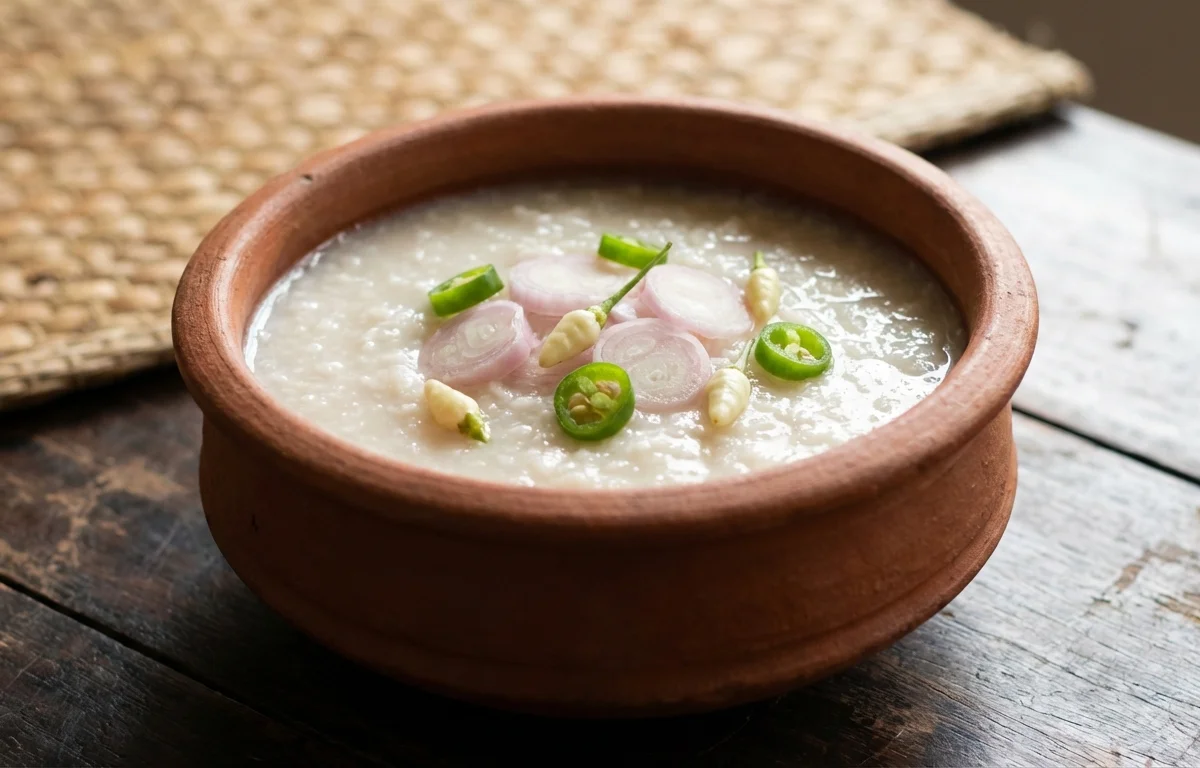
Pazhamkanji
A humble, nourishing fermented rice porridge from Kerala, traditionally made by soaking leftover cooked rice in water overnight. The slight tang from natural fermentation, paired with buttermilk, a pinch of salt, and a crunchy shallot or pickle on the side, makes it a beloved rustic breakfast.
For 4 servings
- mix · ~480 min
Soak the cooked rice overnight.
Place the cooked rice in a large bowl. Pour in 4 cups of room-temperature water, making sure the rice is fully submerged. Cover loosely and let it rest at room temperature for 8-12 hours or overnight to ferment.
- mix · ~2 min
Mash and loosen the kanji.
The next morning, the rice will have expanded and the water will be slightly bubbly with a mild tangy aroma. Using a ladle or clean hands, gently mash the rice and mix it with the water until you reach a loose, porridge-like consistency.
TIPDon't over-mash — a few soft grains of rice left intact give the kanji a nicer texture. - mix · ~1 min
Season with salt and stir in buttermilk.
Add the salt to the mashed rice mixture. Pour in the buttermilk and stir well to combine. The buttermilk adds a creamy tang that balances the fermented notes.
- assemble · ~1 min
Portion into bowls.
Ladle the pazhamkanji into individual katoris or small bowls, making sure each serving gets a good amount of both the liquid and the soft rice grains.
- garnish · ~1 min
Garnish with shallots, chili, and serve with pickle.
Top each bowl with sliced raw shallots and slit green chili if using. Serve immediately with a spoonful of tangy mango or lemon pickle on the side.
What to keep in mind.
7 tips from the recipe — small details that make a real difference to the final dish.
- 1Use day-old matta rice for the best fermentation texture and authentic Kerala taste.
- 2Let the rice soak at room temperature—do not refrigerate—so natural fermentation develops tang.
- 3If you prefer a stronger sour note, extend the soak to 14 hours; for milder, use just 8 hours.
- 4Gently mash the soaked rice with your fingers for a rustic, slightly chunky porridge consistency.
- 5Always taste before adding salt; the pickle and buttermilk already contribute salinity.
- 6Serve immediately after adding buttermilk to keep the kanji fresh and prevent separation.
- 7Store leftover pazhamkanji without buttermilk in the fridge up to 1 day; stir in buttermilk just before eating.
Adapt it for your goals.
Dairy-free
Replace buttermilk with 1/4 cup of coconut milk or a splash of lemon juice mixed with water. The dish remains tangy and refreshing, ideal for those avoiding dairy.
low sodiumLow-sodium
Omit salt entirely and rely on the pickle for salinity. Use a no-salt-added pickle or increase the shallot garnish to add crunch without sodium.
protein packedProtein-packed
Stir in a handful of cooked moong dal or crumbled paneer before serving. This boosts protein content while keeping the kanji light and comforting.
herb freshHerb-fresh
Garnish with fresh curry leaves and a pinch of black pepper instead of green chili. Adds aromatic depth without extra heat.
Why this is on our healthy list.
Gut-Friendly Fermentation
The natural fermentation of rice encourages beneficial lactic acid bacteria, which aid digestion and promote a healthy gut microbiome.
Low in Fat & Calories
Pazhamkanji is a light, low-fat breakfast made from rice, water, and buttermilk, providing energy without heavy fats or oils.
Natural Hydration
The high water content helps keep you hydrated and cool, especially in warm climates—making it a traditional heat-beating meal.
Source of Probiotics from Buttermilk
Buttermilk contains natural probiotics that support digestive health and help maintain a balanced gut flora.
Rich in Complex Carbohydrates
Matta rice provides slow-release energy due to its complex carbohydrates, keeping you full and fueled for hours.
Frequently asked questions
Ideally use Kerala matta or parboiled rice; plain white rice will also work but may become too mushy and lack the characteristic texture.


