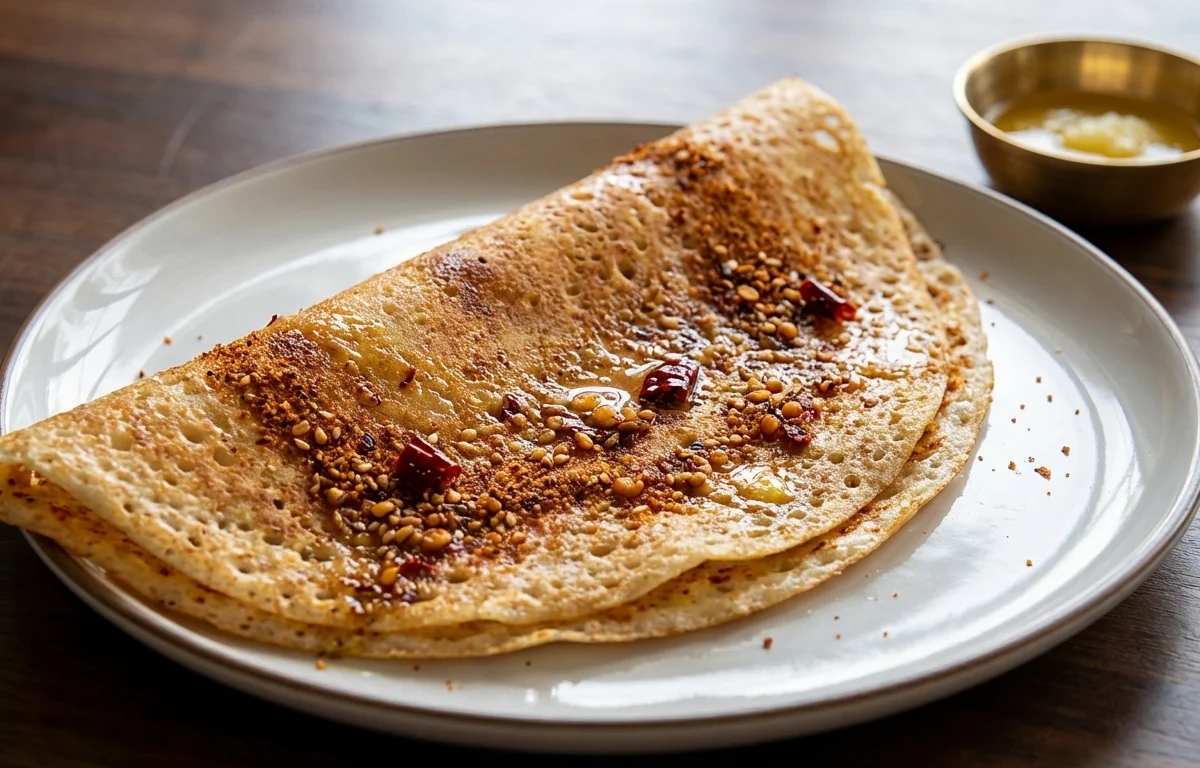
Podi Dosa
Thin, crisp dosa spread with ghee and a fragrant layer of podi makes a simple South Indian favorite that is big on texture and flavor. It cooks quickly and tastes best straight off the pan with chutney on the side.
For 4 servings
- prep · ~5 min
Soak the rice and dal.
1.Wash the idli rice and soak it with fenugreek seeds in enough water for 6 hours.2.Wash the urad dal and soak it in a separate bowl of water for 6 hours.3.Keep the poha aside and rinse it just before grinding.TIPSeparate soaking helps the urad dal grind light and fluffy, which gives better crisp dosas. - mix · ~20 min
Grind the batter.
1.Drain the urad dal and grind it with a little water to a smooth, airy batter.2.Drain the rice and fenugreek seeds, then grind with the rinsed poha and enough water to a slightly grainy, pourable batter.3.Mix both batters well in a large bowl. - rest · ~480 min
Ferment the batter.
Add 0.25 tsp salt to the batter and mix well. Cover loosely and leave in a warm spot for 8 hours, until the batter turns light and slightly bubbly.
TIPDo not fill the bowl to the top; the batter needs room to rise. - roast · ~7 min
Make the podi.
1.Dry roast the chana dal on low heat until golden and fragrant.2.Add the roasted urad dal, dried red chili, sesame seeds, and asafoetida; roast briefly until aromatic.3.Cool the mixture completely, then grind it with the remaining 0.25 tsp salt to a coarse powder.TIPKeep the heat low while roasting so the lentils brown evenly without turning bitter. - prep · ~2 min
Thin the batter for dosa.
Stir the fermented batter gently. Add a little water if needed to make a free-flowing batter that spreads easily on the pan.
- fry · ~4 min
Cook the podi dosa.
1.Heat a dosa tawa well and lightly wipe the surface.2.Pour a ladle of batter onto the center and spread it in a thin circle.3.Drizzle 1 tsp ghee around the edges and over the top.4.Sprinkle 1 to 2 tsp podi evenly over the dosa and cook until the bottom is crisp and golden.TIPIf the tawa is too hot, the batter will not spread well. Lower the heat for a few seconds before making the next dosa. - serve · ~5 min
Fold and serve the dosa hot.
Fold the dosa in half or roll it up and serve right away. Repeat with the remaining batter, podi, and ghee to make 4 dosas.
What to keep in mind.
6 tips from the recipe — small details that make a real difference to the final dish.
- 1For a truly crisp podi dosa, keep the batter thinner than regular plain dosa batter so it spreads into a fine layer.
- 2Let the roasted podi mixture cool completely before grinding, or trapped steam can make the powder clump.
- 3Wipe the tawa lightly between dosas to prevent old podi bits from burning and turning bitter.
- 4If the batter resists spreading, the pan is too hot; lower the heat briefly, then pour the next dosa.
- 5Sprinkle podi only after the batter is spread and ghee is drizzled, so the spice powder adheres evenly.
- 6Store leftover podi in an airtight jar and keep batter refrigerated; both make quick breakfasts for the next day.
Adapt it for your goals.
Vegan
Replace ghee with sesame oil or a neutral oil for a dairy-free version that still pairs beautifully with the podi.
extra spicyExtra-spicy
Increase the dried red chilies in the podi or add a pinch of chili powder for a hotter, more fiery dosa.
onion podiOnion-podi
Scatter very finely chopped onions over the dosa before the podi for extra sweetness, crunch, and street-style flavor.
butter roastButter-roast
Use butter instead of ghee for a richer, softer-edged roast with a more indulgent finish.
Why this is on our healthy list.
Fermented Batter Support
The fermented rice and urad dal batter is traditionally valued for improved digestibility and a lighter texture.
Plant Protein From Lentils
Urad dal and chana dal add plant-based protein, making the dosa more satisfying than a rice-only crepe.
Mineral-Rich Sesame
Sesame seeds in the podi contribute healthy fats and important minerals along with deep nutty flavor.
Frequently asked questions
The batter may be too thick, under-fermented, or the dosa may be spread too thick. A properly heated tawa and enough ghee around the edges also help crisping.