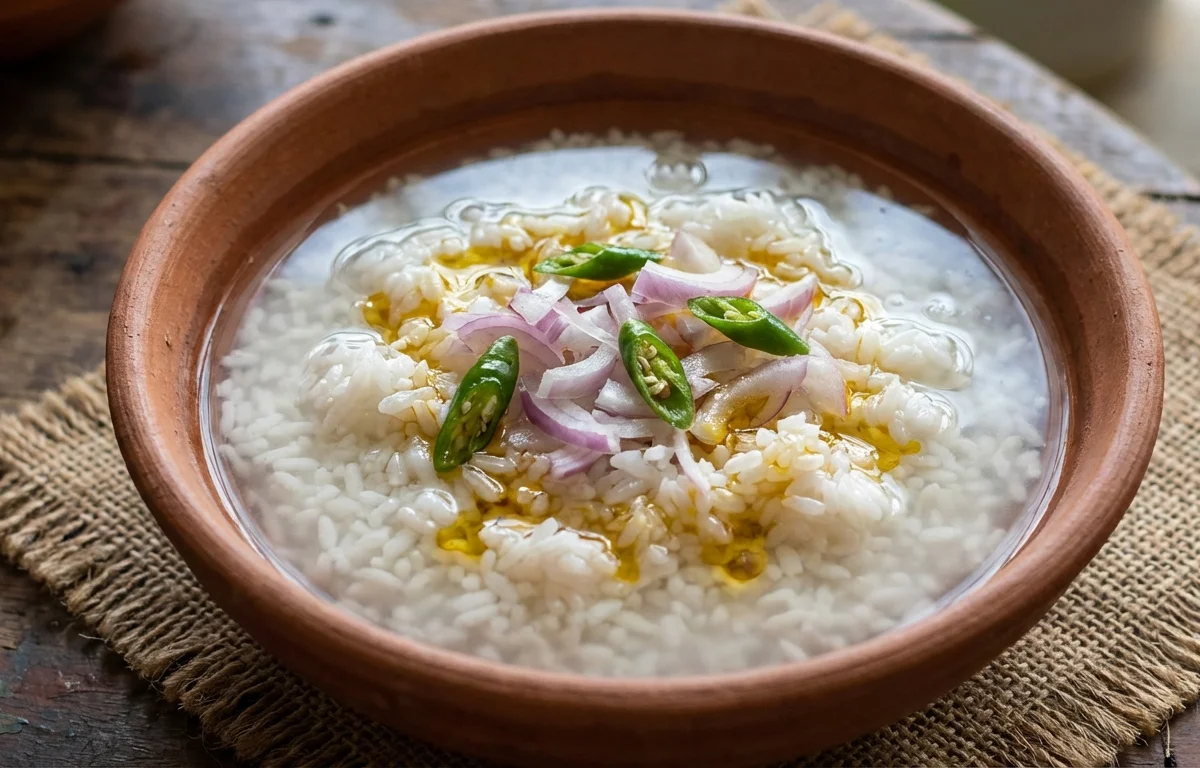
Poita Bhat
A comforting Assamese dish made by soaking cooked rice overnight in water until it turns lightly fermented and pleasantly tangy. Served cool with mustard oil, onion, green chili, and a squeeze of lime, it is simple, rustic, and deeply satisfying in hot weather.
For 4 servings
- prep · ~2 min
Rinse the rice.
Wash the rice in 2 to 3 changes of water until the water looks mostly clear.
- boil · ~15 min
Cook the rice until soft.
1.Add the rice, 3 cups water, and 1 pinch salt to a pot.2.Bring to a boil over medium-high heat.3.Lower the heat and cook until the grains are tender and the water is absorbed, about 12 to 15 minutes. - rest · ~480 min
Cool and soak the rice overnight.
Let the cooked rice cool to room temperature. Transfer it to a bowl, pour in 4 cups water, cover loosely, and leave it at room temperature overnight or for 8 hours.
TIPUse an earthen or steel bowl and keep it in a cool spot so the rice develops a clean, mild tang. - assemble · ~3 min
Prepare the poita bhat.
1.The next morning, gently loosen the soaked rice with your fingers or a spoon.2.Keep a little soaking water with the rice for a traditional texture, or drain some if you prefer it less loose.3.Add chopped onion, green chili, mustard oil, lime juice, and the remaining pinch of salt. - mix · ~1 min
Mix well.
Stir everything together until the rice is evenly seasoned and lightly glossy from the mustard oil.
- serve · ~1 min
Serve the poita bhat cool.
Divide into 4 katoris and serve right away as a simple meal or alongside mashed potato, fried fish, or pickle.
What to keep in mind.
7 tips from the recipe — small details that make a real difference to the final dish.
- 1Cook the rice a little softer than plain steamed rice so it loosens easily after soaking.
- 2Cool the rice fully before adding the soaking water, or it can turn overly mushy overnight.
- 3Use an earthen or steel bowl and keep it in the coolest corner of the kitchen for a clean, mild ferment.
- 4If the weather is very hot, shorten the soak slightly or move the bowl to the fridge after a few hours.
- 5Keep some of the soaking water while mixing; that starchy, tangy liquid gives poita bhat its classic texture.
- 6Rub the mustard oil briefly between the rice and onions so its sharp aroma spreads through the whole bowl.
- 7Add lime juice just before serving to keep the tang bright and the onion crisp.
Adapt it for your goals.
Jolokia-spicy
Replace the green chili with a small amount of bhut jolokia for a fiercer Assamese-style heat.
no onionNo-onion
Skip the onion for a plainer bowl that lets the fermented rice and mustard oil stand out.
lighter mustardLighter-mustard
Use less mustard oil and a little extra lime if you want a gentler, less pungent finish.
with sidesWith-sides
Serve it with aloo pitika, fried fish, or pickle to turn the simple rice into a fuller traditional meal.
Why this is on our healthy list.
Cooling Summer Meal
Served cool with soaking water, this dish is traditionally valued as a light, refreshing option in hot weather.
Digestive Support From Fermentation
The overnight soaking creates a mild natural fermentation that can make the rice taste tangier and feel easier to eat for some people.
Simple Plant-Based Ingredients
Made from rice, onion, chili, mustard oil, and lime, it is a straightforward vegan dish with minimal processing.
Vitamin-Rich Garnishes
Onion, green chili, and fresh lime add beneficial plant compounds and freshness to an otherwise simple rice base.
Frequently asked questions
It should taste lightly tangy and fresh, not sharply sour. If it smells harsh or unpleasant, discard it.