Pork Rinds
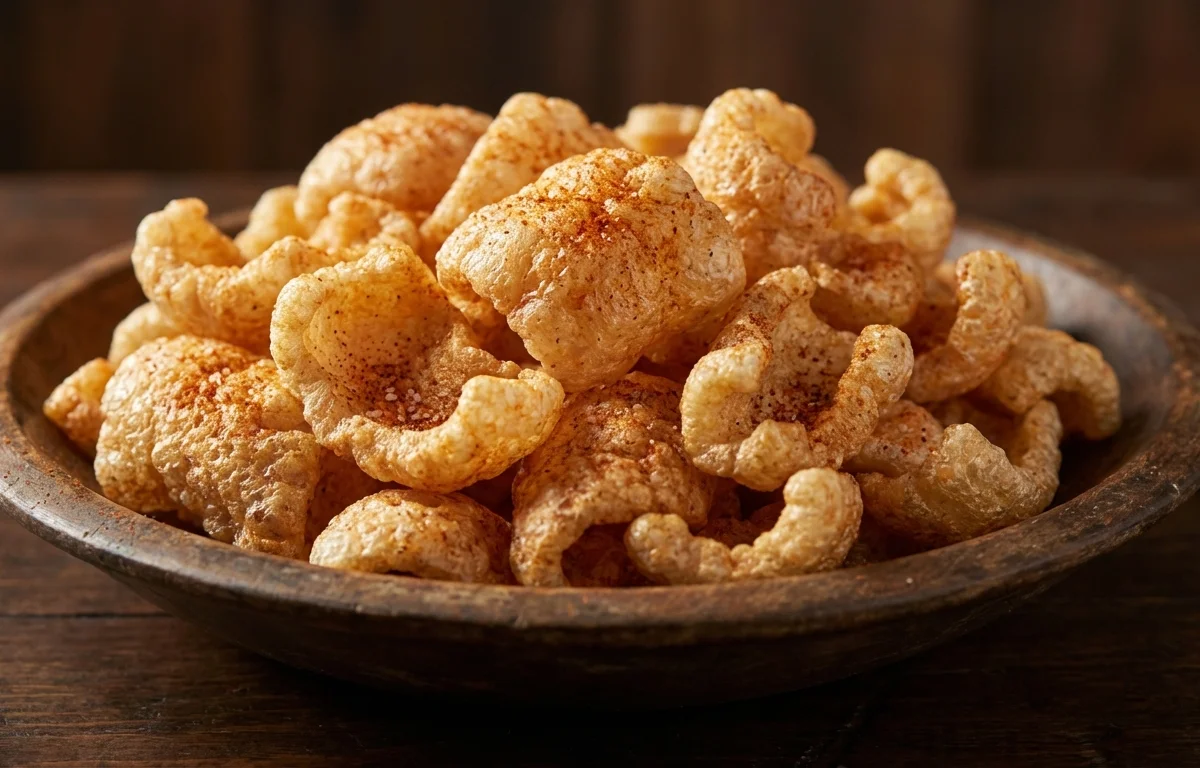
Light, airy, and incredibly crispy deep-fried pork skins that puff up like clouds. This classic Southern snack transforms humble pig skin into a crunchy, savory treat seasoned simply with salt. Perfect for low-carb snacking or crushing over salads and soups.
For 6 servings
- prep
Prep the pork skin.
Scrape any remaining hair and excess fat from the pork skin using a sharp knife. Cut the skin into 4-inch squares. Rinse thoroughly under cold water.
TIPLeaving a very thin layer of fat attached helps the rinds puff better during frying. - boil · ~150 min
Boil the pork skin until tender.
Place the skin pieces in a large stockpot and cover with cold water. Add 0.5 tsp salt. Bring to a rolling boil, reduce heat to a simmer, and cook uncovered for 2 to 2.5 hours until the skin is soft and gelatinous. A paring knife should slide through with almost no resistance.
TIPDon't undercook — tough rinds result from skin that hasn't softened enough. - prep
Drain and scrape the cooked skin.
Drain the skin pieces and let them cool until comfortable to handle, about 10 minutes. Using the back of a spoon or a butter knife, gently scrape off any remaining excess fat from the underside of each piece. You'll feel it release easily from the gelatinous skin.
TIPRemove all visible lumps of fat — any fat left behind will prevent the skin from puffing and become greasy instead of crispy. - bake · ~105 min
Dehydrate the skin in a low oven.
Arrange the scraped skin pieces in a single layer on wire racks set over baking sheets. Place in a 170°F (75°C) oven — or your oven's lowest setting — and dry until the skins are brittle, translucent, and snap when bent, about 1.5 to 2 hours. They should look like amber glass.
TIPKeep the oven door cracked slightly with a wooden spoon if the lowest setting is too hot. The skins must be bone-dry before frying. - fry · ~2 min
Deep fry the pork rinds in batches.
Heat 4 cups of oil or lard in a heavy-bottomed pot to 400°F (200°C). Drop 3 to 4 pieces of dried skin into the hot oil. They will puff dramatically within 5 to 10 seconds — use a slotted spoon to flip once. Fry until fully expanded and golden, about 15 to 20 seconds per batch.
TIPWork in very small batches. The puffing is instant and the rinds burn quickly. The oil must stay above 375°F for proper puffing. - prep
Drain and season immediately.
Transfer the puffed rinds to a paper-towel-lined bowl using a slotted spoon. While still hot, sprinkle with the remaining 0.5 tsp salt and toss gently. Let cool completely — they will crisp up further as they cool.
TIPSeason while hot so the salt sticks. Crushed black pepper, smoked paprika, or a pinch of cayenne are great additions. - serve
Serve or store the pork rinds.
Serve immediately, piled high in a bowl. Store any leftovers in an airtight container at room temperature for up to 5 days.
What to keep in mind.
6 tips from the recipe — small details that make a real difference to the final dish.
- 1Scrape the fat layer after boiling while still warm for easiest removal.
- 2Dehydrate until the skins are brittle and snap cleanly — moisture is the enemy of puffing.
- 3Fry in small batches of 3–4 pieces to prevent the oil temperature from dropping too fast.
- 4Maintain oil temperature above 375°F (190°C) at all times for maximum puff.
- 5Season the rinds immediately after frying while they are still hot so the salt adheres.
- 6Store cooled rinds in an airtight container at room temperature for up to 5 days.
Adapt it for your goals.
Spicy chili-lime
Toss finished rinds with a mixture of chili powder, lime zest, and salt for a tangy, fiery snack inspired by Mexican street corn seasoning.
herb garlicHerb-garlic
Sprinkle with garlic powder, dried rosemary, and onion powder while hot for a savory, aromatic twist perfect for dipping.
barbecueBarbecue
Mix smoked paprika, brown sugar substitute (or a pinch of sugar), and a touch of mustard powder to create a sweet-smoky coating reminiscent of BBQ chips.
no fryNo-fry
After dehydrating, air-fry the skins at 400°F for 2–3 minutes for a lower-oil version that still puffs nicely.
curry spicedCurry-spiced
Add curry powder, cumin, and a pinch of turmeric to the salt for an aromatic, golden seasoning.
Why this is on our healthy list.
Zero-Carb Snack
Pork rinds contain no carbohydrates, making them a perfect crunchy alternative for keto and low-carb diets.
High in Protein
Each serving provides a good amount of protein from the pork skin, supporting muscle repair and satiety.
Rich in Collagen
The gelatin in pork skin is a natural source of collagen, which may support joint, skin, and gut health.
Gluten-Free
This recipe is naturally free of gluten, making it suitable for those with celiac disease or gluten sensitivity.
Frequently asked questions
The most common reason is insufficient dehydration — the skins must be brittle and snap before frying. Also, oil temperature must stay above 375°F.