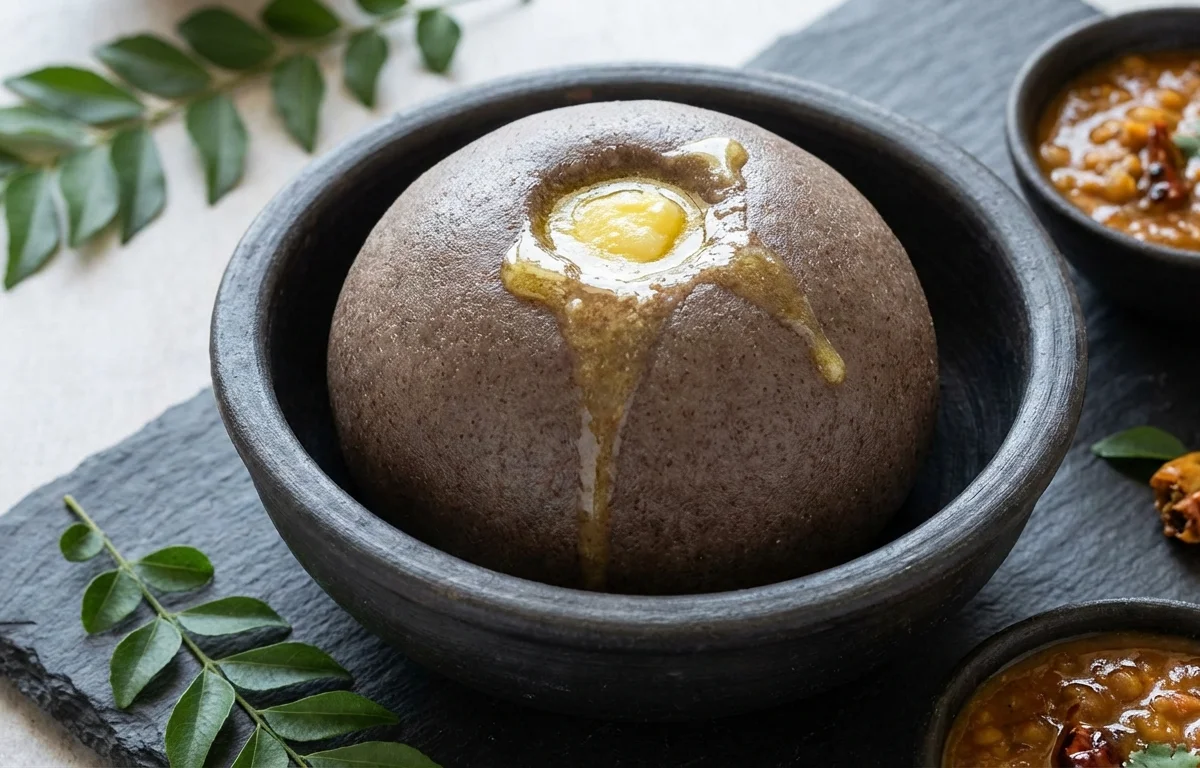
Ragi Sangati
A hearty Andhra staple made by cooking rice until soft and then beating in ragi flour until thick and smooth. It forms warm, filling balls with a nutty taste and is usually served with spicy curries or pappu.
For 4 servings
- prep · ~5 min
Measure and keep everything ready.
Rinse the rice well and keep the ragi flour, water, salt, and ghee nearby. Once the flour goes in, the dish needs quick mixing.
TIPKeep a sturdy wooden spoon or masher ready because the mixture thickens fast. - boil · ~20 min
Cook the rice until very soft.
1.Bring the water to a boil in a heavy pot.2.Add the rice and salt, then stir once.3.Cook on medium heat until the rice turns very soft and starts breaking down (18-20 min).4.Mash the rice lightly in the pot to make a soft base.TIPDo not let the pot dry out; the rice should stay loose enough to absorb the ragi flour. - mix · ~6 min
Add the ragi flour and beat until smooth.
1.Lower the heat and sprinkle the ragi flour evenly over the hot rice without stirring for a few seconds.2.Mix from the center outward so the flour starts absorbing the moisture.3.Beat firmly with the spoon until the mixture comes together into a thick, smooth mass with no dry patches (3-4 min).4.Cover and cook on very low heat for 2 minutes to let the flour finish cooking.TIPSprinkling the flour evenly helps prevent lumps. - rest · ~3 min
Rest the mixture briefly.
Turn off the heat and let the sangati sit for 3 minutes. This makes it easier to handle and shape.
- assemble · ~4 min
Shape the sangati into balls.
1.Grease your palm lightly with ghee.2.Divide the hot mixture into 4 portions.3.Shape each portion into a smooth round ball while still warm.TIPWet or grease your hands lightly if the mixture feels sticky. - serve
Serve the ragi sangati hot.
What to keep in mind.
7 tips from the recipe — small details that make a real difference to the final dish.
- 1Cook the rice until it is almost porridge-like; undercooked grains make the sangati gritty and harder to beat smooth.
- 2Use a heavy-bottomed pot so the thick ragi mixture does not catch and scorch while you beat it.
- 3Sprinkle the ragi flour in an even layer before mixing; dumping it in one spot creates stubborn lumps.
- 4Beat from the center outward with a sturdy wooden spoon or mathu-style masher for the classic smooth, elastic texture.
- 5If the mixture feels too tight to mix, splash in a little hot water rather than cold so it loosens without turning pasty.
- 6Shape the balls while still warm, not hot; a short rest makes them easier to handle and helps them hold a smooth round shape.
- 7Ragi sangati tastes best fresh and hot, but leftovers can be steamed or sprinkled with water and reheated to soften again.
Adapt it for your goals.
Vegan
Skip the ghee and grease your hands with a little neutral oil; useful if you want a dairy-free Andhra-style staple.
softer textureSofter-texture
Add a little extra hot water while beating for a looser, softer sangati that pairs especially well with pappu or thin pulusu.
all ragiAll-ragi
Reduce or omit the rice for a more pronounced ragi flavor, though the texture will be denser and slightly less silky.
ghee richGhee-rich
Mix in a bit more ghee at the end for a richer mouthfeel and a more aromatic finish when serving with spicy curries.
Why this is on our healthy list.
Rich in Millet Goodness
Ragi adds whole-grain character and is traditionally valued for its earthy flavor, fiber, and mineral content.
Satisfying and Filling
The combination of rice and ragi makes this a hearty staple that stays comforting and substantial with simple ingredients.
Naturally Gluten-Free
Made from rice and finger millet, this dish suits those looking for a gluten-free traditional main when served with suitable sides.
Frequently asked questions
Lumps usually happen when the ragi flour is added in one heap or mixed too slowly. Sprinkle it evenly over the hot rice and beat immediately with a sturdy spoon.



.webp)