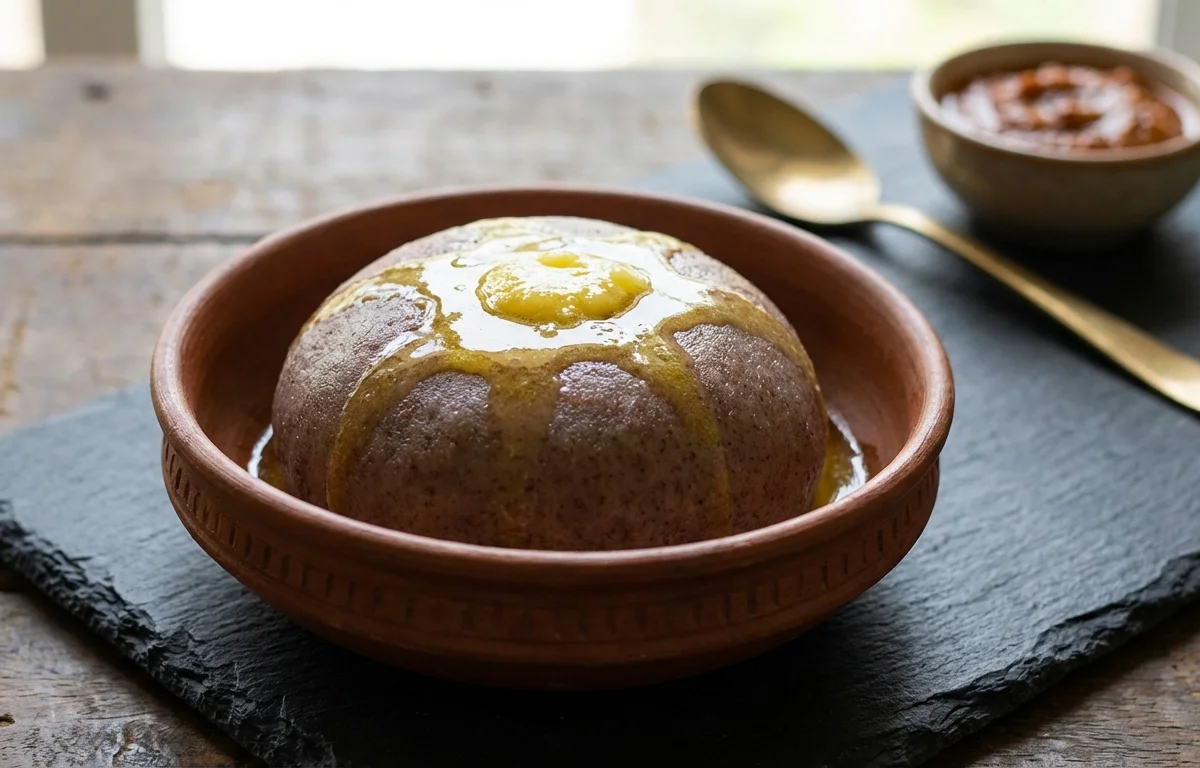
Ragi Sankati
A rustic Andhra staple made by cooking ragi flour with a little rice into soft, hearty balls. It has a comforting earthy flavor and a filling texture that pairs especially well with spicy gravies and chutneys.
For 4 servings
- prep · ~5 min
Measure the flour and wash the rice.
Keep the ragi flour ready in a bowl. Wash the rice well and set it aside so it cooks evenly.
- boil · ~15 min
Cook the rice in water.
1.Bring the water to a boil in a heavy pot.2.Add the rice and salt.3.Cook on medium heat until the rice turns very soft and starts breaking down, about 12 to 15 minutes.TIPUse a heavy pot to prevent the mixture from catching at the bottom later. - mix · ~4 min
Add the ragi flour and make the dough.
1.Lower the heat and sprinkle the ragi flour over the cooked rice without stirring right away.2.Let it sit for 30 seconds so the steam moistens the flour.3.Stir and mash firmly with a wooden spoon until the flour is fully mixed and no dry patches remain.4.Keep mixing for 2 to 3 minutes until the mass looks smooth, thick, and leaves the sides of the pot.TIPAdd the flour gradually and mix quickly to avoid lumps. - rest · ~4 min
Cover and rest the sankati briefly.
Turn off the heat, cover the pot, and let the mixture rest for 3 to 4 minutes so it firms up slightly and becomes easier to shape.
- assemble · ~3 min
Shape the sankati into balls.
1.Grease your palms lightly with ghee.2.Divide the warm mixture into 4 equal portions.3.Shape each portion into a smooth round ball while still warm.TIPWet or grease your hands lightly if the mixture feels sticky. - serve · ~1 min
Serve the ragi sankati hot.
Serve each ragi sankati warm with a little ghee if you like, alongside spicy Andhra gravies or chutney.
What to keep in mind.
7 tips from the recipe — small details that make a real difference to the final dish.
- 1Cook the rice until it is almost mushy; firm grains make the sankati gritty and harder to bind.
- 2After sprinkling in the ragi flour, give it a brief steam before mixing so the flour hydrates evenly.
- 3Use a sturdy wooden spoon or ragi muddler to mash and turn the mixture; it gets very thick quickly.
- 4The right texture is a smooth mass that leaves the sides of the pot but still feels soft, not dry.
- 5Shape the balls while the mixture is warm; once fully cool, cracks form more easily.
- 6If it tightens too much in the pot, sprinkle in a little hot water and beat again until smooth.
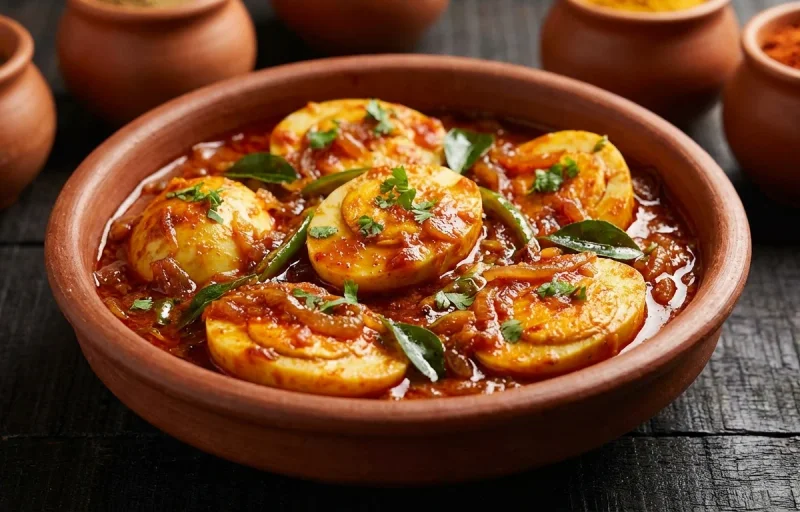
- 7Serve immediately with hot pappu charu, natu kodi pulusu, or spicy chutney, as sankati firms up on standing.
Adapt it for your goals.
Vegan
Skip the ghee and shape with wet palms or a few drops of neutral oil for a fully plant-based version.
no riceNo-rice
Make it with only ragi flour for a more pronounced millet taste, though the texture will be slightly denser and less silky.
soft textureSoft-texture
Add a splash more hot water while mixing if you prefer a looser, softer sankati that pairs well with thin gravies.
mini ballsMini-balls
Shape into smaller portions for easier serving alongside multiple Andhra sides like chutney, pulusu, and pappu.
Why this is on our healthy list.
Wholesome Millet Base
Ragi is a traditional millet that brings hearty whole-grain character and makes this dish especially satisfying.
Naturally Filling
The dense combination of ragi flour and a little rice makes a sustaining meal that is commonly enjoyed as a hearty staple.
Simple Ingredient Dish
Made with just ragi, rice, water, salt, and a little ghee, this is a straightforward meal with minimal processing.
Frequently asked questions
Lumps usually happen when the flour is dumped in and stirred unevenly. Sprinkle it across the surface, let it steam briefly, then mash firmly and continuously.



.webp)