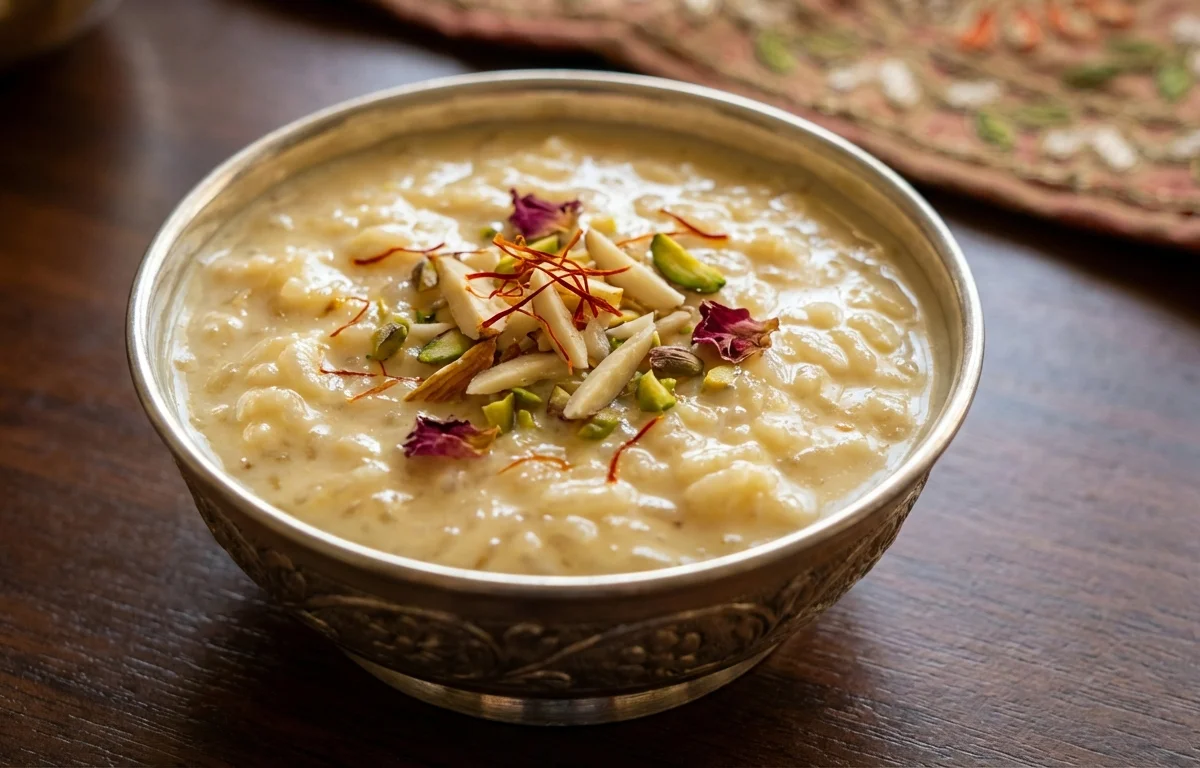
Rice Kheer
Creamy Indian rice pudding simmered slowly with milk, sugar, and cardamom until rich and fragrant. It is simple, comforting, and perfect served warm or chilled after a meal.
For 4 servings
- prep · ~20 min
Wash and soak the rice.
Rinse the basmati rice until the water runs mostly clear. Soak it in fresh water for 20 minutes, then drain well before cooking.
- boil · ~8 min
Heat the milk.
Pour the milk into a heavy pan and bring it to a gentle boil over medium heat, stirring often so it does not catch at the bottom.
TIPUse a wide heavy pan so the milk reduces evenly and develops a richer flavor. - simmer · ~30 min
Cook the rice in the milk.
1.Add the drained rice and crushed cardamom to the hot milk.2.Lower the heat and let it simmer gently.3.Stir every 2 to 3 minutes so the rice cooks evenly and the milk does not stick.4.Cook until the rice is very soft and the milk thickens, about 25 to 30 minutes.TIPKeep the heat low once the rice goes in; a fast boil can split the milk and scorch the pan. - simmer · ~7 min
Add the sugar and dry fruits.
1.Stir in the sugar until fully dissolved.2.Add the raisins, almonds, pistachios, and saffron strands.3.Simmer for 5 to 7 minutes more until the kheer looks creamy and slightly thick. - rest · ~10 min
Let the kheer rest for 10 minutes.
TIPKheer thickens more as it cools, so stop cooking when it is a little looser than you want to serve. - serve
Serve warm or chilled.
Spoon the rice kheer into serving bowls or katoris. Serve warm for a softer texture or chill and serve cold for a thicker pudding-like finish.
What to keep in mind.
7 tips from the recipe — small details that make a real difference to the final dish.
- 1Lightly crush the soaked rice with your fingers before adding if you want a softer, more traditional kheer texture.
- 2Use a wide heavy-bottomed pan so the milk reduces evenly and develops a richer, slightly caramelized flavor.
- 3Scrape the cream from the sides back into the milk as it simmers for a fuller, creamier body.
- 4Add sugar only after the rice is fully soft; adding it too early can slow the rice from cooking properly.
- 5Bloom the saffron in 1 tablespoon warm milk first, then stir it in for better color and aroma.
- 6If chilling, thin the kheer slightly before cooling because it will thicken considerably in the fridge.
- 7Store refrigerated for up to 3 days and loosen with a splash of milk before serving again.
Adapt it for your goals.
Jaggery
Replace sugar with melted, cooled jaggery for a deeper, earthy sweetness; add it after the kheer is off the heat to reduce the risk of curdling.
veganVegan
Use full-fat almond milk or coconut milk instead of dairy milk for a plant-based version with a different but still rich flavor.
rose kheerRose-kheer
Add a few drops of rose water after cooking for a floral finish that pairs beautifully with saffron and cardamom.
low sugarLow-sugar
Reduce the sugar and rely more on raisins and saffron for sweetness and aroma if you prefer a lighter dessert.
Why this is on our healthy list.
Calcium-Rich Dessert
The full-fat milk in this kheer provides calcium and dairy protein, making it more nourishing than many sugar-only sweets.
Energy and Satiety
Rice and milk make this a comforting, filling dessert that can feel satisfying in small portions.
Nuts Add Good Fats
Almonds and pistachios contribute healthy fats, a bit of protein, and extra texture along with minerals.
Aromatic Spice Benefits
Cardamom and saffron bring fragrance and traditional warming character without needing extra fat or heavy flavorings.
Frequently asked questions
It usually needs more gentle simmering. Kheer thickens as the milk reduces and also firms up more after resting or chilling.