
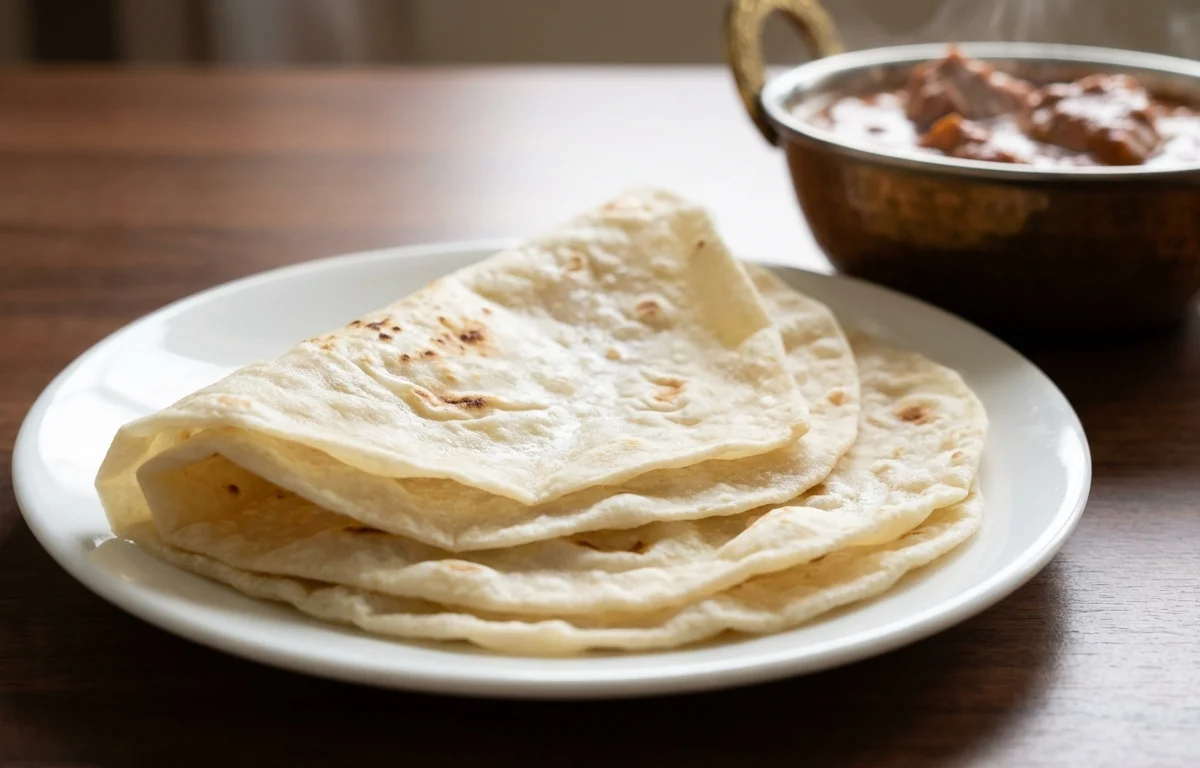
Rumali Roti
Paper-thin North Indian flatbread cooked quickly on an inverted hot pan until soft and lightly speckled. Its flexible texture makes it perfect for scooping up kebabs, curries, and rich gravies.
For 8 servings
- knead · ~10 min
Knead the dough.
1.Mix all-purpose flour, whole wheat flour, and salt in a wide bowl.2.Add oil and rub it into the flour with your fingertips.3.Pour in lukewarm water a little at a time and knead into a soft, smooth dough.4.Knead for 6 to 8 minutes until the dough feels elastic and supple.TIPKeep the dough softer than chapati dough so the rotis roll out very thin without springing back. - rest · ~20 min
Cover and rest the dough.
Cover the dough with a damp cloth and let it rest for 20 minutes. This relaxes the gluten and makes rolling easier.
- prep · ~5 min
Divide and shape the dough balls.
1.Knead the rested dough briefly until smooth again.2.Divide it into 8 equal portions.3.Roll each portion into a smooth ball and keep them covered to prevent drying. - other · ~5 min
Heat the cooking surface.
Place an inverted kadai or an inverted heavy pan over medium-high heat and let it get very hot. The surface should be evenly heated before you start cooking the rotis.
TIPA properly hot inverted pan helps the roti cook in seconds and stay soft instead of turning dry. - prep · ~10 min
Roll the rotis very thin.
1.Dust the work surface lightly with the extra all-purpose flour.2.Flatten one dough ball and roll it out as thinly as possible into a large circle.3.Lift and stretch gently with your hands if needed to make it even thinner.4.Keep the rolled roti lightly dusted so it does not stick or tear.TIPRoll one roti at a time and cook it right away for the best soft, foldable texture. - fry · ~4 min
Cook the rumali roti.
1.Place the thin roti carefully over the hot inverted pan.2.Cook for 20 to 30 seconds until small bubbles appear and light spots form.3.Flip and cook the other side for another 15 to 20 seconds.4.Remove once the roti is cooked through but still soft.TIPDo not overcook, or the bread will become crisp instead of soft and foldable. - assemble · ~3 min
Fold and stack the rotis.
Fold each hot roti loosely like a handkerchief and stack them in a clean cloth to keep warm and soft while you cook the remaining rotis.
- serve
Serve the rumali roti warm.
What to keep in mind.
7 tips from the recipe — small details that make a real difference to the final dish.
- 1Keep the dough slightly softer than chapati dough so it stretches paper-thin without cracking.
- 2Resting under a damp cloth is key; uncovered dough balls develop a dry skin and tear while rolling.
- 3Make sure the inverted kadai is fully hot before cooking, or the roti will dry out before it gets light spots.
- 4Roll and cook one roti at a time to prevent the thin discs from sticking to the counter or shrinking back.
- 5Use only a light dusting of flour; too much dry flour burns quickly on the hot inverted pan.
- 6Cook just until tiny bubbles and pale brown speckles appear, then remove and fold immediately to trap steam.
- 7Stack the cooked rotis in a cloth-lined container so they stay soft and flexible for serving.
Adapt it for your goals.
All-wheat
Use only whole wheat flour for a nuttier, more rustic roti. It will be slightly less stretchy but works well for everyday meals.
softer textureSofter-texture
Add a little extra oil and keep the dough slightly wetter for even more supple, foldable rotis that pair well with rich kebabs.
tandoori styleTandoori-style
Cook over a slightly hotter surface for a few deeper charred spots if you want a more restaurant-style smoky finish.
Why this is on our healthy list.
Whole Grain Goodness
The whole wheat flour adds more fiber and a broader grain flavor than using refined flour alone.
Low Added Fat
Only a small amount of oil goes into the dough, and the rotis are cooked on a dry hot surface.
Lighter Bread Option
Because rumali roti is rolled very thin and cooked quickly without frying, it can feel lighter alongside rich curries and gravies.
Frequently asked questions
It is usually overcooked or cooked on a pan that is not hot enough. The roti should cook in seconds and be removed as soon as light spots appear.


