Loading...
CKD-Friendly variation of Besan Chilla
A light and savory chickpea flour pancake, thoughtfully adapted for a kidney-friendly diet. This recipe uses low-potassium vegetables and minimal salt, making it a delicious and safe breakfast or light meal.
Leach Vegetables to Reduce Potassium
Prepare the Chilla Batter
Combine Ingredients
A light and savory chickpea flour pancake, thoughtfully adapted for a kidney-friendly diet. This recipe uses low-potassium vegetables and minimal salt, making it a delicious and safe breakfast or light meal.
This north_indian recipe takes 35 minutes to prepare and yields 4 servings. At 180.24 calories per serving with 8.33g of protein, it's a beginner-friendly recipe perfect for breakfast or brunch or lunch or snack.
Discover authentic recipes from cuisines around the world.
Find recipes that fit your dietary preferences.
Find recipes optimized for your goal.
Cook the Chillas
Serve
You can add other leached, low-potassium vegetables like grated carrot, bottle gourd (lauki), or zucchini. Ensure they are properly leached and squeezed dry before adding to the batter.
For a different flavor profile, add a pinch of asafoetida (hing) to the batter. You can also add a tiny amount of amchur (dry mango powder) for a tangy taste, but consult your dietitian first.
Instead of coriander, you can use finely chopped dill leaves or parsley for a fresh, different aroma.
Specifically designed with low potassium and sodium by leaching vegetables and using minimal salt, making it suitable for a renal diet.
Besan (chickpea flour) is a great source of protein, which is essential for body functions, provided in controlled amounts suitable for CKD patients.
The combination of besan and vegetables provides dietary fiber, which aids digestion, promotes satiety, and helps in managing blood sugar levels.
This recipe is low in saturated fat and cholesterol. The inclusion of ajwain (carom seeds) is also known to aid digestion and may have cardiovascular benefits.
One serving, which consists of two chillas, contains approximately 215-230 calories, making it a light yet satisfying meal. The exact count can vary based on the amount of oil used.
Yes, this specific recipe is designed to be healthy for kidney patients. Besan is a good source of protein, and the critical step of leaching vegetables significantly reduces their potassium content. The use of low-sodium salt also helps manage blood pressure. Always consult your doctor or dietitian for personalized advice.
Leaching is the process of boiling vegetables in water to draw out and discard water-soluble minerals like potassium. For individuals with Chronic Kidney Disease (CKD), limiting potassium intake is vital, and this step makes vegetables like onions and capsicum safer to consume.
Yes, you can use other low-potassium vegetables. Good options include grated bottle gourd (lauki), zucchini, or carrots. Remember to leach them properly and squeeze out all excess water before adding them to the batter.
Leftover chillas can be stored in an airtight container in the refrigerator for up to 2 days. Reheat them on a tawa. The batter can be refrigerated for up to 24 hours, but it may thicken; you might need to add a little water to adjust the consistency before cooking.
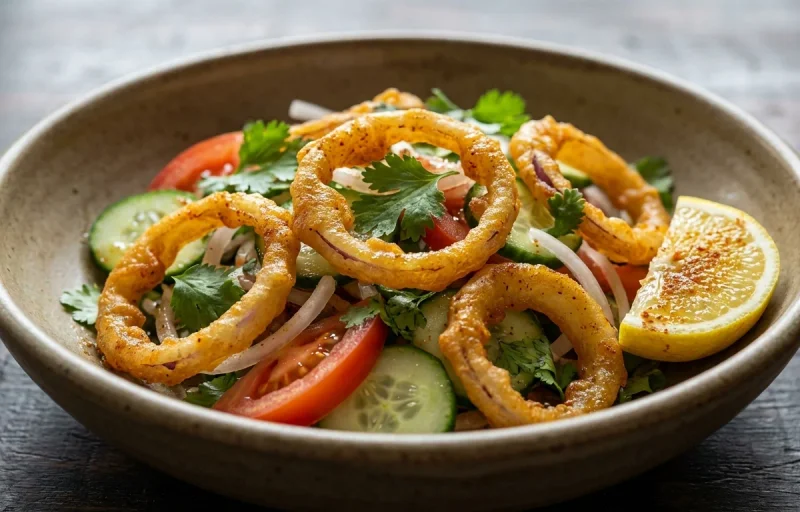
Crispy, spiced onion rings tossed with a fresh, tangy salad of cucumbers, tomatoes, and a zesty chaat masala dressing. A delightful fusion snack that's both crunchy and refreshing.

A hearty and protein-packed vegetarian twist on the classic keema. Crumbled soya granules and grated boiled eggs are cooked in a savory onion-tomato masala, creating a delicious and satisfying dish. Perfect to scoop up with warm rotis or pav.

A simple and comforting North Indian curry made with tender potatoes and sweet onions, simmered in a light tomato and spice gravy. This quick everyday dish is perfect with hot rotis or parathas.

A creamy and pungent yogurt dip bursting with fresh garlic flavor. This simple North Indian side dish, known as Lehsun ka Raita, is the perfect cooling accompaniment to spicy curries and biryanis.
