Sakinalu
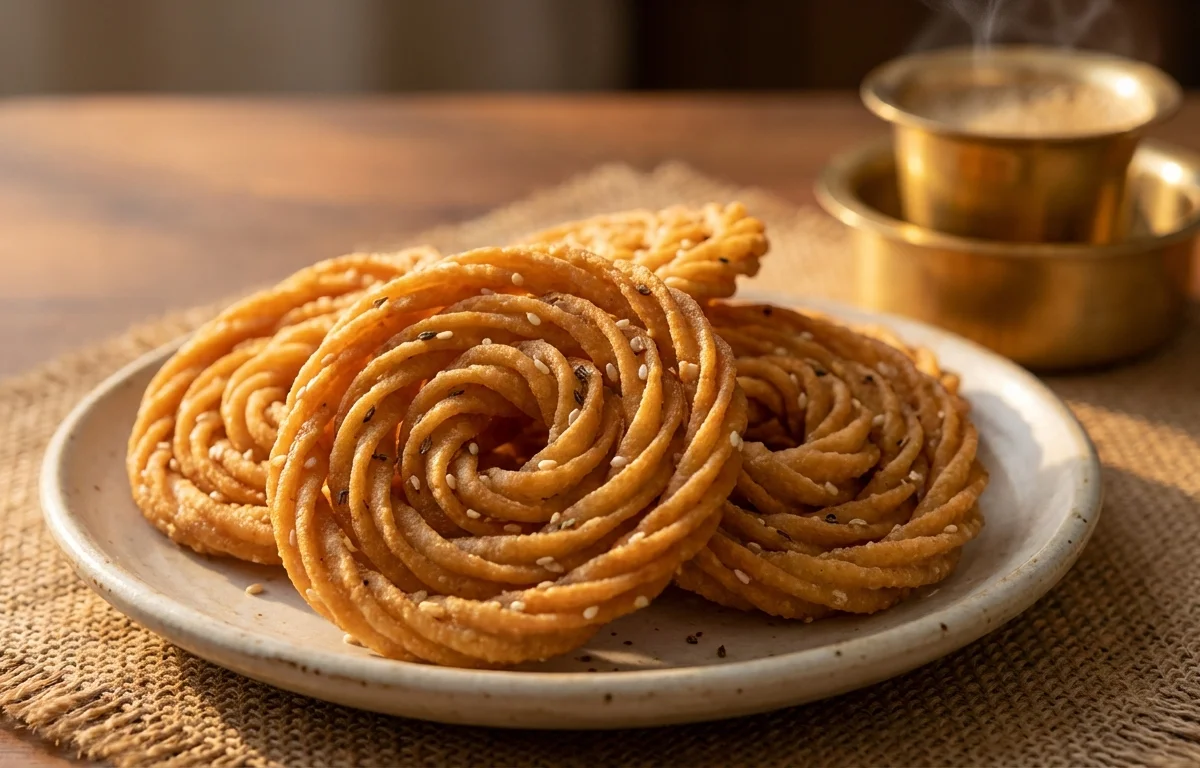
A traditional Telangana festival snack made with rice flour, sesame seeds, and ajwain, shaped into delicate coils and deep fried until crisp. These savory spirals stay crunchy for days and are especially popular during Sankranti.
For 12 servings
- prep · ~360 min
Soak and dry the rice.
1.Wash the rice well until the water runs mostly clear.2.Soak it in fresh water for 6 hours.3.Drain completely and spread on a cloth for 30 to 45 minutes until the grains feel just lightly damp.TIPDo not dry the rice fully. Slightly damp rice gives smoother fresh flour and better binding. - mix · ~20 min
Grind the rice and make the dough.
1.Grind the damp rice to a very fine flour and sieve it if needed.2.Take the flour in a wide bowl and add sesame seeds, carom seeds, and salt.3.Pour in warm water little by little and mix into a soft, smooth dough without cracks.TIPKeep the dough softer than murukku dough. If it feels dry, the coils may break while shaping. - rest · ~15 min
Cover and rest the dough.
Cover the dough with a damp cloth and let it rest for 15 minutes so the flour hydrates evenly and becomes easier to shape.
- assemble · ~25 min
Shape the sakinalu.
1.Pinch off a small portion of dough and roll it into a thin rope with your fingers.2.Coil the rope in tight concentric circles on a small piece of greased cloth or parchment.3.Seal the end neatly so the spiral holds together during frying.4.Repeat with the remaining dough to make 12 pieces.TIPKeep the shaped spirals covered with a cloth so they do not dry out before frying. - fry · ~20 min
Deep fry the sakinalu.
1.Heat the oil in a deep kadai over medium heat.2.Gently slide in 1 or 2 shaped spirals at a time.3.Fry on medium to low heat, turning carefully, until crisp and light golden on both sides.4.Lift out and drain well.TIPDo not fry on high heat. The outside browns too fast while the inside stays soft. - rest · ~30 min
Cool the sakinalu completely.
Set them on a plate or rack and let them cool fully so they become crisp.
- serve
Store or serve the sakinalu.
What to keep in mind.
7 tips from the recipe — small details that make a real difference to the final dish.
- 1Grind the rice while it is still slightly damp; fully dried rice gives a coarser flour and weaker dough.
- 2If the dough starts cracking while rolling ropes, knead in a teaspoon or two of warm water before shaping more.
- 3Shape each spiral directly on a small greased cloth or parchment square so it can be lifted into oil without breaking.
- 4Keep both the dough and shaped sakinalu covered with a damp cloth, or the surface will dry and split.
- 5Fry on medium-low heat until the bubbling reduces and the color turns light golden; that is the cue they have crisped through.
- 6Do not crowd the kadai; frying only 1 or 2 at a time helps the coils hold their shape and cook evenly.
- 7Cool completely on a rack before storing, or trapped steam will soften the sakinalu.
Adapt it for your goals.
Spicier
Add a little red chili powder or crushed black pepper to the dough for a hotter festival-style snack.
jaggery sweetJaggery-sweet
Make a festive sweet version by adding melted jaggery syrup to the dough and skipping the salt-heavy savory profile.
mixed seedMixed-seed
Add a spoon of cumin along with sesame and ajwain for a more aromatic, slightly earthier bite.
small biteSmall-bite
Shape mini sakinalu for easier frying and serving at gatherings; they also tend to stay extra crisp.
Why this is on our healthy list.
Naturally Gluten-Free
Since the dough is made from rice flour rather than wheat, this traditional snack is naturally gluten-free.
Seeds Add Good Fats
Sesame seeds contribute healthy fats and a bit of plant-based nourishment along with a nutty flavor.
Digestive Spice Support
Ajwain is traditionally used in Indian cooking for its warming flavor and digestive-friendly qualities.
Frequently asked questions
The dough is usually too dry or the flour is too coarse. Add a little warm water, knead again, and keep the dough covered while you work.