Smoked Beef Brisket
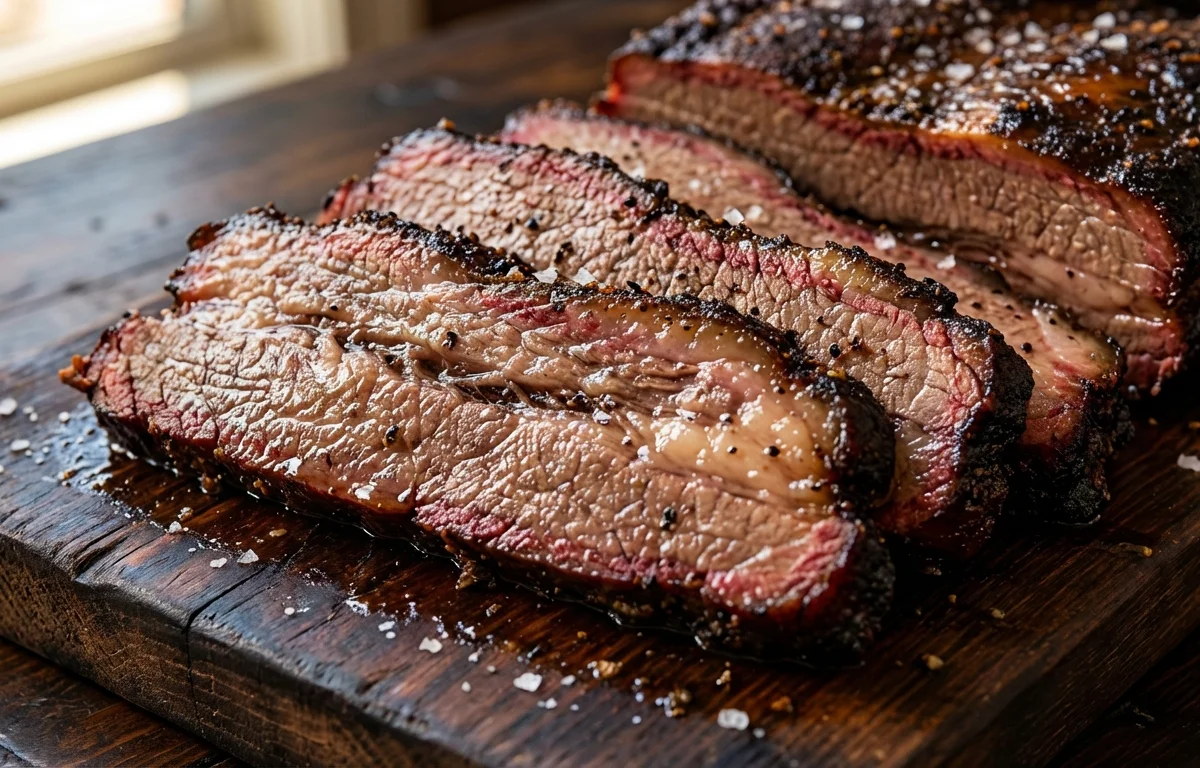
A beautifully smoked beef brisket with a deep, dark bark and incredibly tender, juicy meat. This low-and-slow Texas-style classic fills your backyard with mouthwatering aromas for hours before delivering melt-in-your-mouth slices that are pure barbecue bliss.
For 4 servings
- prep
Trim the brisket.
1.Place brisket fat side up on a clean cutting board. Trim fat cap to an even 6 mm thickness across the entire top.2.Remove any hard, waxy fat pockets and thin, loose edges of meat that would burn during smoking.3.Flip brisket over and trim any silverskin or excess fat from the underside. - prep · ~720 min
Apply the dry brine and rest overnight.
1.Sprinkle salt evenly over all sides of the trimmed brisket.2.Place brisket on a wire rack set inside a sheet pan, uncovered.3.Refrigerate at least 12 hours, up to 24 hours, for the salt to penetrate and season the meat deeply.TIPDry brining overnight makes brisket noticeably juicier. The salt dissolves muscle proteins so they hold onto moisture during the long cook. - prep · ~45 min
Season the brisket with the rub.
1.Remove brisket from refrigerator and pat dry with paper towels.2.In a small bowl, mix black pepper, garlic powder, onion powder, and smoked paprika.3.Apply a thin, even coat of yellow mustard across the entire brisket to act as a binder.4.Shower the spice rub generously over the brisket, pressing gently to adhere. Let brisket sit at room temperature while you prepare the smoker (about 45 min).TIPLetting the brisket come up closer to room temp before hitting the smoker helps it cook more evenly. - roast · ~180 min
Smoke the brisket low and slow.
1.Preheat smoker to 110°C and add wood chunks for clean, thin blue smoke.2.Place seasoned brisket fat side UP on the smoker grate, away from any direct heat source.3.Close the lid and smoke undisturbed for 3 hours, maintaining 107-121°C. Use an ambient probe to keep smoker temp steady.4.After 3 hours, spritz any dry-looking edges lightly with water, then continue smoking.TIPAvoid opening the smoker early. Every peek adds 10-15 min to the cook and lets precious smoke escape. - roast
Wrap the brisket in butcher paper.
1.Keep smoking until the bark is dark mahogany and internal temperature stalls around 65-71°C (about 4-5 hours in).2.Tear off two long sheets of pink butcher paper and lay them overlapping on the counter.3.Transfer brisket to the paper, wrap tightly with the fat cap facing up, folding edges under so juices don't leak out.4.Return wrapped brisket to the smoker.TIPWrapping when the bark looks dark and set — not at a rigid time — gives you the best crust. Butcher paper breathes so the bark stays crisp unlike foil. - roast · ~240 min
Finish cooking until probe-tender.
1.Insert instant-read thermometer into the thickest part of the flat. Cook until internal temperature reaches 93-96°C.2.Start checking for tenderness once it hits 93°C. The probe should slide in with zero resistance, like room-temp butter.3.Total wrapped cook time is typically 3-4 hours more.TIPTemperature is a guide; tenderness is the rule. A brisket that's probe-tender at 93°C is done — one that fights the probe at 96°C needs more time. - rest · ~120 min
Rest the brisket in a cooler.
1.Remove wrapped brisket from the smoker. Keep it wrapped in the same butcher paper.2.Place wrapped brisket in a clean, empty cooler or dry oven (turned off) and close the lid.3.Rest for a minimum of 1 hour — 2 hours is even better — for juices to redistribute throughout the meat.TIPResting is non-negotiable. Skip it and those juices spill onto the cutting board instead of staying in every slice. - prep
Slice the brisket against the grain.
1.Unwrap brisket and place on a large cutting board, fat cap up.2.Separate the point from the flat along the natural fat seam.3.Slice the flat across the grain into pencil-thick slices (about 6 mm).4.Turn the point 90 degrees and slice against its grain as well.5.Arrange slices on a warm platter, spooning any collected juices over the top.TIPThe grain direction changes between the point and flat. Cutting across the grain shortens muscle fibers so each bite is tender, not chewy. - serve
Serve the smoked brisket warm with classic sides.
Present slices with any reserved juices drizzled over. Pairs perfectly with pickles, sliced white bread, and barbecue sauce on the side.
What to keep in mind.
7 tips from the recipe — small details that make a real difference to the final dish.
- 1Trim the brisket fat cap to an even 6 mm to ensure proper rendering and bark formation.
- 2Dry brine the brisket for at least 12 hours to deeply season the meat and retain moisture.
- 3Use yellow mustard as a binder; it adds virtually no flavor but helps the rub stick perfectly.
- 4Wrap the brisket in pink butcher paper only when the bark is a dark mahogany color and set.
- 5Probe the thickest part of the flat for tenderness, not just temperature; the probe should slide in like room-temperature butter.
- 6Rest the wrapped brisket in a cooler for at least 1 hour, preferably 2 hours, to redistribute juices.
- 7Slice the flat and point separately against their respective grain directions for maximum tenderness.
Adapt it for your goals.
Spicy Texas Style
Add 2 teaspoons of cayenne pepper and 1 tablespoon of chili powder to the rub for a bold, fiery kick that still respects the classic pepper-forward profile.
Coffee Cocoa RubCoffee-Cocoa Rub
Replace smoked paprika with 1 tablespoon each of finely ground espresso powder and unsweetened cocoa powder for a deep, earthy, almost smoky-sweet crust.
Sweet and SmokySweet and Smoky
Incorporate 2 tablespoons of dark brown sugar into the rub for a caramelized, slightly sweet bark—ideal for those who prefer a Kansas City-style flavor.
Why this is on our healthy list.
Rich in High-Quality Protein
Beef brisket provides a substantial amount of complete protein, essential for muscle repair and satiety.
Good Source of Iron
Red meat like brisket is naturally rich in heme iron, which supports healthy blood oxygen transport.
Contains Zinc for Immunity
This cut of beef offers significant zinc, a mineral that plays a key role in immune function and wound healing.
B Vitamins for Energy
Brisket is packed with B vitamins, including B12 and niacin, which help convert food into energy.
Frequently asked questions
Aim for 93-96°C in the thickest part of the flat, but always prioritize probe tenderness over a target number.