Sunga Pitha
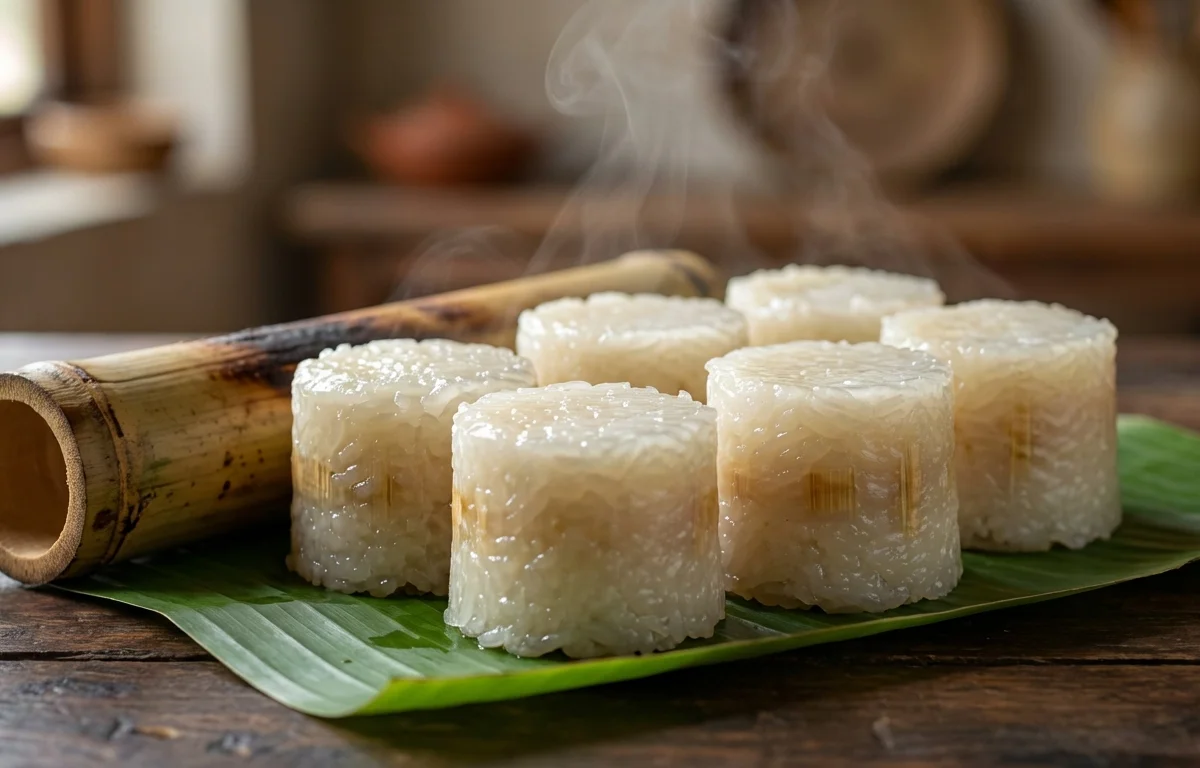
A traditional Assamese rice cake made by packing damp rice flour and fresh coconut into bamboo and roasting it over fire. It turns gently smoky outside, soft inside, and is often enjoyed with jaggery or tea.
For 4 servings
- prep · ~240 min
Soak the rice.
Wash the rice well and soak it in water for 4 hours. Drain completely so the grains are moist but not dripping.
- mix · ~5 min
Grind the rice into a coarse flour.
Grind the drained rice in a mixer to a slightly gritty flour, not a fine powder. Add a little water only if needed to help it move.
TIPKeep the texture slightly coarse so the pitha stays soft and does not turn pasty. - mix · ~4 min
Mix the filling base.
1.Transfer the ground rice to a bowl.2.Add grated coconut, jaggery, and salt.3.Mix with your fingers until the mixture feels evenly damp and crumbly.4.Sprinkle in a little water if needed so it holds together lightly when pressed. - assemble · ~7 min
Line and fill the bamboo tubes.
1.Place a strip of banana leaf inside each bamboo tube.2.Spoon the rice mixture into the tubes little by little.3.Press gently after each addition so the tube is filled evenly without packing it too tightly.4.Leave a little space at the top for the mixture to expand.TIPDo not overpack the tubes or the pitha becomes dense and hard to slide out. - roast · ~25 min
Roast the bamboo over medium heat.
Place the filled bamboo tubes over a charcoal fire or open flame on medium heat. Turn them often and roast until the bamboo outer layer chars lightly and the pitha inside cooks through, about 20 to 25 minutes.
TIPUse medium heat so the inside cooks fully before the bamboo burns too much. - rest · ~5 min
Cool the tubes briefly.
Set the roasted bamboo aside for 5 minutes so they are easier to handle and the pitha firms up slightly.
- assemble · ~3 min
Remove the Sunga Pitha from the bamboo.
Peel away the charred outer layer if needed and gently push or tap the pitha out of the bamboo tube. Remove the banana leaf lining.
- serve · ~2 min
Slice and serve the Sunga Pitha.
Cut into thick pieces and serve warm. It pairs nicely with extra jaggery or a cup of tea.
What to keep in mind.
7 tips from the recipe — small details that make a real difference to the final dish.
- 1Drain the soaked rice very well before grinding, or the mixture turns gummy instead of crumbly.
- 2Keep the rice grind slightly gritty; a fine paste makes the pitha heavy and sticky.
- 3If the jaggery is very moist, reduce added water so the filling base stays just lightly damp.
- 4Warm or wilt the banana leaf briefly over flame so it bends easily and lines the bamboo without tearing.
- 5Turn the bamboo tubes frequently for even roasting and a gentle smoky flavor rather than burnt spots.
- 6Rest the roasted tubes for a few minutes before unmolding so the pitha sets and comes out cleaner.
- 7Serve warm for the best texture; once fully cold, the rice cake firms up noticeably.
Adapt it for your goals.
Less-sweet
Reduce the jaggery in the filling and serve extra on the side for a milder sweetness and more pronounced rice-coconut flavor.
coconut forwardCoconut-forward
Increase the grated coconut slightly for a richer, softer interior and stronger traditional aroma.
pan roastedPan-roasted
If bamboo is unavailable, shape the mixture in banana leaf packets and roast on a tawa for a home-kitchen version.
tea time miniTea-time-mini
Use narrower bamboo sections to make smaller pithas that cook a bit faster and are easier to serve with tea.
Why this is on our healthy list.
Naturally Gluten-Free
Made primarily with rice, this traditional pitha suits those looking for a wheat-free sweet snack option.
Contains Healthy Fats
Fresh coconut contributes satisfying fats that add richness and help make the pitha more filling.
Less Processed Sweetening
Jaggery is a traditional sweetener that offers a deeper flavor than refined white sugar in this preparation.
Frequently asked questions
Yes. Banana leaf packets roasted on a tawa or grill can mimic the steamed-roasted effect, though the smoky bamboo aroma will be milder.