Surnali Dosa
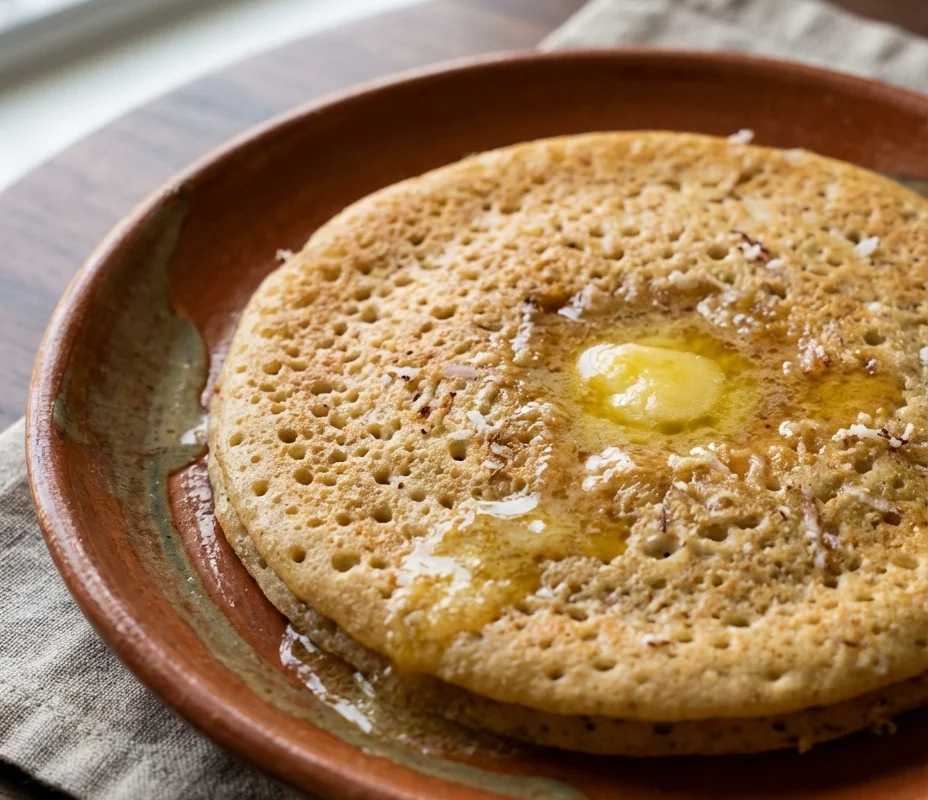
A sweet, soft fermented dosa from the Konkan coast, made with rice, coconut and jaggery. It cooks up golden with tiny holes on top and a gentle tang that makes it lovely for breakfast or an evening snack.
For 8 servings
- prep · ~240 min
Soak the rice and fenugreek seeds.
1.Wash the rice well until the water runs mostly clear.2.Soak the rice and fenugreek seeds together in enough water for 4 hours.3.Rinse the poha lightly and set it aside for the last 10 minutes of soaking.TIPA longer soak helps the batter grind smoother and ferment more evenly. - mix · ~15 min
Grind the batter.
1.Drain the rice and fenugreek seeds.2.Grind them with the poha, coconut and jaggery, adding water as needed.3.Make a smooth, pourable batter that is slightly thicker than regular dosa batter.4.Mix in the yogurt and salt.TIPKeep the batter smooth but not watery, or the dosa will spread too thin. - rest · ~480 min
Ferment the batter.
Cover the batter and leave it in a warm place for 8 hours, or until it turns light, airy and slightly tangy.
- mix · ~1 min
Stir the batter gently.
After fermentation, stir the batter once. If it looks too thick to pour, add a little water to bring it to a thick ladleable consistency.
- fry · ~4 min
Cook the surnali dosa.
1.Heat a tawa over medium heat and grease it lightly with a little ghee.2.Pour a ladle of batter in the center and spread it gently into a small thick round.3.Drizzle a little ghee around the edges, cover, and cook until the surface shows holes and the base turns golden.4.Flip only if needed and cook briefly on the second side.TIPCook on medium heat so the jaggery does not darken too quickly before the center is done. - serve
Serve the surnali dosa warm.
What to keep in mind.
7 tips from the recipe — small details that make a real difference to the final dish.
- 1Keep the batter slightly thicker than regular dosa batter so surnali stays soft and puffy instead of spreading thin.
- 2Strain the jaggery if it has grit before grinding, so the batter stays smooth and the dosa cooks evenly.
- 3After fermentation, stir very gently; overmixing knocks out the air that helps create the tiny holes on top.
- 4Cook on medium heat and keep the pan covered so the center steams through before the jaggery browns too much.
- 5Spread only into a small thick round, not a paper-thin dosa, or you will lose the signature soft texture.
- 6If the first dosa sticks, lower the heat slightly and wipe the tawa with a thin film of ghee before the next one.
- 7The batter keeps well in the fridge for about 2 days; bring it closer to room temperature before cooking for better rise.
Adapt it for your goals.
Vegan
Skip the yogurt or use a plant-based curd, and cook in coconut oil instead of ghee for a fully dairy-free version.
low sweetLow-sweet
Reduce the jaggery slightly for a less sweet surnali that works well for breakfast with chutney.
elaichi flavoredElaichi-flavored
Add a pinch of cardamom while grinding for a more fragrant, dessert-like version that pairs nicely with tea.
bananaBanana
Blend in a little ripe banana for extra softness and a fruitier sweetness, common in homestyle sweet dosas.
Why this is on our healthy list.
Fermented and easier to digest
The rested batter develops gentle tang and fermentation, which many home cooks find lighter than an unfermented rice batter.
Energy-rich breakfast
Rice, poha and jaggery make this a sustaining dish for mornings or evening snacks when you want quick, comforting energy.
Contains healthy fats
Fresh coconut and a little ghee contribute richness and satiety, helping the dosa feel satisfying despite simple ingredients.
Frequently asked questions
The batter may not have fermented enough, or it may have been stirred too much after fermenting. A warm resting spot and gentle mixing help preserve the airy texture.



.webp)