Tandalachi Bhakri
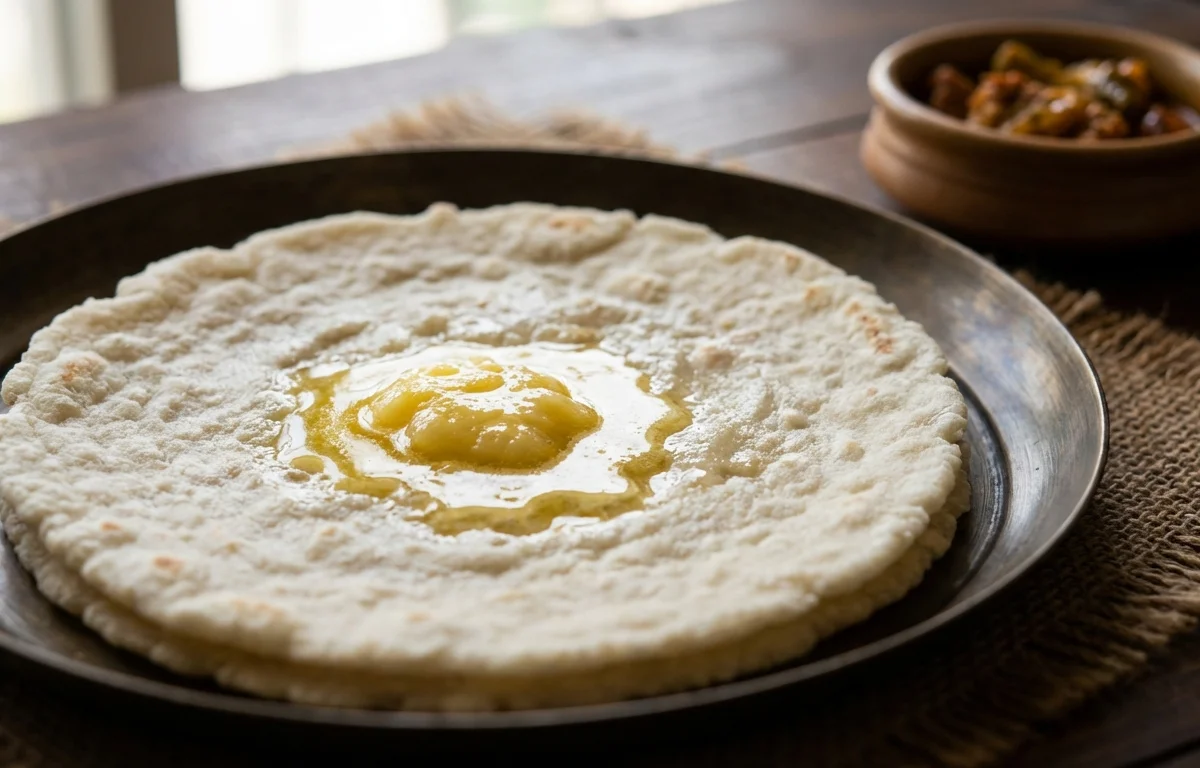
A rustic Maharashtrian flatbread made with rice flour, this bhakri cooks up soft in the center with light toasty spots outside. It is simple, filling, and especially good with pithla, thecha, or a vegetable curry.
For 4 servings
- boil · ~5 min
Boil the water with salt.
Heat the water in a pot and bring it to a boil. Add the salt and stir once so it dissolves fully.
TIPUse very hot water for rice flour dough; it helps the bhakri stay soft and easier to shape. - mix · ~3 min
Mix the rice flour into the hot water.
Lower the heat and add the rice flour gradually, stirring quickly to avoid lumps. Mix until a rough, thick dough forms and no dry flour remains.
- rest · ~5 min
Cover and rest the dough briefly.
Turn off the heat, cover the pot, and let the dough rest until cool enough to handle but still warm.
- knead · ~5 min
Knead the dough until smooth.
Transfer the warm dough to a plate or board and knead well for 4 to 5 minutes until smooth and soft. Divide it into 4 equal portions.
TIPIf the dough cracks while kneading, wet your palm lightly and keep kneading until it comes together. - prep · ~7 min
Pat each portion into a bhakri.
1.Dust the surface lightly with rice flour.2.Place one dough ball on the surface and flatten it gently with your fingers.3.Pat outward evenly to make a thin round bhakri about 5 to 6 inches wide.4.Keep the edges smooth by pressing any cracks back together.TIPPat with light, even pressure; pressing too hard at once causes the edges to split. - fry · ~6 min
Cook the bhakri on a hot tawa.
1.Heat a tawa over medium heat until evenly hot.2.Lift the bhakri carefully and place it on the tawa.3.Cook until the surface changes color and light spots appear, about 1 to 2 minutes.4.Flip and cook the second side, pressing lightly with a cloth or spatula so it cooks evenly.5.Brush or smear a little ghee and cook until both sides have light golden spots.TIPKeep the heat medium; very high heat hardens rice bhakri before the center cooks. - serve
Serve the bhakri hot.
Cook the remaining bhakris the same way and serve hot while still soft. Pair with pithla, thecha, curd, or a simple vegetable curry.
What to keep in mind.
6 tips from the recipe — small details that make a real difference to the final dish.
- 1Knead the dough while it is still warm; once fully cool, rice dough is harder to smooth out.
- 2Keep the unused dough portions covered with a damp cloth so they do not dry and crack.
- 3If lifting the patted bhakri is tricky, shape it on a damp cloth or parchment and flip it onto the hot tawa.
- 4Use only a light dusting of rice flour while patting; excess dry flour can make the bhakri dusty and dry.
- 5Press the edges gently on the tawa after flipping, since thicker edges often stay undercooked.
- 6Serve straight off the tawa with a smear of ghee for the softest texture; rice bhakri firms up as it sits.
Adapt it for your goals.
Vegan
Skip the ghee and cook with a neutral oil, or serve plain; ideal if you want a dairy-free bhakri.
jowar mixJowar-mix
Replace a small portion of the rice flour with jowar flour for a slightly earthier taste and a more rustic texture.
thicker village styleThicker-village-style
Pat the bhakri slightly smaller and thicker for a heartier version that stays soft inside and pairs well with spicy thecha.
mini bhakriMini-bhakri
Make smaller rounds if you are new to rice dough; they are easier to pat, lift, and cook evenly.
Why this is on our healthy list.
Naturally Gluten-Free
Because it is made from rice flour, this bhakri suits those avoiding wheat and other gluten-containing flatbreads.
Simple, Light Ingredient List
With mainly rice flour, water, salt, and a little ghee, it is a straightforward staple without heavy additives.
Comforting Energy Source
Rice flour provides carbohydrates that make this bhakri filling and useful as a base for dals, vegetables, or curd.
Frequently asked questions
The dough is usually too cool or too dry. Knead it again with lightly wet palms while still warm, and keep the portions covered.



.webp)