Tandlachi Bhakri
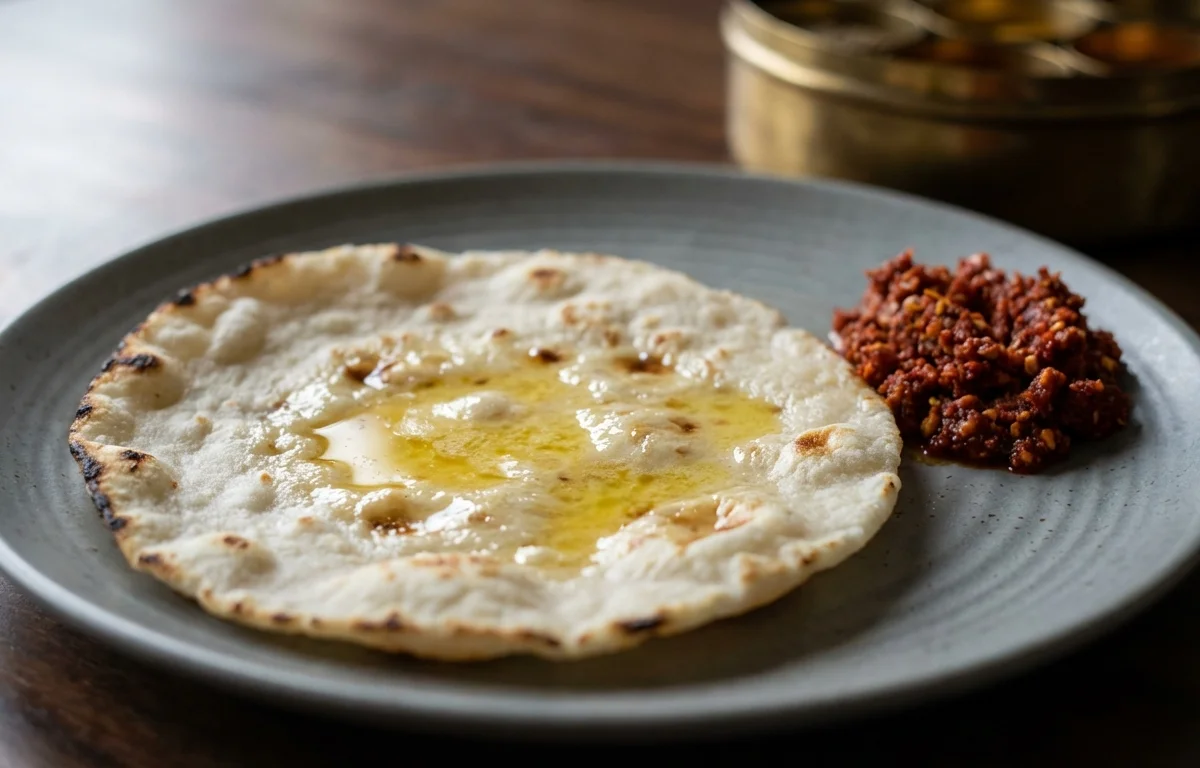
This rustic Maharashtrian flatbread is made with rice flour and hot water for a soft, earthy bite. It cooks up tender with faint toasted spots and is best served warm with thecha, pithla, or a simple vegetable curry.
For 8 servings
- boil · ~4 min
Boil the water with salt.
Heat the water in a saucepan and bring it to a gentle boil. Stir in the salt so it dissolves fully.
- mix · ~2 min
Mix in the rice flour.
Lower the heat and add the rice flour all at once. Stir quickly until the flour absorbs the water and forms a rough, thick mass with no dry patches.
TIPWork quickly once the flour goes in so the dough stays evenly hydrated and smooth. - rest · ~5 min
Cover and rest the dough briefly.
Take the pan off the heat, cover, and let the dough sit until just cool enough to handle.
- knead · ~7 min
Knead the dough until smooth.
Transfer the warm dough to a plate or wide bowl and knead it well with damp hands until soft, smooth, and crack-free. Divide into 8 equal balls.
TIPKnead while the dough is still warm, not cold, or the bhakri can crack while patting. - prep · ~8 min
Pat each bhakri.
1.Dust the work surface or a piece of parchment lightly with rice flour.2.Place one dough ball on it and flatten gently with your fingers.3.Pat outward in small motions to make a thin round bhakri about 5 to 6 inches wide.4.Keep the edges neat and press any small cracks back together.TIPUse light, even pressure while patting so the bhakri cooks evenly and does not tear. - fry · ~12 min
Cook the bhakri on a hot tawa.
1.Heat a tawa over medium heat until evenly hot.2.Lift one bhakri carefully and place it on the tawa.3.Cook until the surface changes color and light spots appear, about 1 minute.4.Flip and cook the second side, brushing with a little oil, until pale golden spots form.5.Flip once more and cook briefly until done and soft.TIPKeep the heat medium; very high heat hardens the outside before the center cooks. - serve
Serve the bhakri warm.
What to keep in mind.
7 tips from the recipe — small details that make a real difference to the final dish.
- 1Add the rice flour to the boiling water all at once and stir fast to avoid stubborn lumps in the dough.
- 2Knead while the dough is still warm; once fully cool, rice dough is more likely to crack while patting.
- 3Keep your hands slightly damp when kneading to smooth the surface without making the dough sticky.
- 4Dust very lightly while shaping; too much loose rice flour can dry the bhakri and make it chalky.
- 5If the edges split while patting, pinch them back together and smooth with damp fingers before lifting.
- 6Cook on a properly heated tawa over medium heat so the inside steams through before the outside firms up.
- 7Stack cooked bhakris in a cloth-lined container to trap gentle steam and keep them soft until serving.
Adapt it for your goals.
No-oil
Skip the oil on the tawa for a more traditional dry-roasted bhakri; serve hot with ghee or chutney if desired.
thicker bhakriThicker-bhakri
Pat the rounds slightly smaller and thicker for a softer, heartier bhakri that pairs well with pithla or zunka.
mini bhakriMini-bhakri
Make smaller rounds if you're new to shaping rice dough; they are easier to lift and less likely to crack.
Why this is on our healthy list.
Naturally Gluten-Free
Made entirely from rice flour, this bhakri is a suitable flatbread option for those avoiding wheat and gluten.
Simple Ingredient Dish
With just rice flour, water, salt, and a little oil, it is a minimally processed, straightforward homemade staple.
Light Companion Bread
Its mild, simple profile pairs well with vegetable curries, pithla, and chutneys without feeling overly rich.
Frequently asked questions
The dough is usually too cool or a bit dry. Knead it while still warm and use damp hands to smooth cracks as you pat.



.webp)