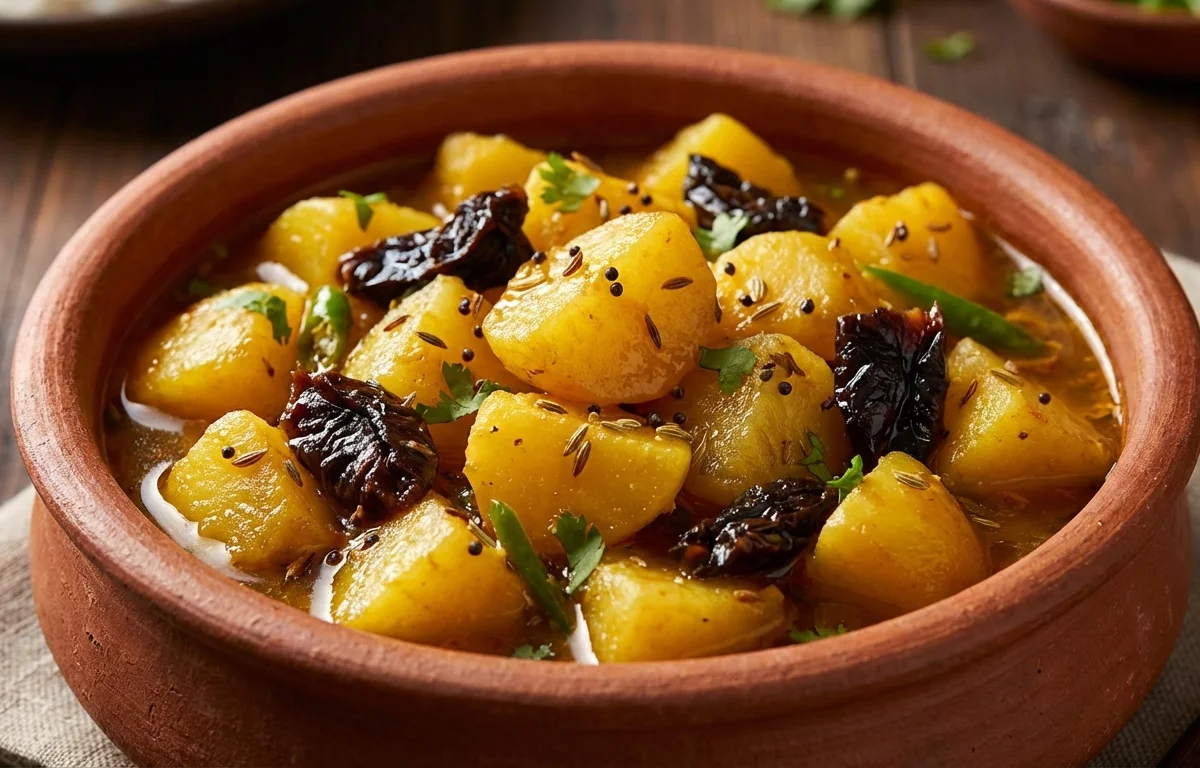
Thekera Tenga Aloo
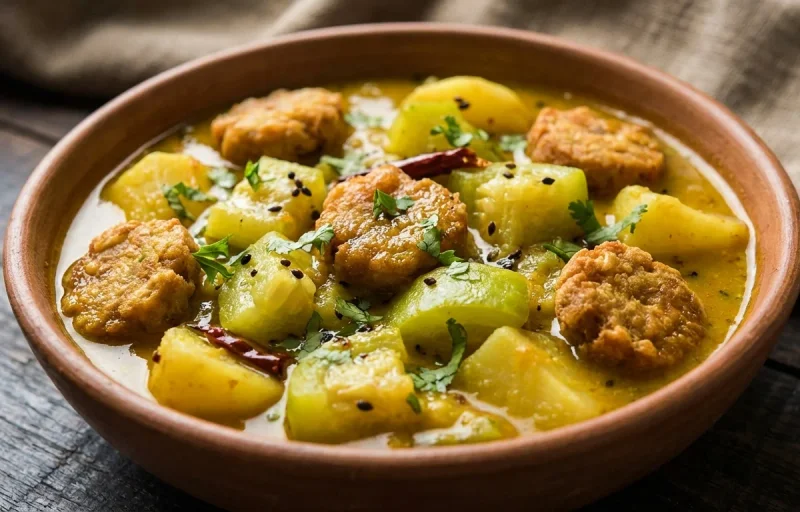
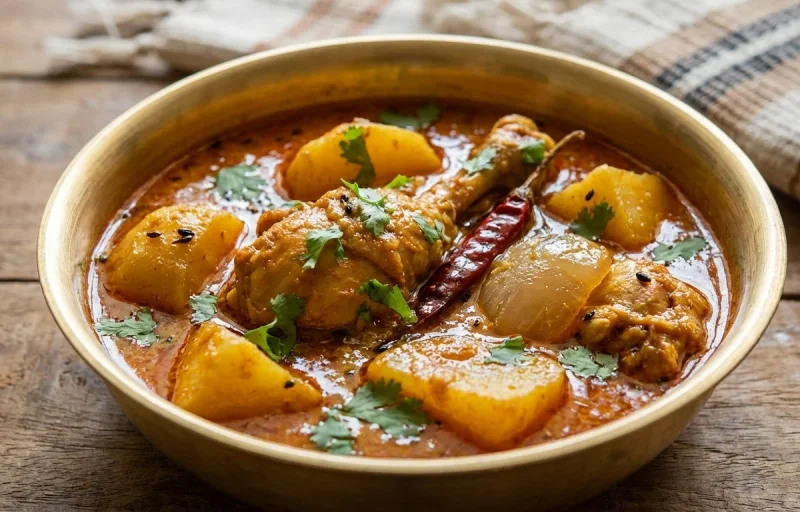
A tangy, comforting potato curry from Assam that gets its unique sourness from dried mangosteen. The thekera imparts a citrusy punch that perfectly balances the earthy potatoes, while minimal spices let the tart fruit shine. A homestyle dish that pairs beautifully with steamed rice.
For 4 servings
- prep · ~15 min
Soak the dried mangosteen.
Place the dried mangosteen pieces in a small bowl with warm water and let them soak for 15 minutes to soften.
- boil · ~15 min
Boil the potatoes.
Peel and cube the potatoes. Add them to a pot with 300 ml water and salt. Bring to a boil and cook until fork-tender, about 12-15 minutes. Do not drain the water.
- prep · ~2 min
Mash the soaked mangosteen.
After soaking, squeeze the softened mangosteen pieces in your fingers directly into the pot with the potatoes. Discard the fibrous seeds and hard parts. Stir well to incorporate the tangy pulp into the broth.
TIPSqueeze well — the pulp holds all the tangy, citrusy flavor that defines this dish. - simmer · ~7 min
Simmer the curry.
Let the curry simmer on low heat for 5-7 minutes, allowing the flavors to meld. The potatoes will absorb the tangy broth. Add sugar if the curry feels too sour. Lightly mash a few potato cubes against the side of the pot to thicken the gravy slightly.
- temper · ~1 min
Temper with mustard oil and green chili.
In a small tempering pan, heat mustard oil until it reaches its smoking point. Remove from heat briefly, then add the slit green chilies and let them sizzle for 10 seconds. Pour this tempering over the simmering potato curry and cover immediately to trap the aroma.
TIPHeating mustard oil to its smoke point removes its raw pungency and gives a mellow nutty flavor. - rest · ~2 min
Rest for 2 minutes, then serve.
Keep the pot covered for 2 minutes. Serve hot with steamed rice.
What to keep in mind.
7 tips from the recipe — small details that make a real difference to the final dish.
- 1Soak the dried mangosteen in warm water for at least 15 minutes to fully soften it before squeezing.
- 2Squeeze the soaked mangosteen pulp thoroughly into the pot — the fibrous seeds should be discarded.
- 3Lightly mash a few potato cubes against the pot wall to naturally thicken the curry without adding cream.
- 4Heat mustard oil until it just begins to smoke to mellow its pungency and develop a nutty aroma.
- 5Cover the pot immediately after pouring the tempering to trap the fragrant mustard oil and chili aromas.
- 6Let the curry rest for 2 minutes after tempering so the flavors meld and the potatoes absorb the tangy broth.
- 7Add the optional sugar only after tasting the final curry, as thekera's sourness varies by batch.
Adapt it for your goals.
Vegan
This recipe is already vegan as written — the mustard oil and plant-based ingredients are naturally free of animal products.
low oilLow-oil
Reduce mustard oil to 1 tablespoon and temper with fewer chilies for a lighter curry. The tangy thekera still delivers robust flavor.
with dalWith dal
Add 1/4 cup of cooked toor dal or masoor dal along with the potatoes for a heartier, protein-rich version of this Assamese curry.
spicySpicy
Increase red chili powder or add 1-2 more slit green chilies during tempering to turn up the heat while keeping the thekera's sourness.
Why this is on our healthy list.
Rich in Fiber
Potatoes with their skins provide dietary fiber, while dried mangosteen contributes additional fiber for digestive health.
Natural Sourness Without Vinegar
Dried mangosteen offers a citrusy tang that replaces processed vinegar, providing a clean, natural flavor profile.
Low in Fat
This curry uses just 2 tablespoons of mustard oil for the entire dish, making it a light and heart-friendly option.
Good Source of Potassium
Potatoes are a natural source of potassium, which supports healthy blood pressure and muscle function.
Frequently asked questions
Thekera is dried mangosteen, a tropical fruit used in Assamese cooking for its sour, citrusy flavor. It is available at Indian grocery stores or online spice retailers.