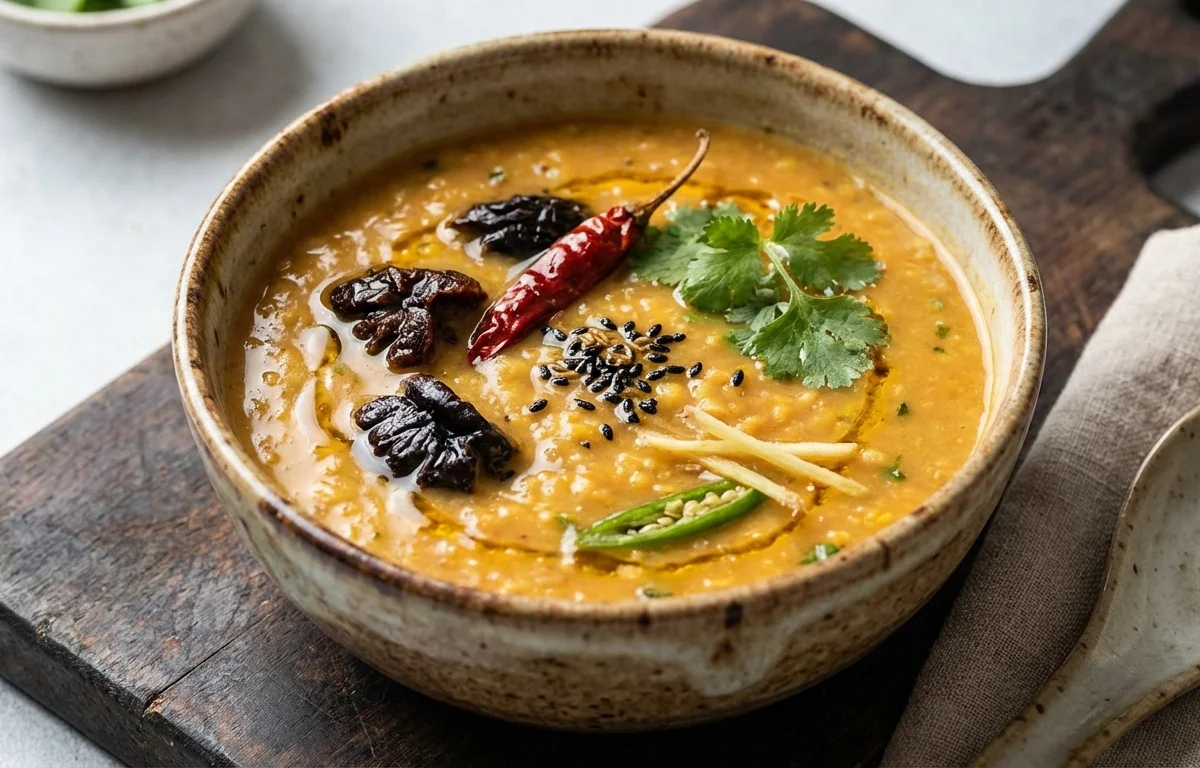
Thekera Tenga Dali
A comforting Assamese-style dal with a distinct tangy kick from thekera, a sun-dried garcinia fruit. Toor dal is cooked till soft and mushy, then laced with a simple tadka of mustard seeds and dry red chilies, finished with the smoky richness of mustard oil. Light, bright, and perfectly balanced – just like how a grandmother in Assam would make it.
For 4 servings
- prep
Soak and prepare the dal.
Wash the toor dal well under running water until the water runs clear. Soak in fresh water for 30 minutes, then drain.
- pressure cook · ~15 min
Pressure cook the dal with turmeric and thekera.
1.Add drained dal to the pressure cooker with 3 cups of water and turmeric powder.2.Add the rinsed thekera slices and stir once.3.Close the lid and pressure cook on medium heat for 4-5 whistles.4.Let the pressure release naturally, then open and whisk the dal till smooth.TIPWhisking while hot makes the dal light and aerated. - simmer · ~5 min
Simmer the dal and season.
1.Place the open cooker back on low heat.2.Add salt and bring to a gentle simmer for 5 minutes, stirring occasionally.3.If the dal is too thick, add a splash of water to reach a pouring consistency.TIPThe thekera will continue to infuse its tanginess as it simmers. - temper · ~2 min
Make the tempering in mustard oil.
1.Heat mustard oil in a small tadka pan till it reaches its smoking point and turns pale yellow.2.Turn the heat to low, add mustard seeds and let them splutter for 10 seconds.3.Add the dry red chilies and lightly crushed garlic cloves.4.Sauté till the garlic turns golden and aromatic, about 20-30 seconds.TIPHeating mustard oil to its smoking point removes its raw pungency and gives a nutty aroma. - mix
Pour the tempering over the dal.
Immediately pour the sizzling tadka over the hot simmering dal. Stir gently to combine.
TIPPour straight away — the sizzle when the hot oil hits the dal is what releases the aromatics. - rest · ~5 min
Let the flavors meld before serving.
Cover the dal and let it rest off the heat for 5 minutes. This allows the thekera and garlic to deepen their flavor.
- serve
Serve the dal hot.
Ladle into bowls and serve with steamed rice and a wedge of lemon on the side.
TIPA drizzle of raw mustard oil on top just before serving lifts the whole dish.
What to keep in mind.
6 tips from the recipe — small details that make a real difference to the final dish.
- 1Soaking the toor dal for 30 minutes ensures even cooking and a creamy texture.
- 2Whisk the dal vigorously after pressure cooking to achieve a light, aerated consistency.
- 3Heat mustard oil until it smokes to mellow its pungency and unlock a nutty aroma.
- 4Add the thekera during pressure cooking so its tanginess fully infuses the dal.
- 5Let the finished dal rest 5 minutes off heat for deeper flavor melding.
- 6If the dal thickens on standing, thin with hot water to maintain a pouring consistency.
Adapt it for your goals.
Low-oil
Reduce mustard oil to ½ tablespoon and skip the raw drizzle — for a lighter version that still retains the distinct tadka flavor.
high proteinHigh-protein
Add ½ cup of cooked moong dal or masoor dal along with the toor dal for extra plant protein and a creamier texture.
veganVegan
This recipe is already vegan — simply confirm no ghee is added; serve with rice and lemon as suggested.
no pressure cookerNo-pressure-cooker
Simmer the soaked dal with thekera and turmeric in a heavy pot for 45–50 minutes, adding water as needed, until soft.
Why this is on our healthy list.
Rich in Plant Protein
Toor dal is an excellent source of plant-based protein, supporting muscle repair and satiety.
Digestive Support
Thekera (dried garcinia) is traditionally used in Assam to aid digestion and add a tangy flavor without extra sodium.
Low in Fat
With only 1 tablespoon of mustard oil for the whole recipe, this dal is a heart-friendly, low-fat meal option.
High in Dietary Fiber
Toor dal provides soluble fiber that helps regulate blood sugar and promotes gut health.
Frequently asked questions
Thekera is sun-dried garcinia fruit used in Assamese cooking for its distinct sourness. It's available in Indian grocery stores or online — substitute with kokum or dried tamarind if needed.