Thengai Paal
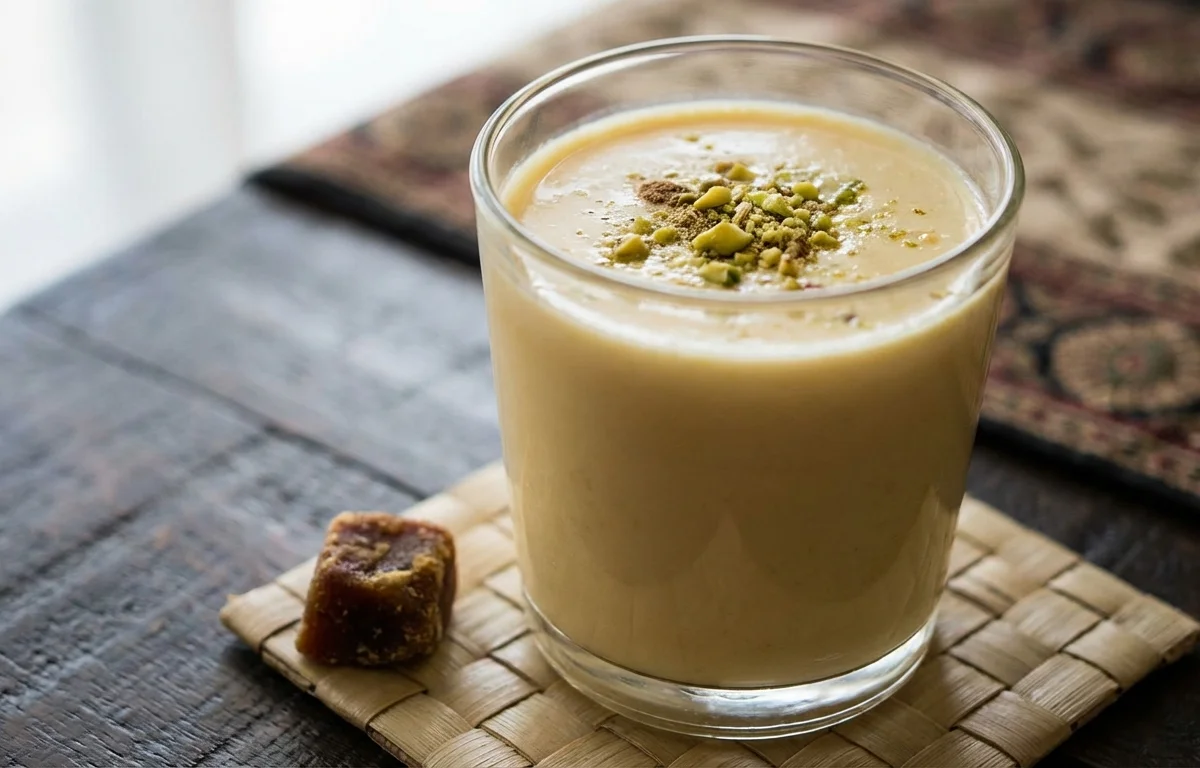
A light, soothing Tamil-style coconut milk drink gently flavored with cardamom and a little sweetness. It is often served alongside idiyappam or appam and tastes delicate, creamy, and comforting without feeling heavy.
For 4 servings
- prep · ~5 min
Extract the first coconut milk.
1.Add grated coconut and 1 cup warm water to a blender.2.Blend until the coconut turns very fine.3.Strain through a fine sieve or cloth and collect the thick milk in a bowl. - prep · ~5 min
Extract the second coconut milk.
1.Return the strained coconut solids to the blender.2.Add the remaining 2 cups warm water and blend again.3.Strain once more and collect the thinner milk separately. - boil · ~6 min
Warm the thin coconut milk with jaggery.
Pour the second coconut milk into a saucepan. Add jaggery, cardamom, and salt, then heat gently until the jaggery melts and the mixture is hot but not boiling.
TIPKeep the heat low so the coconut milk stays smooth and does not split. - mix · ~2 min
Stir in the thick coconut milk.
Turn the heat to the lowest setting and add the first coconut milk. Stir for 1 to 2 minutes just until warmed through, then switch off the heat.
TIPDo not let it come to a full boil after adding the thick milk. - serve
Serve the thengai paal warm.
What to keep in mind.
7 tips from the recipe — small details that make a real difference to the final dish.
- 1Strain the coconut milk through a cloth for the smoothest, silkier thengai paal without gritty bits.
- 2Warm the jaggery with the second, thinner extract first; this protects the rich first extract from curdling or splitting.
- 3If your jaggery has impurities, melt it in a little thin coconut milk and strain before adding back to the pan.
- 4Lightly crush the cardamom pods just before heating so the aroma infuses the milk more fully.
- 5Once the thick coconut milk goes in, keep the flame very low and stop heating as soon as it is steaming.
- 6Thengai paal thickens slightly as it cools, so loosen leftovers with a splash of warm water before reheating.
- 7Serve it warm with idiyappam or appam, or chill it briefly for a softer, dessert-like drink.
Adapt it for your goals.
Vegan
This recipe is naturally vegan as written, making it a gentle dairy-free accompaniment for appam or idiyappam.
palm sugarPalm-sugar
Use palm jaggery instead of regular jaggery for a deeper, more caramel-like sweetness that pairs beautifully with coconut.
saffron cardamomSaffron-cardamom
Steep a few strands of saffron in the warm thin coconut milk for a festive version with a fuller aroma.
lighterLighter
Use a little extra warm water in the second extract if you prefer a thinner, more drinkable thengai paal.
Why this is on our healthy list.
Naturally Dairy-Free
Fresh coconut provides the creaminess here, so this is a suitable comforting drink for those avoiding dairy.
Less Refined Sweetening
Jaggery brings sweetness with a deeper flavor than white sugar, helping the drink taste rounded without needing much else.
Gentle, Simple Ingredients
With coconut, water, cardamom, jaggery, and a pinch of salt, the drink stays minimal and easy to pair with breakfast dishes.
Frequently asked questions
Boiling the first extract can make the coconut fat separate and turn the drink grainy or oily, so only warm it gently.